
Unlocking the Power of Trichoderma asperellum: The Game-Changer for Sustainable Agriculture
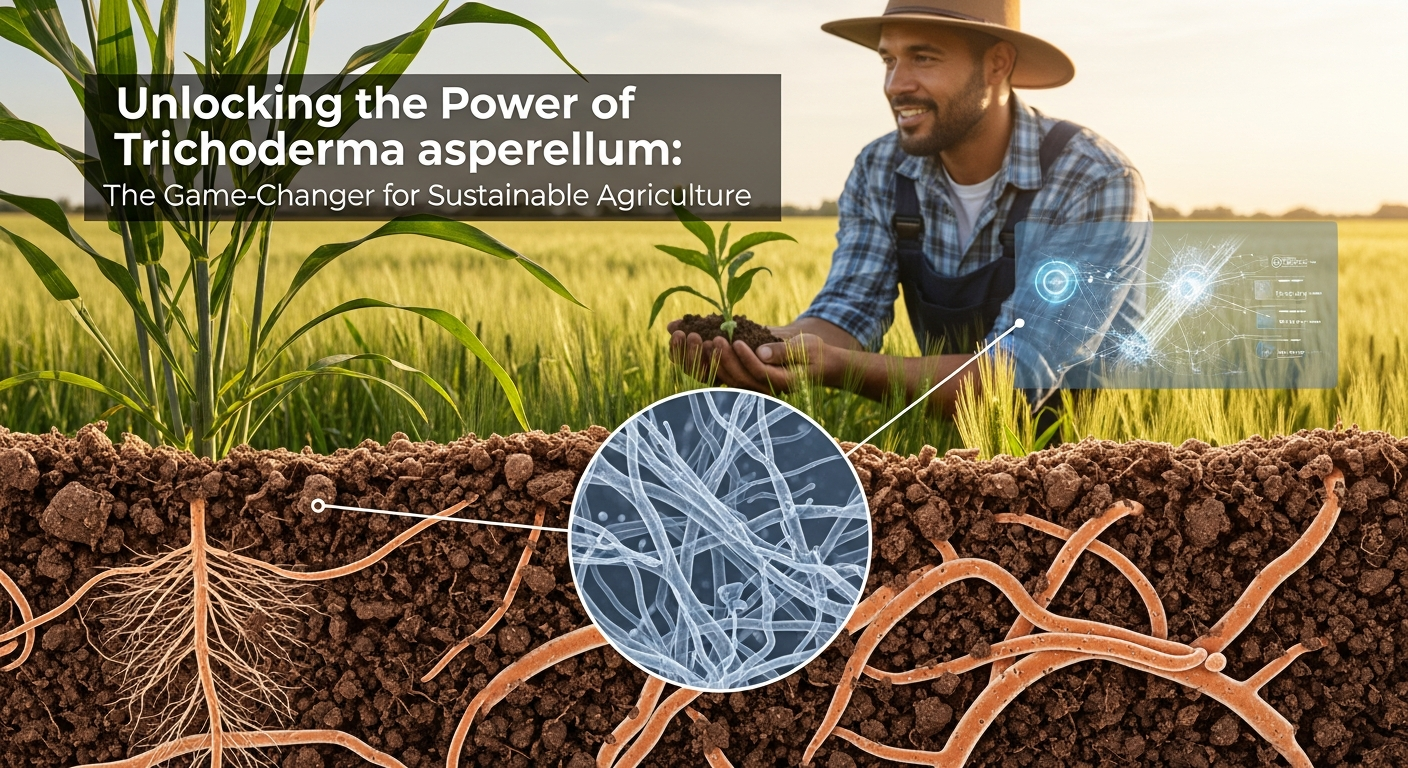
Farmers have been using Trichoderma asperellum, a naturally occurring beneficial trichoderma fungus, for decades to protect their crops and improve the health of the soil. Trichoderma is found naturally in the root zone of plants and works in conjunction with nature to provide support to crops by increasing their strength from the ground up.
Asperellum has many properties that benefit plants. It suppresses soil-borne pathogens that harm crops, promotes root development, improves nutrient uptake, increases microbial activity in the soil, and stimulates growth in plants without harming the environment.
As a result, Trichoderma asperellum is one of the easiest products to apply, safe for long-term use, and a product that works well with both organic and sustainable farming systems. As a result of using this trichoderma fungus, crops treated with it will show improved resistance to stress, better root development, and improved vigor overall.
Every time you use Trichoderma asperellum, you get natural protection and support for growth, whether on vegetables, cereals, fruits, or cash crops. Because of this, Trichoderma asperellum is a true innovator in sustainable agriculture.
Introduction: Why Trichoderma asperellum Is Revolutionizing Modern Farming
There are increasing concerns about the use of pesticides, herbicides and fungicides for crop protection and as methods of managing soil health. Farmers and growers are looking for solutions to these challenges that are less chemically dependent and more environmentally friendly. As a result, biological and organic solutions are quickly becoming the preferred choice for farmers/growers when they need crop protection.
In addition, trichoderma asperellum is beneficial at the root level of plants and has the ability to create a barrier around the roots of plants while simultaneously increasing the nutrient availability to these plants. Trichoderma asperellum is safe to use; it does not leave any residue on the plants after harvest; and it is fully compatible with sustainable agricultural practices. Therefore, trichoderma asperellum is now becoming widely used within both organic agriculture systems and integrated farming systems.
Growing Demand for Biological Crop Protection
The world’s farmers are reassessing how they use pest control products as a result of regulatory, environmental, and external marketplace influences.

Role of Trichoderma Fungus in Sustainable Agriculture
The Trichoderma fungus has many functions in addition to disease control. It occupies spaces in plant roots while competing with different pathogens for nutrients and space within soils.
The benefits of Trichoderma Asperellum are as follows:
- Provides disease suppression of soilborne organisms such as root rot and wilt diseases.
- Promotes root development and nutrient absorption.
- Stimulates the host plant’s defence mechanisms.
- Increases the number of microorganisms present in the soil (microbial diversity).
Due to the way that Trichoderma Asperellum naturally strengthens plants, it is an important tool for farmers who are trying to provide environmentally sustainable agriculture by assisting their crops’ abilities to tolerate biotic and abiotic stresses that result from environmental extremes of low precipitation (drought) and high salinity or compromised soils (saline soils).
Why Asperellum Is Gaining Global Attention
Asperellum has received international recognition due to its ability to produce reliable outcomes through countless crop types and regions of the world.
Asperellum’s Global Appeal:
- Effective with respect to vegetables, fruits, cereals, beans, and cash crops.
- Compatible with all methods of agriculture including drip irrigation, seed treatment and soil application.
- Compliments other bio-inputs & organic nutrients.
- Inexpensive for small- to large-scale farmers.
With verifiable results and benefits associated with sustainability the trichoderma asperellum fungi has now become an integral force in responsible agronomy.
Understanding Trichoderma asperellum: An Overview
Trichoderma Asperellum is a naturally occurring helpful Trichoderma fungus that is widely used in agriculture to protect crops and increase agricultural soil health. T. Asperellum acts as a biological barrier to the soil-borne pathogenic microorganisms (disease-causing organisms) that can harm crops while simultaneously promoting root development and overall plant health. T. Asperellum has become a crucial component of sustainable and organic farming systems due to its environmentally friendly and non-residual nature.
Underground, T. Asperellum functions as a facilitator for healthy crop production by promoting a balanced microbial population in the soil and reducing the need for chemical applications. T. Asperellum can benefit vegetable, fruit, cereal, pulse, and plantation crops.
What Is Trichoderma asperellum?
Trichoderma asperellum can be described as an advantageous, rapidly reproducing organism. It exists naturally in the earth and at plant root locations.
What you should know:
- It belongs to the group of Fungi known as Trichoderma
- This organism can be used as a bio-fungicide and can act to stimulate plant growth
- Trichoderma asperellum will help to manage various pathogens that cause soil-borne disease such as root rot, wilt, or damping off.
- Trichoderma asperellum will support increased root development and the ability of a plant to absorb nutrients from the soil.
Unlike chemical fungicides, Trichoderma asperellum provides natural protection to plants and increases soil fertility.
Classification and Key Characteristics of Asperellum
There are many unique characteristics of Asperellum biology, which together provide the ability to excel in agricultural systems, i.e. the biological and the environmental.

How Trichoderma Fungus Lives and Functions in Soil
The trichoderma fungus survives in the soil‘s Rhizosphere, or where plants grow, by establishing a mutualistic, supportive and protective relationship between itself and the plants it works with.
How it Works in The Soil
- Trichoderma colonizes plant roots and prevents the entrance of disease-causing microbes.
- The fungus utilizes organic matter and plant pathogenic fungi for its food source.
- Trichoderma improves microbial balance in the soil.
- Trichoderma assists with the availability of soil nutrients, especially phosphorus.
By working together to improve both plant and soil life and defence, Trichoderma Asperellum produces healthy plants, higher yields and has the ability to contribute to soil sustainability over time.
The Science Behind Trichoderma asperellum’s Effectiveness
Trichoderma asperellum is a very effective trichoderma fungus that can control soil-borne plant diseases through multiple layers of action. It is effective at both directly controlling pathogenic organisms and indirectly through the promotion of healthy plant roots and increased activity of soil biological organisms. When compared to fungicides with single modes of action, trichoderma asperellum has multiple biological modes of action. This makes trichoderma asperellum a stable control agent over an extended period of time.
Using trichoderma asperellum as a biological control product enables crops to thrive within a healthy soil ecosystem, reducing crop disease incidence and enhancing nutrient absorption. Due to the scientific benefits of using trichoderma asperellum, it is widely used in sustainable and organic agriculture.
Mode of Action and Antagonistic Properties
Plants are protected by Asperellum modulating harmful soil borne (pathogenic) fungal organisms that attack the plant.
Key modes of action include:
- Formation of antifungal enzymes and metabolites
- Degrading the cell wall of the pathogenic fungus
- Limiting pathogen fungal growth
- Creating a hostile environment for the pathogens

Mycoparasitism and Competition with Pathogens
Trichoderma fungi exhibit a very rare characteristic which is mycoparasitism. Mycoparasitism is the ability of Trichoderma to attack other fungi directly.
Here is how mycoparasitism occurs:
- Asperellum determines the presence of a disease-causing fungus (the pathogen).
- Asperellum forms a coil around the hyphae of the pathogen.
- Asperellum penetrates into and consumes (feeds) the pathogen.
- Asperellum eventually destroys the pathogen.
Moreover, Asperellum will compete for nutrient resources and space in the soil, thereby limiting the ability of any disease-causing organism to persist.
Plant–Microbe Interactions and Root Colonization
The relationship between Trichoderma asperellum & plant root-colonization for mutual benefit (ie: colonization of the root zone).
Benefits Of Root Colonisation:
- Establishment Of Protective Barriers To Protect Against Pathogens.
- Enhance Absorption Of Water And Nutrients.
- Stimulate Plant Defence Response.
- Promote Root Growth & Branching.
Trichoderma asperellum’s ability to interact with its host through these plant/microbe interactions not only provides disease control, but also produces strong, vigorous plants; therefore, making it one of the key components of sustainable agriculture today
Key Benefits of Using Trichoderma asperellum in Crop Production
Trichoderma asperellum is a beneficial species of Trichoderma, providing a variety of agronomic benefits from one application. It offers disease prevention (from soil-borne pathogens), growth promotion and soil quality enhancement, thus providing benefits to growers in organic, integrated and regenerative production systems.
Because trichoderma works at the root zone, it provides a long-term rather than short-term benefit to crops, leading to healthier plants and reliable yields over time.
Natural Disease Suppression and Plant Protection
Asperellum is a natural fungal suppressant found in many types of soils and has been widely studied to support the use of fungal suppression in biological control.
Some of the disease prevention benefits of a fungal suppressive agent:
- Suppressed by fungal pathogens mycelium
- Inhibit (blocked) pathogens from colonizing the roots
- Create (produce) antifungal enzymes and/or metabolites
- Reduce reliance on chemical fungicides

Plant Growth Promotion and Yield Enhancement
The trichoderma species of fungus not only protects plants from diseases but also encourages them to grow by providing:
- During their development from roots to shoot, increased root lengths and branching.
- The availability of better absorption of nutrients and water.
- The production of hormones that aid in plant defense mechanisms.
- Better and more frequent flowering and fruiting.
Continual use of T. asperellum will enhance the health of a plant's root systems resulting in stronger plants that are more capable of withstanding environmental stresses and producing greater yields.
Soil Health Improvement and Microbial Balance
Trichoderma Asperellum is an essential component in maintaining soil fertility and a biological balance within the soil.

Trichoderma Asperellum enhances the life of the soil, supports the natural protection of crops, and supports long-term, sustainable farming and productivity levels.
Application Methods: How to Use Trichoderma asperellum Effectively
There are several different methods of application that can be used with trichoderma asperellum to provide maximum crop protection and benefit to the overall growth of crops over time. Successful application of trichoderma asperellum will lead to successful establishment of the fungus on the roots of plants, thereby allowing for longer-term suppression of diseases and improved soil quality. Trichoderma asperellum is most effective when applied to crops at an earlier stage and applied regularly as part of an integrated farm management system.
The correct procedure and timing for applying trichoderma asperellum will support proper establishment in the soil, thus providing continuous protection for plants throughout their entire growing cycle.
Seed Treatment with Trichoderma asperellum
Treating seeds with Trichoderma asperellum is a great way to get this beneficial fungus into your plants as early in their life cycle as possible.
Here are some of the benefits of seed treatment:
- Protects your seedlings from diseases in the soil
- Improves germination and early root development
- Ensures that your crops establish evenly
General seed treatment method:
- Mix Trichoderma asperellum with either water or an organic adhesive
- Apply the mixture to your seeds by coating them evenly with the solution and then shade-drying them before planting.

Soil Application and Drenching Techniques
Trichoderma will grow and thrive in the root zones of plants where pathogens cause significant damage with this type of technique.
Methods of application of trichoderma to soil:
- Co-mingle with well-decomposed FYM or compost.
- Apply as a soil drench to crops during land prep or close to the areas of root zones.
- For existing crops, use it as a soil drench.
Primary benefits of applying trichoderma to soil:
- Effective control of root diseases.
- Improving the balance of soil microbiology.
- Increased availability of nutrients for crops.
Foliar Spray and Integrated Use in Organic Farming
Trichoderma Asperellum works mainly in the Soil, however, there are benefits of using it in physiological applications to improve the plant's overall health.

Trichoderma asperellum vs Chemical Pesticides and Other Biocontrol Agents
Trichoderma Asperellum has an outstanding performance level as a robust Trichoderma fungal agent, providing effective and safe, sustainable long-term agricultural protection versus chemical pesticide options. Traditional chemical pesticides are applied as one-specific mode of action, only targeting specific categories of pests for a brief period (usually only a few days).
In comparison to pesticides, Trichoderma Asperellum acts in many forms through its unique capabilities of working effectively as a biological agent to provide long-lasting agricultural protection in cooperation with all forms of soil organisms, resulting in healthier plants & crops grown in healthy soils.
Advantages Over Chemical Fungicides
There are a variety of advantages offered by Asperellum compared to synthetic fungicides.
Advantages:
- There are no chemical residues present on crops when using Asperellum.
- It is completely safe for all parties involved (i.e. farmers, consumers, etc.) as well as for beneficial insects.
- Asperellum will not cause resistance to pathogen development.
- Use Asperellum to promote soil fertility rather than degrade it.

Comparison with Other Trichoderma Species
Numerous species of the genus Trichoderma are utilized in farming, but Trichoderma asperellum out-competes many other species of Trichoderma in several categories.
Reasons Trichoderma asperellum excels:
- Increased rate of penetration of roots
- Improved antagonistic ability
- Increased ability to survive in a variety of soil conditions
- Consistent results on multiple crops
Environmental and Economic Benefits
Trichoderma Asperellum is beneficial to the environment and to the economy of farms.
Environmental Benefits:
- Reduces the amount of chemicals in soil and water,
- Increases the number of living things in the soil,
- Helps create sustainable farming practices.
Economic Benefits:
- Lowers costs of pesticides and inputs,
- Increases yield and quality of crops,
- Can be used repeatedly without an increased risk.
Given the combined advantages of safety, performance, and affordability, Trichoderma Asperellum is considered to be an intelligent choice for agriculture that is ready for the future.
Sourcing and Storing Trichoderma asperellum Products
To achieve maximum benefit from using trichoderma asperellum (t), it is important that you select an appropriate product containing live organisms, as the quality, formulation, and the environment in which you store these types of products can impact their performance in the field. The likelihood that your application will be effective at controlling disease or that you will achieve excellent root colonization, requires that you use authentic products with proper preservation.
To protect the viability of trichoderma asperellum (i.e., keep it alive for as long as possible), farmers should always strive to find good quality and properly handled products.
Available Trichoderma Asperellum Formulations
Trichoderma Asperellum formulations are available in many different forms for different crops and application types.

How to Identify High-Quality Biofungicides
Products that contain trichoderma fungus will not all have the same results. Quality is important.
Key Quality Indicators:
- Clearly stated strain: Trichoderma Asprillum
- High viable count; proper cfu/g or cfu/ml
- Properly manufactured and have proper manufacture and expiration dates
- Certified for Bio-Input, or Organic use

Storage Conditions for Maximum Effectiveness
To ensure optimum performance from trichoderma asperellum, they must be stored properly.
Here are some recommended ways to store trichoderma asperellum:
- Keep it in a cool, dry, and dark place.
- Avoid exposing it to direct sunlight and/or high temperatures.
- Keep trichoderma asperellum away from pesticide or herbicide chemicals.
- Use trichoderma asperellum before the expiration date.
Farmers can obtain maximum benefit from using trichoderma asperellum and thereby help protect crops sustainably through the use of high-quality sources and correct storage methods.
FAQs
Q1. What is Trichoderma asperellum used for in agriculture?
Trichoderma asperellum is used to control soil-borne plant diseases, promote root growth, and improve overall soil health naturally.
Q2. Is Trichoderma asperellum safe for food crops?
Yes, asperellum is completely safe, residue-free, and suitable for food, vegetable, and fruit crops.
Q3. How does Asperellum control plant diseases?
It suppresses harmful pathogens through antagonism, mycoparasitism, and root zone competition as a beneficial trichoderma fungus.
Q4. How often should Trichoderma asperellum be applied?
It is generally applied at sowing or transplanting and repeated every 20–30 days depending on crop and disease pressure.
Q5. Which crops benefit most from Trichoderma fungus?
Vegetables, fruits, cereals, pulses, oilseeds, and plantation crops benefit greatly from trichoderma asperellum.
Conclusion: Harness the Full Potential of Trichoderma asperellum for Healthier Crops and a Greener Planet
Trichoderma asperellum is an innovative and proven tool for today's farmers through its natural methods for providing disease control and supporting plant and soil health. As a beneficial trichoderma species, Trichoderma asperellum works at the root level to eliminate harmful pathogens, mitigate nutrient uptake, and bolster a plant's defense mechanism. Two Modes of Action: Trichoderma asperellum has Multiple Modes of Action: Thus making this fungus an easily accessible and long-term, sustainable alternative to chemical fungicides.
Trichoderma asperellum is not only an essential factor in protecting your crops from pests and diseases — It is also instrumental in improving soil fertility and preserving the natural balance of soil organisms through enhanced root growth; thus, helping crops better tolerate stresses, including drought, poor soil structure, and disease incidence. This results in higher-quality yields, and supports sustainability on our farms over the long term.
By regularly incorporating trichoderma asperellum into your farming practices, you will reduce your chemical dependency and help the food supply become safer and environmentally friendly. By including these types of products in your crop management practices, you will produce healthier crops and be able to lower your input costs, ultimately helping to create a cleaner and healthier planet.