

The Ultimate Guide to Humic Acid Extraction: Techniques, Benefits, and Applications
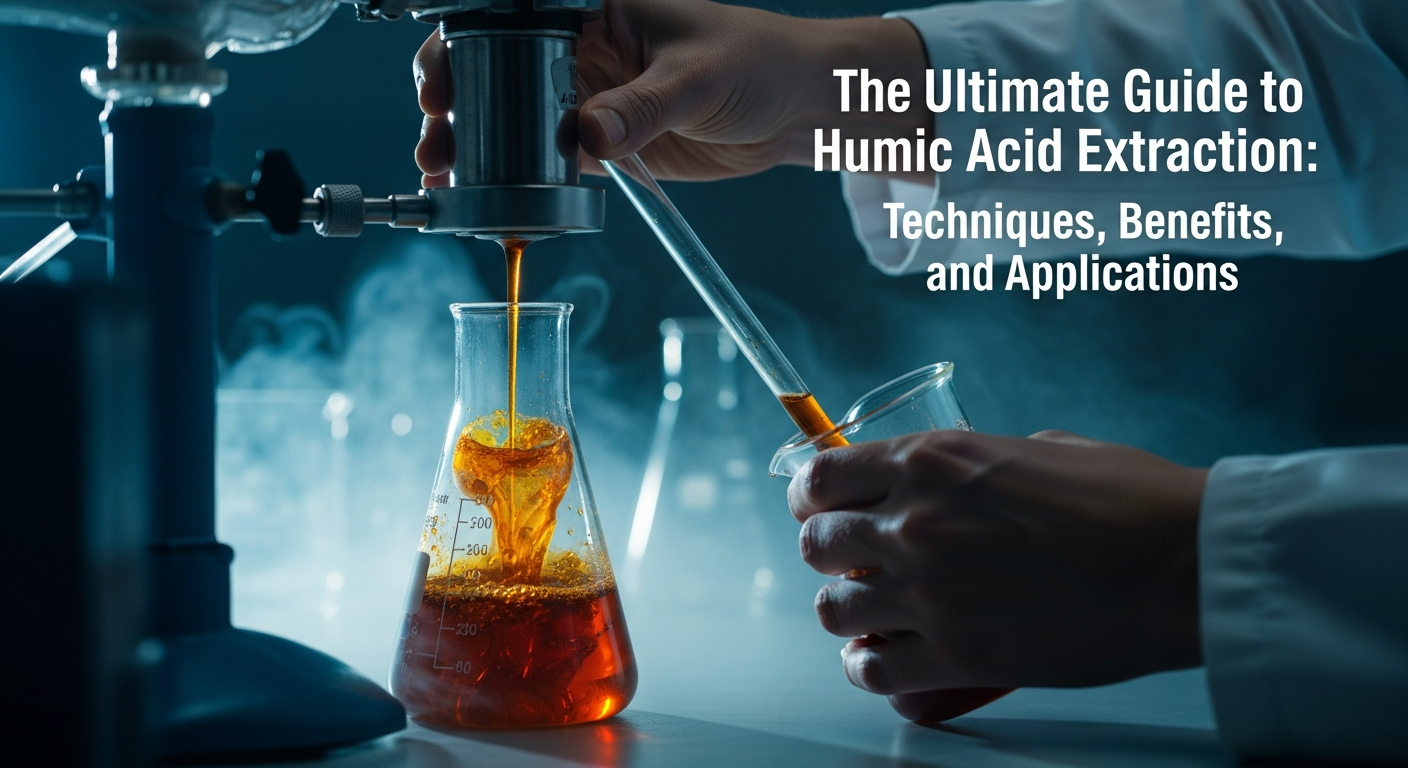
Extracting humic acid means sourcing valuable humic substances from organic materials (such as leonardite, peat, lignite and decomposed vegetation). Humic substances occur naturally, are derived from carbon-rich materials, and provide many important benefits to soil quality and health, nutrient availability and plant health in contemporary agricultural systems.
The active organic compounds in extracted humic acid can be used to improve soil structure, enhance biological activity and promote nutrient uptake by plants, making humic acid an essential component of many organic growing methods and sustainable agriculture practices.
High-quality humic acid fertilizer will promote strong root systems, improved water retention and enhanced fertilizer efficiency, allowing for more vigorous plant growth and increased productivity. Various extraction methods are utilized to produce optimal purity, concentration, and efficacy based on the desired use of humic acid in agriculture or industry.
Humic acid extraction unlocks the full potential of natural organic matter. Therefore, humic acid can provide great benefits to growers that want to achieve increased yield production and practice sustainable methods.
Understanding Humic Acid Extraction: What It Is and Why It Matters
Humic acids are among the most significant naturally occurring organic substances used in modern agriculture. Humic acids are separated from organic material, such as peat, leonardite, lignite, decomposed plant materials, and other organic-rich materials, through the extraction of humic acids. Numerous ways exist to extract humic acids from organic-rich materials, many of which will help to enhance the availability of soil and nutrients and improve the health of plants in several types of agricultural systems.
With so many beneficial biological and chemical properties of humic acid, they represent a crucial part of sustainable agricultural practices and modern soil management systems.
What Is Humic Acid and How Is It Formed?
Humic acid is a naturally occurring organic compound that develops over time through the gradual decay of the remnants of plants and animals. This process of decomposition occurs as microorganisms decompose organic materials, forming stable humic substances that consist of high levels of carbon and other biologically active elements.
Key characteristics of humic acid:
• Dark brown organic compounds that contain high levels of carbon
• Compounds with carboxyl group and phenolic functional groups
• Humic acids increase the retention of nutrients captured in the soil by the plant
• Humic acids assist in the growth of bacteria, fungi, and other microorganisms that are necessary for root development.

Importance of Humic Acid Extraction in Agriculture
In order for producers to have access to high-quality humic substances for use on crops and soils, it is necessary to have an efficient extraction process in place for obtaining humic acid.
Benefits for Agriculture:
1. Increases ability of plants to absorb nutrients;
2. Improves effectiveness of fertilizers;
3. Promotes soil structure and aeration;
4. Increases microbial activities in the root zone.
Because extracted humic acid works as a natural soil ameliorant to create higher productivity long-term without reliance on excessive use of chemical fertilizers.
Role of Humic Acid Fertilizer in Soil Health Improvement
Among the many uses for extracted humic substances, the production of humic acid fertilizers is one of the most important. Humic acid fertilizers promote natural improvement of soil through improving nutrient availability and biological activity.
Benefits of Humic Acid Fertilizers:
1. Improves root development and growing vigor of plants;
2. Improves moisture retention of soil;
3. Reduces nutrient loss due to leaching;
4. Supports sustainable and regenerative methods of agriculture.
The extraction process of humic acid yields highly concentrated substances that have a major impact on soil health and crop production. In that they help to improve the natural fertility of the soil, humic acid fertilizers are an important element in sustainable agricultural practices and protection of the environment over the long term.
Common Methods of Humic Acid Extraction
In order for high quality humic substances to be created, an efficient extraction technique for humic acids is important. There are a number of different methods used to extract and purify humic acid from naturally-derived raw materials such as leonardite; peat; lignite; and composted organic matter. Each of these extraction methods has its own distinct differences when compared to each other, including: degree of complexity; cost of extraction; purity of product; and degree of suitability for industry.
Materials extracted from these sources are usually used to manufacture humic acid fertilizers which are extensively used in agriculture to enhance soil conditions and develop the growth of plants.
Alkaline Extraction Method Explained
The alkaline extraction technique is the most prevalent form of extracting humic acid because this technique provides the maximum efficiency of extraction as well as a satisfactory yield. This technique uses alkaline materials (e.g. sodium hydroxide (NaOH) and potassium hydroxide (KOH)) to dissolve the humic materials contained in the dissolved raw organic matter.
Steps for alkaline extraction as listed below:
- Crush & Preparation of raw organics
- Mixing with alkaline solution
- Dissolving into liquid form
- Filtration to remove insoluble particulates from liquid.

Acid Precipitation and Purification Process
Once the alkaline extraction is complete, acid precipitation will be used to separate out the humic acid from the other soluble organic compounds (for example, fulvic acid) in the solution by adding prominent acids to the solution until the pH drops significantly enough to cause the humic acid to precipitate out of the solution.
The four benefits of the acid precipitation are:
- Creating a more pure form of extracted humic acid,
- Separation of the various humic fractions,
- Utilizing a more consistence producing a greater quality end product, and
- Creating a more stable product for fertilizer manufacturing.
The process of purifying the humic acids may also include washing, drying, and filtering in order to remove contaminants from the final commercial humic acid fertilizer products.
Solvent Extraction and Modern Isolation Techniques
The introduction of advanced separation and extraction solvents in modern extraction technologies has enabled greater efficiency in humic acid extraction. The use of these newer methods are intended to improve purity, minimize waste and enhance sustainability.
Modern methods of extraction include:
- Extraction with organic solvents
- Extraction by ultrasonic assistance
- Extraction with microwaves
- Filtration through membranes and other advanced purification methods
These newer techniques have helped increase the biological activity of humic acid and provide improved yields and time efficiencies for humic acid extraction. Advanced isolation techniques are of increasing importance in the large-scale production of high-quality humic acid as an organic fertilizer for sustainable agriculture and environmental use.
Step-by-Step Process for Efficient Humic Acid Extraction
To have an effective Humic Acid Extraction Process and high-quality Extractions, the whole Extraction Process should be very precise and controlled, so as to produce a high yield, pure and biologically active Humic Acids. The extraction process consists of four main steps: Raw Material Preparation, Chemical Extraction, Purification and Drying. Each one of these steps will impact the quality of the final Humic Acid product and how well it works in agriculture.
High-grade humic material, in extract form, is most commonly turned into humic acid fertilizer, which provides a natural means for enhancing soil fertility, nutrient absorption and crop growth.
Raw Material Preparation for Humic Acid Extraction
The primary and most important part of the Humic Acid Extraction Process is to select and prepare the appropriate raw materials used in the extraction process. The types of raw material suitable for the extraction include: Leonardite, Peat, Lignite and Composted Organic Matter. Proper preparation will increase extraction efficiency and produce consistent results in your extraction of Humic Acids.
The best form of preparation includes:
- Drying raw material to eliminate excess moisture.
- Crushing and grinding raw material into small particles.
- Removing stones and other foreign objects from the raw material prior to extraction.
- Creating consistent particle sizes which will improve efficiency in the extraction process.

Extraction Protocols and Chemical Reactions
Chemical compounds such as the following are dissolved with alkaline materials in order to prepare the starting raw material to extract soluble and insoluble (organic and inorganic) humic acids.
Steps for Extraction:
1) Mix the starting raw material with an alkaline solution.
2) Control temperature and pH to maintain the proper conditions for extraction.
3) Continuously stir the mixture until all soluble substances have been extracted.
4) Separate the solid residue from the liquid extract.
Through this part of the extraction process, chemical reactions will happen by breaking the carbon bonds between the organic compounds of the raw material and creating soluble humic acid compounds in the alkaline extraction solution. Controlling the pH and temperature throughout the extraction process is crucial for maximizing the efficiency of extraction while maintaining the biological activity of the extracted substances.
Filtration, Purification, and Drying Techniques
Once the extraction has occurred and you have obtained an extraction solution comprised of multiple homogenous and dilute dissolved soluble and insoluble materials, the extraction solution must be purified (removing impurities and concentrating humic solids contained within the extraction solution) prior to using the concentrated humic solids in the production of a range of biostimulant products. Common methods of separating humic acid from fulvic acid (the other primary class of humic solids) uses acid precipitation.
Steps for Purifying Extract:
1) Filter the extraction solution to remove solid waste.
2) Use acid precipitation to separate humic acid from the remaining soluble solids.
3) Wash out residual salts.
4) Dry and mill or granulate the product into powder or granules.

Advantages of Different Humic Acid Extraction Techniques
The method of extracting humic substances from materials—soil and plant matter—will yield substances with certain qualities depending upon what you want the final product to look like. Additionally, the kind of extraction method you use will affect the overall quality of the humic acids produced, which can also have an impact on their ability to improve soil, as well as the crop yields that your product creates.
Most of the new modern extraction techniques not only focus on yield maximization but they also work to keep the biological activity and sustainability of these substances intact.
Improving Extraction Yield and Purity
Although there are many variables involved in extracting humic acids (including the extraction method used), one of the main goals of each extraction method is to produce as much of the humic acid as possible, while maintaining the purity of that product. The method of extracting the humic acid, as well as the raw materials that the humic acids are produced from, will vary.
Some of these include the following items that can result from optimization:
a) More active concentrations of humic compounds, at a higher efficiency.
b) The ability of the humic compounds to bind nutrients will be much greater.
c) There will be fewer contaminants and/or residues in the fertilizer products made from humic material.
d) The nutrient levels of the fertilizer products made from humic material will be consistent over multiple product batches.

Cost-Effective and Industrial-Scale Extraction Methods
It is essential for extraction methods to be economically viable and capable of industrial-scale production when considering commercial production. At the industrial level, the balance between production cost and product quality is critical when extracting humic acid.
Advantages of using industrial-scale extraction methods include:
- Greater efficiency in production
- Reduced time required for processing
- Consistent quality of products produced
- Lower per unit cost of manufactured product
Alkaline extraction is being utilized as both the most cost-effective and largest scale production of humic acid fertilizer when combined with filtration and drying.
Eco-Friendly Extraction Approaches for Sustainable Production
With the increasing concern to the environment, eco-friendly and sustainable humic acid extraction methods are becoming critical. Many new technologies seek to decrease the environmental impact, energy requirements and chemical waste associated with the extraction of humic acid.
Benefits of using eco-friendly extraction methods include:
- Reduction in the use of chemicals
- Reduction in wastewater created during manufacture
- Increase in energy efficiency
- Creation of a safer and cleaner method of production
The use of advanced technologies (e.g., ultrasonic extraction and green solvent technologies) maximize the natural integrity of humic acid and support the creation of sustainable manufacture. These environmentally responsible forms of manufacture will lead to safer and more sustainable forms of humic acid fertilizer for use in modern agriculture.
Key Factors Affecting the Quality of Extracted Humic Acid
Many crucial influencers will determine the extraction efficiency from any given humic acid extraction method, as well as the final purity, concentration, and biological activity of the produced extracts. A high-quality product should be formed for effective agricultural production; this is especially true when it comes to using premium humic acid fertilizers to enhance soil fertility and soil quality.
Because there are multiple factors affecting the final quality and yield of extracted humic substances, such as the type and source of raw material, the extraction process will be greatly affected by other factors - specifically pH, temperature, and time for the extraction process.
Influence of pH, Temperature, and Extraction Time
The success of any humic acid extraction is greatly dependent on the proper control of conditions utilized to conduct the extraction process. Factors such as pH, temperature, and time during the process can affect the extraction efficiency and stability of the extracted molecules.
Many of these fundamental conditions are important to the process.
- The control of the pH level will provide for an alkaline (basic) environment in which to dissolve and extract your humic material (humics).
- The moderate temperature (heat) used during extraction will help you achieve a fast extraction while allowing you to retain all bioactive properties of the humic material.
- The amount of processing time will be critical in the level of purity and yield you will achieve.

Raw Material Source and Humic Acid Purity Standards
The raw material from which humic acids are extracted significantly impacts on the characteristics and quality of the extracted product because different raw materials have differing amounts of humic substances and impurities.
There are many different types of raw materials from which humic substances can be extracted (most commonly):
- Leonardite
- Peat
- Lignite coal
- Compost and other decomposed organic matter
The purity of extracted humic acids can be assessed based on:
- Percentage of humic substances
- Level of heavy metal contamination
- Organic carbon content
- Solubility and ability to bind nutrients
When using high-quality raw materials to make humic acid, it is generally possible to achieve a higher concentration of more effective humic acids that can be used for both agricultural and industrial purposes.
Maintaining Bioactivity During the Extraction Process
Keeping the biological activity of the humic substances during the extraction process is one of the primary obstacles to successfully extracting them. Utilization of large amounts of heat or very harsh chemicals during processing, can cause damage to many of the functional components in the humble substance.
Some of the ways to maintain biological activity of the humic substance during processing include:
• Limiting the temperature at which they will be processed
• Minimizing the use of chemicals during processing
• Using methods of purification that involve very gentle action
• Preventing the oxidation of the humic substance while it is being dried and stored
Retaining biological activity in the extracted humic substances will cause the humic acid to maintain the ability to stimulate microbial activity, enhance nutrient uptake, and increase plant growth. These capabilities are essential for producing high quality and sustainable humic acid fertilizers that are useful in modern agriculture.
Applications of Extracted Humic Acid Across Industries
Because of the increasing need for sustainable and eco-friendly solutions, humic acid extraction is a growing industry across many markets. Extracted humic acid has a wide range of uses due to its ability to improve soil health, increase nutrient efficiency, help bind pollutants, and promote biological activity. Humic acid is now used in a wide range of areas including Agriculture, Environmental management, Water treatment, as well as Industrial applications.
One of the most important ways humic acid is used is in the creation of humic acid fertilizers, which increases crop health and helps maintain soil health over time.
Humic Acid Fertilizer in Agriculture and Crop Production
Agriculture is the largest market for extracted humic acid. Farmers turn to humic acid fertilizers to naturally improve soil quality, increase nutrient uptake, and increase productivity in their crops.
The benefits of using humic acid fertilizers in Agriculture include:
- Increased fertilizer use efficiency
- Enhanced root growth and strength of plants
- Improved retention of nutrients in the soil
- Increased crop yield and quality

Soil Conditioning and Plant Growth Stimulation
The use of humic acid as a natural conditioner to improve soil and stimulate growth is growing in popularity, with many applications available. This organic compound can improve the physical and biological characteristics of soils.
Benefits of Using Humic Acids for Soil and Plants Include:
- Aeration and aggregation of soils increases.
- Water retention ability of the soil increases.
- Microbial activity in the soil is improved.
- Increased resistance to environmental stresses.
The bioactive materials from the extraction of humics stimulate root and metabolic function of plants. They make the soil healthier and improve the productivity of the soil over time.
Industrial Uses: Water Treatment and Environmental Remediation
Extracted humic acids have various uses in industry and the environment due to their properties of adsorption and binding.
Examples of Industrial Uses of Humic Acids Include:
- Water treatment and purification.
- Binding and removal of heavy metals from soil.
- Remediation of contaminated soils.
- Organic additive to industrial products.

Sustainability and Environmental Impact of Humic Acid Extraction
As both the agricultural and industrial industries move toward environmentally-friendly alternatives, there has been an increased emphasis on extracting humic acid from natural sources in a sustainable manner. Humic acid that is extracted supports environmentally friendly agriculture by enhancing soil fertility, while reducing reliance upon high amounts of synthetic fertilizers.
In addition to assisting in the sustainable production of agricultural food products through greater yields, humic acid that is obtained through ecologically responsible extraction methods contributes to the long-term health of the soil and provides a beneficial environment for cultivating food crops.
Eco-Friendly Extraction and Green Chemistry Practices
The traditional methods used to extract humic acid generally require large amounts of chemicals and energy. New methods of extraction are based upon the principles of green chemistry, allowing for more efficient, safer and ecologically sound extraction of humic acid.
The following are examples of extracting humic acid using environmentally friendly practices:
- Utilisation of low-toxicity chemicals.
- Reduced energy consumption during the processing of humic acid.
- Recycling the water and solvents used in the extraction process.
- Minimising the generation of chemical waste.

Reducing Waste Through Sustainable Extraction Technologies
Modern technology is improving the way humic acids are processed by the manufacturer, using more sustainable methods and producing less contaminated waste. With more efficient systems to extract the humic acids, manufacturers are maximizing their resources and reducing the contamination of waste that may occur via the extraction and processing of humic acids.
Some benefits of sustainable extraction technologies include:
- Increased extraction efficiency with less input of material required.
- Less wastewater produced during extraction.
- Decreased carbon footprint from the production of humic acids.
- More complete recovery of organic compounds.
Also, newer types of filtration and separation technologies are yielding much cleaner and concentrated humic acid fertilizers, producing the least amount of harmful impacts to our environment.
Contribution to Organic and Regenerative Farming Systems
One of the most notable environmental benefits achieved by using humic acids is how it promotes sustainable farming methods. Humic substances extracted from humic acids improve the partitioning of nutrients in the soil, the biological activity of soil, and the efficiency of soil to retain moisture in an efficient way.
Some benefits to regenerative farming systems include:
- Reduction in the amount of use of synthetic fertilizer
- Increase in the amount of organic matter and microbial activity in soils
- Better water retention and improved soils
- Long-term increase in soil fertility.
By producing and utilizing environmentally friendly humic acid fertilizers, ecosystems will be healthier, and there will be more environmentally sustainable farming practices. The production and the use of humic acids produced in an eco-friendly manner through sustainable extraction technologies will allow agriculture to utilize better arrangements of soils and to develop agriculture into more robust and regenerative food systems.
Challenges and Innovations in Humic Acid Extraction Technology
The increasing demand for sustainable agricultural inputs signifies a growing importance of successful extraction technologies for humic acids. Benefits obtained from humic acids that have been extracted provide considerable assistance in improving both soil fertility and crop productivity; however, there are multiple technical and quality-related issues associated with the process of extracting humic acids. Modern innovations in extraction technology have now allowed for advances in the efficiency of extraction, product purity, and environmental sustainment.
The continued development of processing technologies will also drive future increases in high-performance humic acid fertilizers for global agriculture.
Common Extraction Challenges and Quality Control Issues
A key challenge associated with the extraction of humic acids is producing a consistent quality product while producing high extraction yields. The raw materials and processing conditions used during the extraction process can have impacts on the composition and performance of humic substances.
Extraction challenges commonly experienced include:
- Extraction yields are low due to the use of low-quality raw materials
- Contamination of the extracted product due to the presence of minerals or heavy metals
- Loss of bioactive components during the extraction or processing
- Inconsistent concentration and quality of the extracted humic acids

Emerging Technologies in Humic Acid Processing
The development of emerging technologies in the processing of humic acid is significantly changing how efficiently, quickly, and sustainably humic acids are created and maintained after extraction. These emerging technologies preserve the natural functional properties of humic materials while causing minimum impact to the environment.
Specific examples of emerging technologies to produce humic acids include:
- Ultrasonic-assisted extraction;
- Microwave-assisted extraction;
- Membrane filtration systems;
- Automated pH and temperature controls.
Future Innovations in Humic Acid Fertilizer Production
The focus of future innovations in the development of humic acids as fertilizers is to create and produce more sustainable, more concentrated, and more biologically active (soil biological activity) forms of humic acids. To achieve the goal of sustainable, concentrated, and biologically active forms of humic acid fertilizers, researchers are researching new ways of combining humic substances together with biofertilizers, micronutrients, and precision agriculture technologies.
Some examples of future innovations in the production of humic acid fertilizers include:
- Humic acid products formulated using nano-technology;
- Intelligent-release systems for humic acid fertilizers;
- Artificial intelligence to optimize the extraction of humic acids;
- Formulations of humic acids combined with biofertilizers.
Choosing the Right Humic Acid Extraction Method
Choosing the appropriate method for extracting humic acids is crucial to obtaining high-quality humic substances for each of these uses (agricultural production, environmental use and industrial use). Extraction methodologies provide different levels of purity, extraction efficiencies, costs and scalability. The appropriate method is determined by the quality of humic acid needed, the source of raw material and the purpose for which the end product (especially humic acid fertilizer) will be used.
Knowledge of the benefits and shortcomings of differing extraction methods will allow an extractor to maximize production while reducing the impact on the environment and providing a high-quality product.
Selecting Methods Based on Purity Requirements
Many differing levels of purity will be required for various applications. Products intended for use in agriculture will be able to tolerate a small amount of impurities; whereas, products used for specific industrial or research purposes will require a highly purified form of the humic acid extract.
Some factors that will affect your choice of extraction method include:
- Desired concentration of the humic acid
- Whether or not there are any non-objectively defined impurities present and the presence of any possible minerals/concomitant contaminants
- The necessary solubility of the product
- The intended agricultural/industrial use of the product.

Equipment, Cost, and Scale Considerations
When deciding on a method of extracting humic acid from plant materials, a number of factors must be taken into account, such as the type of equipment available, how much will be produced, and the cost of the operational process. An efficient method is required in the production of humic acid for industrial applications to produce high-quality products from large quantities of starting materials.
Critical aspects of your operation include:
- Extraction Process (Equipment & Infrastructure)
- Chemical and Electrical Consumption
- Labor and Repair Costs
- Speed & Scale of Production
The most common method traditionally employed to manufacture humic acid fertilizer is alkaline extraction because it has the lowest start-up investment and it has been used on a large scale for many years.
Comparing Traditional vs Modern Extraction Techniques
While each method of extracting humic acid offers its own advantages, those advantages depend on what you are trying to achieve by producing the end product.
Traditional extraction methods include:
- Alkaline extraction with acid precipitation
- Lower capital investment cost.
- Proven large-volume reliability.
- Well-established in fertilizer production.
Modern extraction techniques include:
- Ultrasonic-assisted extraction
- Microwave-assisted extraction
- Membrane filtration and automated systems
- Higher efficiency and greater purity.

FAQs
Q1. What is humic acid extraction?
Humic acid extraction is the process of separating and purifying humic acid from natural organic materials like leonardite, peat, and lignite for agricultural and industrial use.
Q2. Which method is commonly used for humic acid extraction?
The alkaline extraction method using sodium or potassium hydroxide is the most widely used technique for humic acid extraction.
Q3. Why is humic acid important in agriculture?
Humic acid improves soil fertility, enhances nutrient absorption, supports root growth, and increases microbial activity in the soil.
Q4. What are the main sources of humic acid?
Common sources include leonardite, peat, lignite coal, compost, and decomposed organic matter rich in humic substances.
Q5. How does humic acid fertilizer benefit crops?
Humic acid fertilizer improves nutrient efficiency, boosts root development, enhances water retention, and helps crops grow healthier and stronger.
Conclusion: Harness the Power of Humic Acid Extraction
Because of the increased awareness around environmentally friendly agricultural practices and environmentally desirable management of natural resources, there is a rising demand for a better understanding of humic acid extraction and its value across the broad range of industries involved in the production of Humic Substances.
Research and development have led to a variety of methods to extract high-quality humic acids from naturally occurring organic matter using various techniques to create valuable soil amendments or bioactive products for improving soil fertility, nutrient efficiency, and plant growth.
Humic acid production technology is improving rapidly with new extraction processes being developed that produce increased quantities, purity, and sustainability of the final product. New technologies utilizing alkaline extraction processes, as well as advanced, eco-friendly manufacturing techniques are providing industry the capacity to produce increased-quality humic fertilizer with a decreased environmental footprint and usage of resources.
As growers and industries move toward more environmentally friendly and sustainable solutions for processing humic, the use of extracted humic substances will become more common within agriculture. The continued development of effective methods of extracting humic acids is an excellent investment opportunity for those looking to support healthier crops and improving soil health while achieving long term sustainability for global environmental resources through regenerative agricultural practices.


