

The Science Behind How Does Humic Acid Work: Unlocking Nature’s Power for Soil and Plant Health
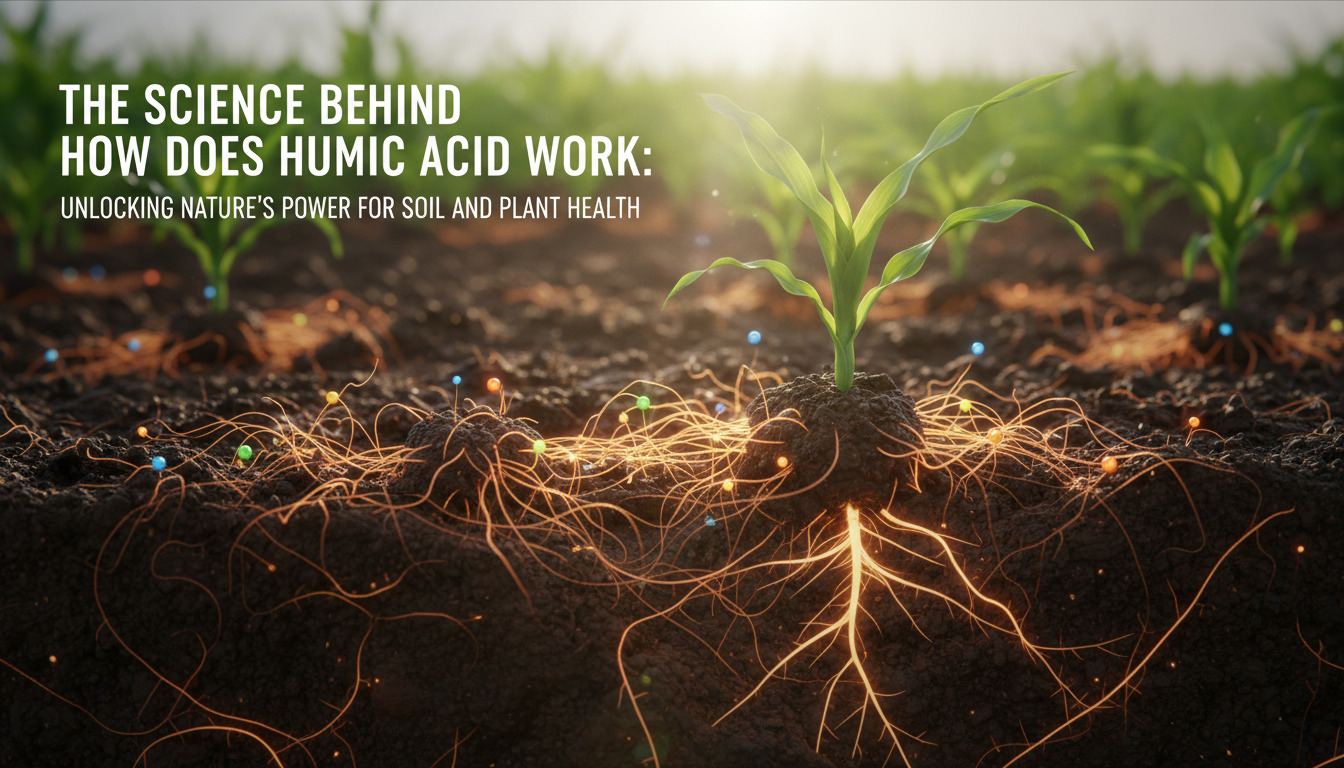
Organic substances originating from the breakdown of plant matter or animal waste that happen naturally over several millennia comprise humic acid. It contains many carbon and beneficial organic (natural) compounds that, today, are vital to enhancing plant growth naturally and improving the overall health of soils in modern agricultural systems.
When farmers want to understand how does humic acid work, the answer is that it enables improved soil structure; increases the availability of nutrients; stimulates beneficial soil microorganisms; holds moisture; increases the aeration of the soil; makes it easier for roots to absorb nutrients; Provides Nutrient Retention.
A high-quality humic acid fertilizer acts as a natural soil conditioner by binding to nutrients, which helps to prevent them from leaching, thus allowing the plant to utilize the essential nutrients when they need them. This leads to stronger root systems, healthier plants, and improved ability for the plant to withstand environmental stress.
Humic acid is one of nature's strongest tools for sustainable agriculture because of how it enhances plant nutrient uptake, provides long-term fertility to soils, and how it helps maximize the potential of both soil and plants when used in field crops and horticulture.
Understanding Humic Acid: What It Is and Its Natural Origins
Humic acid is one of the most significant natural organic compounds for increasing the fertility of soils and improving the health of plants in the ecosystem. It is created naturally from the decomposition of plant and animal residues over time, making humic acid a combination of organic material that helps to enrich our soils. When thinking about how humic acid functions, it is really helpful to know where it came from and how it contributes to a healthy growing environment for plants.
Currently, humic acid is widely used around the world in our agricultural practices as it promotes the absorption of nutrients from the soil into the plant, as well as enhances and improves the structure of the soil and stimulates the beneficial microbial population in the soil. As humic acid is derived from the environment in nature, it is an essential component of sustainable farming systems.
What Is Humic Acid and How Is It Formed?
Humic acids are a naturally occurring byproduct of organic material decomposition. As an example, plant materials and dead animals will break down as they decompose and this organic matter is converted into humic compounds through biological and chemical processes.
Humic acid has certain characteristics:
- Dark organic compound with very high carbon content.
- Formed over the course of many years, or even thousands of years.
- Contains many beneficial functional groups that bond with nutrients.
- Naturally improves plant and soil health.

Natural Sources of Humic Acid in Soil and Organic Matter
In organic materials and soil deposits, humic acid is naturally occurring. Humic acid and its natural sources enhance soil fertility and are part of the nutrient cycle.
Humic acids have several common natural sources, including:
- Leonardite deposits
- Peat and peat moss
- Compost and decayed organic matter
- Forest soils that are rich in organic material

Why Humic Acid Is Essential for Healthy Soil Ecosystems
Humic acid is critical for maintaining a healthy and productive soil ecosystem. It serves as a natural soil conditioner and improves all three properties of soil, including physical, chemical, and biological.
Humic acid provides several benefits to soil ecosystems, including:
- Increasing structure and aggregation of soils;
- Increasing ability of soils to retain moisture;
- Increasing the ability of soils to retain and have access to nutrients;
- Support of beneficial microorganisms.
The Mechanism of Humic Acid: How Does Humic Acid Work in Soil?
In contemporary farming, the question of how humic acid functions & why has it become so essential in enhancing soil quality, is one of the issues most often raised. Humic Acid is a naturally occurring soil conditioner that will improve nutrient availability, enhance the physical structure of the soil and increase biological activity.
High quality humic acid fertilizers will work on several levels, affecting the chemical, physical and biological properties of the soil, thereby contributing to long-term productive and fertile soils.
How Humic Acid Improves Soil Chemistry and Nutrient Availability
The use of humic acids to bond with soil particles allows for improved pathways between soil and roots which will then allow plants to properly absorb nutrients from their environment for successful growth.
Humic acids will increase soil chemistry in the following ways:
- They will help prevent nutrients from being locked up in alkaline or acidic soils
- They will increase nutrients' ability to move around within the root zone.
- They will increase phosphorus and trace elements' availability to plants within the root zone.
- They will stabilize fluctuations of pH in the soil.
Nutrient Chelation and Enhanced Mineral Absorption
While humic acid has many benefits, one of them is the ability to chelate; thus, chelating mineral elements so that plants can easily absorb them through their roots.
Benefits of chelation of mineral elements include:
- Increasing amounts of iron; zinc; calcium; and magnesium ingested by plants
- Reducing leaching of nutrients out of the soil
- Increasing the micronutrient availability to plants within difficult soils
- Increasing root uptake efficiencies.

Increasing Cation Exchange Capacity and Soil Fertility
The term "Cation Exchange Capacity" (CEC) describes how much positively charged nutrients, known as cations, can be stored within the soil (for example: potassium, calcium, magnesium).
Here are four ways that humic acid increases soil fertility:
- By increasing the retention of nutrients in the root zone.
- By reducing nutrient loss via runoff/leaching from fertilizers.
- By improving the long-term productivity of your soil.
- By promoting balanced nutrient availability.
How Humic Acid Enhances Plant Growth and Nutrient Uptake
Farmers use humic acid fertilizer for several reasons, one of which is its ability to help enhance growth of plants in a natural manner as well as increase the efficiency of plant nutrients. Discussion of how humic acid works includes consideration of its overall effect on root development, nutrient uptake by the plant, and metabolism of the plant among the many benefits from the use of humic acids.
Humic acid improves soil and plant conditions through improvement of soil structure and plant physiology and creates a highly beneficial environment where plants grow in a healthier manner and are able to produce at a higher level to meet the demand for food.
Root Development and Stronger Plant Establishment
A healthy root system provides strong support for plants to grow successfully. With the addition of humic acid, roots will form more rapidly and develop finer root hairs, which increases a plant's capacity to obtain water and nutrients.
Root Development Benefits:
- Stimulates root elongation and branching
- Increases feeder root amounts
- Increases water absorption efficiency
- Improves success of seedlings and transplanting.
Improving Nutrient Absorption and Plant Metabolism
Humic acid allows for higher efficiency in nutrient absorption by plants as it helps to improve nutrient availability from the soil while also aiding in the transport of these nutrients within the plant’s tissues. Additionally, humic acids are beneficial for metabolism that stimulates plant growth.
Some of the primary metabolic benefits from humic acid include:
- Better utilization of N, P and K
- Greater availability of micronutrients
- Greater production of chlorophyll and photosynthesis
- Greater enzyme activities and protein productions.
Boosting Crop Productivity with Humic Acid Fertilizer
Direct usage of humic fertilizer does positively respond to crop yield/production by stimulating root development, increasing the plant's ability to take in nutrients. Crops in general will provide improved production at a greater yield level when grown under these conditions better.
Benefits of Humic Fertilizer
1) Increase flowering/rest set
2) Increase uniformity of product
3) Better tolerate drought & stress conditions
4) Improve yield/quality value.

Humic Acid and Soil Microorganisms: Building a Healthier Soil Environment
Good soil is much more than just mineral and organic material. It is also an ecosystem full of billions of microorganisms that are important for plant growth. One of the major ways that humic acid helps farmers produce crops is by creating conditions that encourage microbial life in soil.
A quality humic acid fertilizer serves as a biological growth-promoting substance (catalyst) that improves the health of existing beneficial microorganisms and increases their populations, while at the same time, it improves the overall health and resistance of the soil ecosystem.
Stimulating Beneficial Soil Microbes
Soil microorganisms (e.g., bacteria, fungi and actinomycetes) are essential for nutrient breakdown and plant health. Humic acids provide food and a habitat for beneficial microbes.
Microbial activity is stimulated through soil microorganisms and has benefits, such as:
- Supporting good bacteria and fungi
- Speeding up organic matter breakdown
- Aiding in the natural process of nutrients being released
- Encouraging interaction between plant roots and microorganisms
Enhancing Microbial Activity and Nutrient Cycling
The microbiological processes help with the nutrient cycle by releasing nutrients from organic waste and providing them for the plants to consume.
Enhancements from humic acids for nutrient cycling:
- Accelerated breakdown of plant residue
- Increased availability of nitrogen, phosphorus, and sulfur
- Increased availability of micronutrients
- Improved retention of nutrients in the root zone

The Relationship Between Humic Acid and Soil Biodiversity
Soil biodiversity refers to all forms of life present in the soil. The most common groups include microorganisms, insects and any beneficial(disease/fungi) organism that resides in soil. Generally speaking, highly biodiverse soils will produce far stronger and healthier agricultural systems.
The following are some of the ways that humic acid contributes to soil biodiversity:
- Provides habitat for soil organisms
- Improves structure and aeration of soil
- Increases moisture retention for microbial survival
- Encourages balanced biological activity
Improving Soil Structure, Water Retention, and Aeration with Humic Acid
Among the factors that affect crop growth and crop yield, healthy soil structure is among the most important. A key reason that farmers use humic acid fertilizers is that these fertilizers can enhance the physical characteristics of the soil. When looking at how humic acid does this, its ability to increase soil aggregation, hold moisture in soil, and provide good soil aeration will be highlighted as being able to contribute to the long-term health of soil and productivity of crops.
Unlike traditional fertilizers, which primarily provide nutrients for growing crops, humic acid fertilizers improve the soil itself, therefore, providing optimal conditions for bacterial activity, root growth and overall plant growth and development.
How Humic Acid Enhances Soil Aggregation
Aggregation of soils is how soil particles are held together into cohesive, stable groups or clumps (each clump is called an aggregate). Well-aggregated soils have superior structure, superior drainage, and are more resistant to erosion.
Creating more soil structure through improved soil aggregation has some key benefits including:
1.Stabilizing the formation of aggregates and their pore spaces.
2.Reducing the degree of soil compaction.
3.Enhancing root penetration into the soil and
4.Increasing the flow of nutrients within the soil.

Improving Water-Holding Capacity and Drought Resistance
One of the biggest benefits to humic acid is its ability to increase the ability of the soil to retain moisture. Basically, humic acid acts as a sponge and allows the soil to hold moisture for longer; therefore, plant roots have a supply of water to use whenever they need it.
The benefits of moisture retention include:
- More moisture available in the root zone
- Less irrigation needed
- Increased drought tolerance
- Improved movement of nutrients via water in the soil.
Creating Better Aeration and Root Zone Conditions
Roots need water and air to do their job properly. If your soil doesn’t have the right amount of air, then your roots will not grow as well, be able to take up nutrients as easily, and put your plant under a lot of stress.
Benefits of increased aeration in the soil:
- More oxygen to the root system.
- More microbes in the soil.
- Less chance of waterlogging.
- More respiration and nutrient uptake by the root system.
Humic Acid’s Role in Detoxifying Soil and Reducing Environmental Stress
Humic acid assists in detoxifying soils and helping plants cope with environmental stresses such as heavy metals, salinity, drought, and chemical residues through its ability to reduce soil toxicity. This makes humic acid an excellent tool for farmers who need to mitigate both the effects of toxic pollution in their soils and any other environmental-related stressors placed on their crops and plants.
Using a quality humic acid fertilizer will provide benefits to your crops and plants beyond simply increasing the availability of nutrients; they will also help to protect their crops and soils from adverse conditions that could lead to decreased yields and quality of produce.
Heavy Metal Chelation and Pollutant Binding
Heavy metals and contaminants from manufacturing industries, irrigation water, the use of agricultural chemicals (pesticides and fertilizers), can build up in agricultural soils. Humic acid is effective at binding these toxic compounds, making them less available to plants.
Advantages of chelating metals:
- Binds lead, cadmium and mercury (the most significant metals)
- Reduces the amount of toxic chemical taken up by plants
- Reduces root zone toxicity
- Increases soil safety and soil quality overall

Reducing Salt Stress and Soil Toxicity
Salinity in soil is a widespread and challenging problem in most agricultural areas. Too much salt can negatively affect roots, reduce the ability of plants to get nutrients and grow plants.
When added to the soil, humic acid can positively affect salinity conditions by:
- improving soil structure and drainage
- reducing damage from sodium in the soil
- improving the ability of water to enter and move through the soil
- improving root development to be better able to withstand stress.
Improving Plant Resistance to Drought and Environmental Challenges
Crops will have a much lower yield from environmental stressors like drought, extreme heat/cold, or a lack of nutrients.
Examples of stress-resistance benefits are:
- Better drought resistance
- Better water-use efficiency
- Better nutrient uptake during periods of stress
- Better recovery from environmental damage.
Practical Applications of Humic Acid in Agriculture and Gardening
Correct application is the key to maximizing the benefits of humic acid. Growers often use humic acid as a soil enhancer in a variety of commercial and non-commercial settings, including large-scale farming operations, horticulture, landscaping, and home gardening. The proper understanding of the methods by which humic acid functions in the real world can assist in making the best use of the humic acid product and achieving better results.
Through using a quality product, humic acid can be introduced to numerous growing methods and systems with considerable flexibility, thus providing a far-reaching, versatile solution for an array of crops, soils, and growing systems.
How to Apply Humic Acid Fertilizer Effectively
Humic acid is used for soil application, mixed with irrigation water, as a foliar spray or as part of a planting mix. The most appropriate application method depends on your crops, soil types, and stages of development.
Commonly Accepted Application Guidelines:
- Apply during periods of active plant growth.
- Use with fertilizer applications to enhance the efficiency of the fertilizer application.
- Apply uniformly throughout the field.
- Use application rates according to manufacturer's specifications.
Soil Drench, Foliar Spray, and Fertigation Methods
There are many ways to apply humic acid fertilizers, each having its own benefit depending on the crop or the field situation.
1. Drench application – Mixing humic acids with water (in a solution) and directly applying this to soil in and around the root zone.
Benefits of this application include:
- A more well-organised soil structure
- Better soil/root system development
- Increased stimulation of microbial activity.
2. Foliar spray – Parts of the plant (leaves) are sprayed with the humic acid with direct absorption into the tissues of the plant.
Benefits of this application include:
- Fast supply of Nutrient
- Better recovery from stress.
- Enhance Photosynthesis.
3. Fertigation – Humic acid is applied to irrigation systems for equal distribution.
Benefits of this application include:
- Efficient method of delivering nutrients.
- Lower labour costs.
- Uniformly covered fields.
Recommended Timing and Application Rates for Best Results
Timely application of humic acid will increase its benefit to the crop. To receive full benefit, humic acid must be applied at critical growth stages.
The recommended application timing for humic acid during the crop's development is as follows:
- Prior to planting as a seed treatment
- During the early stages of vascular development
- During the flowering and reproductive stages
- During the vegetative stage, when the fruits are developing, or under stress

Choosing the Right Humic Acid Product for Your Soil Needs
Farmers and gardeners have more options for humic acid fertilizers than ever before due to the increased popularity of these products. Unfortunately, the various brands of humic acid can vary greatly in quality, concentration, and effectiveness. To get the best possible results from your humic acid application, it’s important to understand how humic acid works in order to make an informed decision regarding which type of humic acid product to use based on your soil and crop conditions.
By using the appropriate type of humic acid, whether you are managing field crops, orchards, vegetables, or home gardens, you can improve nutrient use efficiency, improve the health of your soil, and increase the productivity of your crops overall.
Liquid vs Granular Humic Acid Products
Humic acid products come in both liquid and granular forms. Each form offers specific advantages, depending on the application speed and objectives of the farm.
Liquid/Soluble Humic Acid
Liquid humic acids are very soluble and therefore provide immediate benefits to both the plant and to the soil microorganisms.
Advantages of Liquid/Soluble Humic Acid
- Simple to apply through fertigation systems
- Can be applied as foliar or soil drench
- Fast absorption with a quick response
- Ideal for quickly improving the health of the soil/plant
Granular Humic Acid
Granular humic acid products provide the humic substances over time, making them suitable for providing extended benefits of soil conditioning.
Advantages:
- Longer lasting in soil
- Best suited for blending with fertilizer
- Ideal for large scale field application
- Enhances soil structure and health over time

Key Quality Indicators When Selecting Humic Acid
Humic acid products’ performance is primarily determined by two factors: the level of quality they have, and their concentration levels. High-quality products result in higher benefits regarding both soil fertility and plant growth.
Some quality indicators that should be considered include:
- The percentage of humic acid in the product
- How easily the product dissolves when applying it to the soil
- The material that produced the humic acid (i.e., leonardite, etc.)
- Additional beneficial compounds.
Matching Humic Acid Products to Soil and Crop Requirements
Different soils depend on distinctly different varieties of crops, each requiring separate nutritional or structural needs. By choosing an appropriate type of humic acid for your soil, you will realize maximum efficiency and ROI.
Sandy soil, clay soil and high-value crops can benefit from:
- Improving water retention
- Increasing nutrient-holding ability
- Improving aeration and aggregation
- Reducing soil compaction
- Applying liquid humic acid by fertigation or foliar spraying

FAQs
Q1. How does humic acid work in soil?
Humic acid improves soil structure, increases nutrient availability, enhances microbial activity, and helps the soil retain water and nutrients more effectively.
Q2. How does humic acid help plant growth?
Humic acid promotes stronger root development, improves nutrient absorption, supports plant metabolism, and increases overall crop vigor.
Q3. Can humic acid fertilizer replace traditional fertilizers?
No, humic acid fertilizer is best used as a supplement to traditional fertilizers, helping plants utilize nutrients more efficiently rather than replacing them completely.
Q4. How often should humic acid be applied?
Application frequency depends on the crop, soil condition, and product type, but humic acid is commonly applied every 2–4 weeks during the growing season.
Q5. Does humic acid improve water retention in soil?
Yes, humic acid increases the soil's water-holding capacity, helping plants access moisture for longer periods and improving drought tolerance.
Conclusion: Harness the Power of Humic Acid to Transform Soil and Plant Health
How does Humic acid work? This is a question that anyone who works in agriculture should ask themselves if they want to take their practices to the next level and understand why this substance has become such an important part of the modern agricultural movement.
Humic acid can assist every level of agricultural production, from improving soil structure, increasing nutrient availability, increasing microbial activity, and increasing the amount of water retained in the soil to helping stimulate root development, improve nutrient uptake, and helping plants cope with environmental stressors. As a result, Humic acid will be used as a component of sustainable farming practices.


