

Strawberry Fertilizer NPK Guide for Bigger and Sweeter Berries
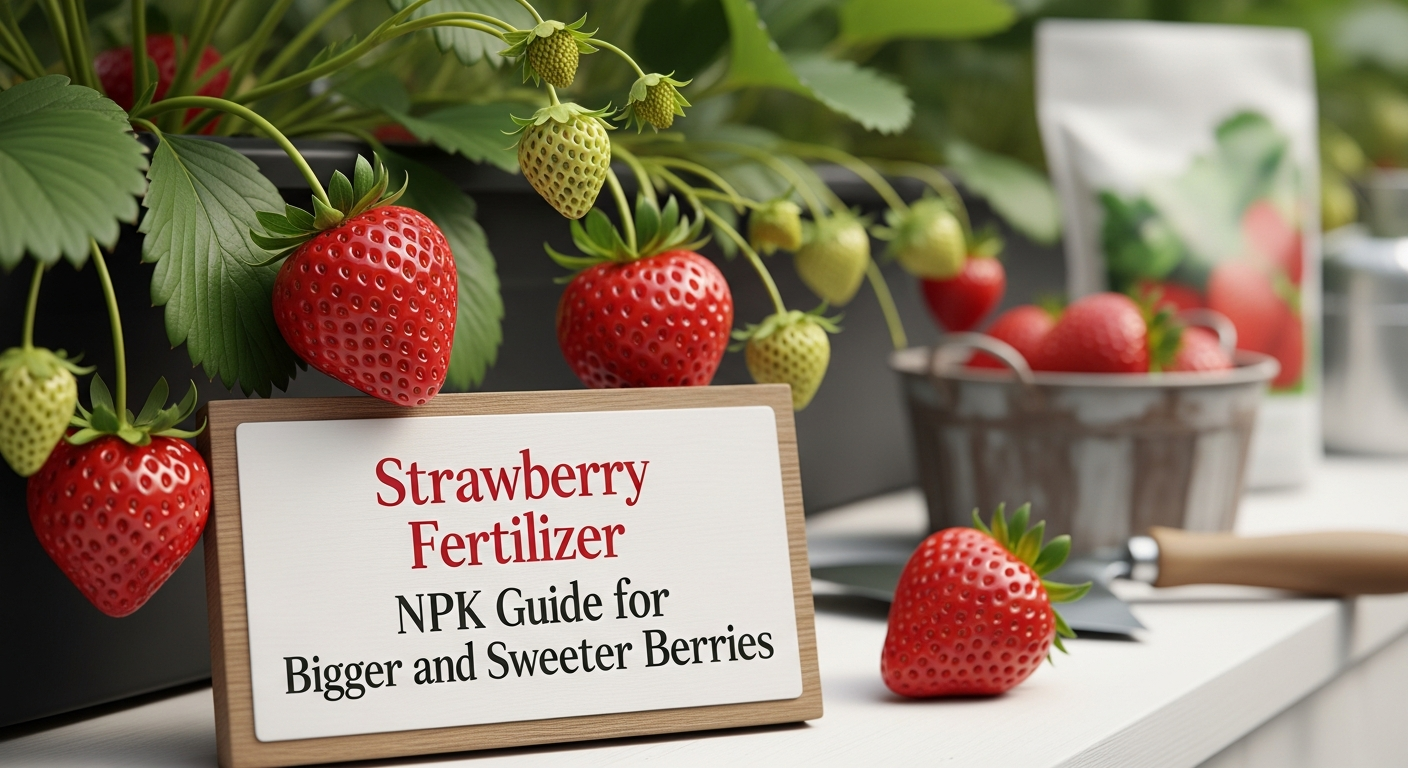
To fulfill the nutritional requirements of strawberries so they produce larger, sweeter, healthier berries, a Strawberry Fertilizer NPK must be chosen wisely as it supplies each nutrient type that strawberries require in order to have a robust root system, abundant green leaves and produce fruit. Properly managing the nutrients will directly affect the size, sweetness, and overall health/vigor of the strawberry plant.
Strawberry plants will benefit most from nitrogen (N), phosphorus (P) and potassium (K) during the entire strawberry plant growth cycle; i.e., nitrogen for green leaf growth, phosphorus for root strength and flower initiation, and potassium for the quality, sweetness, and disease resistance of strawberries. When applied in a balanced manner at each growth stage, these essential nutrients will be absorbed readily by strawberry plants and enable them to develop continuously and stress-free.
Strawberries, like many thousands of other plants grown in gardens and farms around the world, will respond positively when fertilized and nurtured according to a systematic method similar to that which has been developed for fruit trees. By choosing a suitable NPK ratio and applying it at the proper times during the growth cycle, all growers will produce healthier plants, achieve more flowers, and enjoy the benefits of a bountiful harvest filled with luscious, high-quality strawberries packed with nutrients.
Understanding Strawberry Fertilizer NPK, NPK Nutrients, and NPK for Fruit Trees
Strawberries flourish into the sweetest berries through careful nutrient availability throughout their development. Although strawberries require similar nutrients (NPK) as fruit trees, they only need these nutrients in much lower and controlled amounts. When strawberries are fertilized at the appropriate rates during all stages of growth from planting until fruiting, the plants are able to grow optimally while avoiding nutrient overload.
What Strawberry Fertilizer NPK and NPK Nutrients Mean for Crops
Strawberry fertilizer NPK is a ratio of fertilizers containing the three macronutrients in an order that supports strawberry growth.
How NPK Fertilizers Support Strawberry Production: In Practice
- Nitrogen (N) – Promotes leaf and plant growth and vitality.
- Phosphorus (P) – Strengthens root systems and promotes flowering
- Potassium (K) – Increases the size, sweetness and resistance of fruit to disease.
Fertilizer Application Differences Between Heavy-Feeding and Moderate Feeding Crops: Strawberries require moderately high rates of nitrogen and a high rate of potassium when producing fruit. The balanced ratio of NPK nutrients in strawberry fertilizer allows the plants to grow steadily and produce minimal leaf mass, which can negatively impact the quality of the fruit.
Role of NPK Nutrients in Strawberry Plant Development
All the fruits have been placed into their appropriate sections within the NPK chart because of their role in the development of nutritional needs.
How NPK nutrients can help:
- Nitrogen helps the initial growth of a strawberry plant by helping develop healthy and green foliage and runners.
- Phosphorus helps support the development and strengthening of flower buds and root systems during this stage of strawberry production.
- Potassium helps enhance berry size, colour, flavor, and shelf life during this phase of strawberry production.
Fertilizing strawberry plants properly with the proper NPK will allow strawberry plants to develop stronger crowns and have a greater uniformity in their flowering, and yield much larger amounts of fruit than under-fertilizing.
Why Strawberry Fertilizer NPK Differs from Other Crops
With the differences in nutrient requirements and root systems between strawberries, vegetables, and larger fruit trees, it is important to recognize that strawberry roots and nutritional requirements are very different from those of vegetable or tree crops.
Differences in Strawberry Nutritional Requirements
- Due to their shallow root systems, strawberries require lighter and more frequent dosing.
- If strawberries are fertilized too late or given too much nitrogen, they will produce excessive amounts of leafy growth with less fruit.
- Strawberries require higher levels of potassium earlier than many other fruits to ensure that they result in quality fruit.
Although the principles of NP for fruit trees are similar, the total dosage of NPK for strawberries is significantly lower than the amount used for fruit trees.

Ideal Strawberry Fertilizer NPK Ratios Using NPK Nutrients for Fruit Trees
At each growth stage of the strawberry plant, its nutrient requirements vary and applying the correct strawberry fertilizer NPK along with using it at the optimal time will greatly affect the health, size, and sweetness of the berry produced. The Strawberry plant behaves similarly to other plants that produce fruits; therefore, its nutritional needs also fall under the same model as the NPK Nutrient for Fruit Trees; therefore, balanced feeding allows for both vegetation growth as well as quality production of fruit. Providing the appropriate combination of NPK Nutrients for Strawberry plants is essential to developing stronger root systems, producing healthier foliage, and producing uniform and sweeter berries.
Strawberry Fertilizer NPK Ratio for Vegetative Growth
Strawberry plants experience their largest amount of leaf and crown growth at the beginning of their growing season; thus, this is a time when nitrogen is an important nutrient when developing foliage that will help support fruit production.
Recommended Focus of NPK
- Higher Nitrogen
- Moderate Phosphorus and Potassium
Benefits of Applying NPK at the Vegetative Stage:
- Strong leaf production
- Crown development of plants
- Increased capacity of photosynthesis
- Preparation for flowering by plants
Common NPK Ratios Used Are:
- 10-10-10
- 12-12-12
Applying NPK Strawberry Fertilizer at this Stage Helps Strawberry Plants to Develop a Strong Foundation with No Excessive Production of Foliage.
Strawberry Fertilizer NPK Ratio During Flowering Stage
When strawberry plants start flowering they'll naturally want to produce many roots as well as flowers. Also at this time phosphorus becomes more critical for flower production and then further on by supporting pollination and fertilization.
Recommended NPK Focus
- Low/mod Nitrogen Levels
- Higher levels of phosphorus (P)
- Balanced Potassium (K)
Benefits
- Improved root systems.
- Reduced Flower Drop. Improved plant to plant energy transfer.
Commonly Used Ratios
- 5-10-10
- 8-16-16
This stage of development parallels NPK management techniques for fruiting trees whereby flowering directly affects final crop yield.
Strawberry Fertilizer NPK Ratio for Fruiting and Sweetness
Potassium is now the main nutrient element needed during fruiting development. Potassium will improve the size of the berries, sweetness, colour, and shelf-life of the fruit and aid in building plant resistance to stress and disease.
NPK Focus Recommended
- Low Nitrogen (0-5%)
- Moderate Phosphorus
- High (K) Potassium
Benefits of Fruiting Stages
- Increased amounts of sugar and improved flavour; Better quality berries
- Increased plant resistance
- Equal size berries.
Commonly Used Ratios
- 5-10-20
- 6-12-20
If you wish to have larger sweeter strawberries you must grow with an NPK rich in (K).

Types of Strawberry Fertilizer NPK and NPK Nutrients for Fruit Trees
To achieve optimum yields of sweet and high-quality strawberry fruit, it is important to maintain a continuous availability of nitrogen, phosphorus and potassium (N-P-K) fertilization from the time of root development until harvest. Nutrition must be provided consistently for optimal growth and development, similar to fruit trees. Select a suitable fertiliser that corresponds with your unique soil and growth conditions to ensure the highest percentage of available nutrients is present when required.
Granular Strawberry Fertilizer NPK with Long-Term NPK Nutrients
Granular Strawberry Fertilizer NPK is a popular strawberry fertilizer option among strawberry growers because of its slow, steady, and long-term release of NPK nutrients. After being added to the ground, granular NPK fertilizers break down and then continue to release nutrients to plant roots over a long period.
Key advantages of Granular Strawberry Fertilizer NPK Include:
- They provide a long-term supply of NPK nutrients to your strawberries.
- They maintain consistent and steady root and leef growth.
They reduce the need to reapply food frequently.
They are ideal for the pre-planting and early growth stages of your strawberry plants. Granular Strawberry Fertilizer NPK Works especially well in raised beds and in open fields (similar to how you will fertilize your fruit trees with NPK), where long-term feeding of the soil is important for the health and production of your strawberry plants.
Liquid Strawberry Fertilizer NPK for Fast NPK Nutrient Uptake
Liquid fertilizers are a great way to feed strawberry plants. Strawberry plants will utilize the nutrients quickly, and by using liquid fertilizers when the strawberry plants require immediate feeding, particularly during the flowering and fruiting stages, growers can give their strawberry plants a better chance to have vigorous growth!
Some Key Benefits of Liquid Strawberry Fertilizer NPK:
- Fast uptake of the npk nutrients;
- Fast correction of nutrient deficiencies;
- Increase in flowering and size of fruit;
Ideal for Use on Drip Irrigation Systems or as Foliar Applications;
Liquid Strawberry Fertilizer NPK is particularly beneficial in the highest growth stages of strawberry planting, as this is when strawberry plants will be looking for immediate energy from liquid feeding methods, similar to intensive npk for fruit trees feeding programs.
Organic Strawberry Fertilizer NPK Similar to NPK for Fruit Trees
Organic fertilizers release their nutrients over a longer period of time and provide significant soil improvement. Common sources of Organic Fertilizer include compost, manure, seaweed and plant based materials; these products are commonly used to produce MOST fruit crops.
Some Key Benefits of Organic Strawberry Fertilizer NPK
- Improved Soil Structure & Microbial Activity;
- Gently Available And Lasting Source of npk Fertilizer;
- A Reduction Of The Chance For Nutrient Burn;
Support for Sustainable Agriculture Practices;
Organic strawberry fertilizer NPK is similar to organic npk for fruit trees, and therefore would be an ideal option for continuing soil fertility, and to grow fruit using ecologically friendly practices

How to Apply Strawberry Fertilizer NPK and NPK Nutrients Safely
Balanced application of fertilizer at the right time during the life cycle of strawberry plants will provide sufficient nutrients for healthy growth without damaging their roots or providing excessive amounts of foliage. Strawberry plants are similar to fruit trees in that they benefit from several small, uniform shots of NPK fertilization over their entire growth period. Applying the appropriate amount of NPK fertilizer at the proper time enhances nutrient uptake by plants and contributes to maintaining soil quality while producing higher yields of healthier fruit.
Strawberry Fertilizer NPK Application at Planting Time
Proper application of fertilizers applied at planting time provides strawberry plants with healthy canopy and root systems.
Guidelines for Planting
- Utilize Strawberry Fertilizer NPK that is low/pH balanced (I.e., 10-10-10)
- Incorporate fertilizer evenly throughout the entire volume of the planting mix before planting.
- Avoid having the young root system of strawberry plants come into direct contact with fertilizers.
- After the strawberry plant has been planted, water thoroughly to begin the nutrient activation process.
Importance of the Above
- Assists Early in Establishing the Root System
- Reduces Transplant Stress
- Continues to Supply Nutrients Throughout the Early Stages of Plant Development.
Early Fertilization of Strawberries Provides a Foundation for Flowering and Producing Strawberries During the Growing Season.
Fertilizing Schedule Using Strawberry Fertilizer NPK
Different stages of strawberry growth require different nutrients, and utilizing a proper fertilization schedule will help to prevent excessive fertilization and/or nutrient deficiencies.
Here's the recommended strawberry fertilization schedule:
- 2-3 weeks post planting: Fertilize with a light application of NPK
- For vegetative stage: Use a balanced NPK, promoting leaf and runner growth
- Pre-flowering: Reduce nitrogen and increase phosphorus and potassium.
- Post-harvest: Fertilize lightly to restore the plant's health.
Tips for Fertilizing Strawberries:
- Fertilize every 3-4 weeks during the growing season
- Do not apply high amounts of nitrogen during the flowering and fruiting processes.
- Always water after applying fertilizer.

Soil Preparation for Strawberry Fertilizer NPK Efficiency
The ability of Strawberry plants to take up NPK (nitrogen, phosphorus, potassium) nutrients is greatly enhanced when Healthy Soil is utilized. A properly prepared Strawberry plant's soil allows for the best possible utilization of applied fertilizers, while also minimising the amount of NPK nutrients lost.
To prepare your soil for effective Strawberry plant growth, the following steps should be completed:
- Loosen Your Soil to Promote Proper Drainage and Aeration.
- Add Organic Matter to your soil, such as Compost or Well-rotted Manure.
- Maintain pH levels between 5.5 and 6.5 (slightly acidic).
Remove weeds from the area where you will apply strawberry fertilizer, prior to applying the fertilizer. Test Your Soil prior to applying the first Strawberry Fertiliser (NPK) Good Preparation of Soil, allows strawberry plants to utilize NPK nutrients effectively and produce strong, healthy strawberry plants, with larger, sweeter strawberries.
Common Strawberry Fertilizer NPK Problems and NPK Nutrient Imbalances
Strawberry plants are quite sensitive to how much nutrients (fertilizer) they receive. A very small miss in fertilizer, can affect the size of berry up to the sweetness and yield. Incorrect NPK (Nitrogen/Phosphorus/Potassium) ratios and applying fertilizer nutrients at incorrect times (before they are needed, etc.) are common causes of imbalance. The strawberry plant grows its roots and flowers and develops its fruit by relying on balanced forms of NPK (the three macronutrient categories). By being aware of these types of strawberry growing issues, strawberry growers can take steps to rectify them early, to maintain the quality of their crops, and reduce the chance of failure.
Overuse of Strawberry Fertilizer NPK and Excess NPK Nutrients’
Typically, strawberry plants that are over-fertilized will display the following:
- Leaf growth that produces large amounts of foliage compared to the amount of flower
- A dense dark green set of foliage and/or dense, dark green stalks will produce fruit of soft rotting characteristics with no taste.
- The delayed fruiting and/or quality of fruit taste will be negatively affected and lessen.
- The risk of spreading fungal diseases will be increased.
Excess nitrogen will usually be the most common cause of a strawberry plant's lush, overgrown appearance and low production of fruit. Excess potassium has also been known to prevent the absorption of other nutrients, and when amounts of strawberry fertilizer NPK are applied as suggested, growers are usually able to avoid these conditions.
Deficiency of NPK Nutrients in Strawberry Plants
Deficits of vital nutrients in strawberry plants cause weakness and lower both yield and quality.

Strawberry Plants with Nutrient Deficiencies May Show Fewer Runners, Produce Berries that Are Not Uniform in Shape, and Have a Shorter Shelf Life. To Maintain a Constantly Growing Plant with Identical Production Levels, Growers Should Ensure That Strawberries Receive Ideally Balanced NPK Nutrients.
Correcting Strawberry Fertilizer NPK Issues Naturally
Most Nutrient Imbalances Can Be Corrected by Using Natural and/or Sustainable Methods That Will Maintain the Health of the Soil.
Natural Solutions for Substance Imbalance
- Add Compost or Well-Rotted Manure to Increase Nutrient Availability.
- Create Worm Castings (Vermicompost) to Improve Microbe Activity.
- Add Mulch to Protect Soils from the Loss of Moisture and Nutrient Content.
- Use a Low-Rate Balanced Strawberry Fertilizer NPK.
- Rotate Your Strawberry Crops and Regularly Space Them from Each Other.
Strawberries Can Benefit from Nutrient Management of NPKs Like Trees Produce Fruit by Feeding Them Slow and Steady to Produce Healthy Plants and Better Quality Berries.
Enhancing Strawberry Fertilizer NPK with Soil Practices Used for Fruit Trees
The use of soil practices that help fruit trees is beneficial to strawberries because they improve the absorption of nutrients from fertilizers by strawberries.Soil practices commonly used to assist the application of fertilizer NPK to fruit trees (e.g., adding organic materials, using mulch, alleviating deficiencies in micronutrients), greatly improve the strength of the plants, the size of the strawberries, and the sweetness of the strawberries. When both soil health and fertilizer NPK are in sync, strawberries produce higher-quality yields and more consistently.
Organic Matter to Support Strawberry Fertilizer NPK
The addition of organic materials is an important factor in increasing both the availability of nutrients in the soil and the ability of the soil to hold moisture for strawberry plants. The addition of materials such as compost, well-decomposed animal waste, and vermicompost assists with the maintenance of moisture levels and the increase of beneficial- and soil-building organisms, to increase the effectiveness of strawberry fertilizer NPK.
The benefits of adding organic materials are:
- Drastically improves soil aeration and root penetration
- Greatly increases the “nutrient holding capacity” of the soil
- Increases the beneficial microbial activity in the soil
- Decreases the leaching of nutrients either through irrigation or rainfall.
Mulching Benefits Alongside Strawberry Fertilizer NPK
The practice of mulching provides significant advantages for strawberry culture in combination with the application of strawberry fertilizer NPK. Using organic mulch materials such as straw, dried leaves, or composted bark protects the soil surface while allowing for the creation of a favorable growing environment.
The main advantages of mulching:
- Helps conserve moisture and reduces water stress on your strawberry plants
- Stabilizes the temperature of the soil
- Prevents other competing weeds from accessing essential nutrients
- Reduces nutrient loss through surface runoff
The application of mulching practices, such as these, assist strawberry plants with retaining NPK nutrients that have been previously applied which translates into improved quality berries, lower stress levels, and longer periods of production.
Micronutrients Supporting NPK Nutrients in Strawberries
Although NPK makes up the bulk of nutrient requirements for strawberry plants, micronutrients also play a role in achieving optimal growth and development. Micronutrients such as calcium, magnesium, boron, zinc, and iron provide enzymes, structure to cells and development of fruit in addition to nutrient support from NPK sources.
Micronutrient Benefits to Strawberry Production
- Calcium: Helps to firm up fruit so it is more durable when harvested and can be stored longer
- Magnesium: Supports photosynthesis, providing the energy necessary for growth
- Boron: Crucial to the flowering process and successful fruit development (forming the actual berry)
- Zinc & Iron: Prevents yellowing (chlorosis) of leaves, prevents stunted growth due to deficiencies.

FAQs:
Q1. What is the best strawberry fertilizer NPK ratio?
A balanced ratio like 10-10-10 works well early, while 5-10-10 is ideal during flowering and fruiting.
Q2. Can principles of NPK for fruit trees apply to strawberries?
Yes, soil management and balanced nutrition practices used for fruit trees also benefit strawberry plants.
Q3. How often should strawberry fertilizer NPK be applied?
Strawberry fertilizer NPK should be applied every 2–4 weeks during active growth and fruiting.
Q4. Are organic sources enough for NPK nutrients in strawberries?
Organic sources can supply NPK nutrients but may act slower than synthetic fertilizers.
Q5. What happens if NPK nutrients are unbalanced?
Unbalanced NPK causes poor growth, low fruit quality, reduced yield, and higher disease risk.
Conclusion: Improve Strawberry Yield with the Right Strawberry Fertilizer NPK
To produce the biggest, sweetest, and healthiest strawberries possible, it is important to provide the right nutrients in a balanced way. The use of the correct strawberry fertilizer NPK provides enough nitrogen for healthy plant growth; supporting a strong root system and flower development with phosphorus; and increasing fruit quality and sweetness with potassium. Strawberry plants with balanced nutrients will develop healthy plant structures and give consistent fruit yields.
Correctly timing the application of NPK for each of the crop's growth stages and using good soil management practices to help plants efficiently take up nutrients will assist the grower. Regularly checking, applying as required, and avoiding the overuse of fertilizers will assist in preventing common nutrient deficiencies and/or excesses and preserve soil quality.
By applying a balanced fertilization program, strawberry growers can improve the quantity of strawberry production and maintain their ability to be sustainable producers. By applying the right strawberry fertilizer NPK, the grower will enhance the yield but also improve the flavour, size and overall quality of their berries for each growing season.