

The Complete Guide to Onion NPK for Optimal Growth and Yield
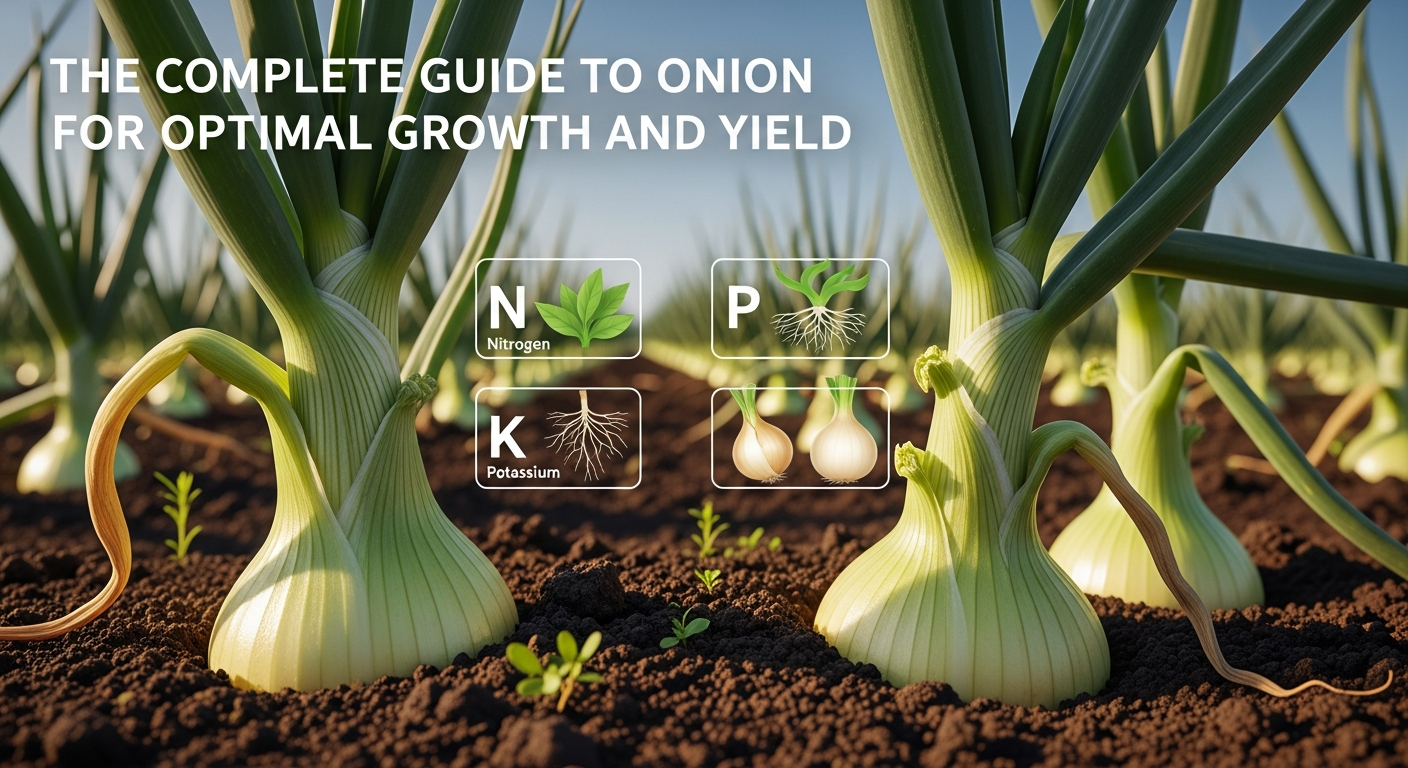
NPK fertilizer is used to grow healthy onions. Onions need balanced nutrition to produce strong, healthy bulbs and tops. The use of an appropriate NPK fertilizer for onions provides essential nutrients to aid plants' continual growth, proper bulb development, and better yield quality as they mature. Proper management of nutrients can result in producing onions that are uniform and marketable.
As nitrogen, phosphorus and potassium provide the most important nutrients for onions, NPK fertilizers supplied to onions supply nitrogen for foliage; phosphorus for roots; and potassium for size, firmness and storage. Nutrients for onions are readily available for absorption when applied in the proper ratio, which makes npk for onion growth both efficient and dependable.
When onions are grown from seedling to bulb expansion to maturity, they respond most favourably when fertilised properly. Farmers can achieve higher yields and quality bulbs, and more consistent crops with every field being productive when they select the correct NPK ratio of fertiliser for onions and apply it correctly at the different growth stages.
Understanding Onion NPK and Its Importance in Farming
The onion crop is one of the most sensitive to nutrients and will respond rapidly to proper fertilization. By understanding the different nutrients that comprise an onion's N-P-K, the grower can provide the correct nutrients at the right time to produce healthy leaves, strong bulbs and maximum yields that can be sold at the market.
The growth cycle of onions is defined, and their root structure is shallow, therefore growers need to ensure a balanced N-P-K to allow onions to develop uniformly and grow steadily. Correcting nutrient deficiencies also helps reduce onion stress, increase the size of bulbs and improve the storage quality of bulbs.
What Does Onion NPK Mean?
The term N-P-K is a reference to the three major macro nutrients (N) Nitrogen, (P) Phosphorus and (K) Potassium which onions need to grow.
- N-P-K: Nitrogen, supports leaf development and is needed to support the development of the bulb
- N-P-K: Phosphorus, helps with root establishment and early growth
- N-P-K: Potassium, supports bulb firmness, size and longevity on the shelf.
Applying the correct N-P-K to an onion plant allows for each of the three macronutrients to support a specific function during each stage of plant growth and helps to ensure that onions develop evenly and are able to be harvested efficiently.
Why Balanced Nutrition Is Critical for Onions
Balanced nutrition is essential for producing onions because the amount of each nutrient supplied influences how quickly their bulbs grow from their leaves. If any nutrient becomes deficient then growth overall reduces and the yield becomes lower in both quantity and in quality of production.
Balanced Onion NPK
- Allows continuous production of leaves but does not create excessive softness in leaves.
- Produces a smooth bulb growth.
- Reduces the chance of premature bolting and the chance of poorly shaped bulbs.
- Provides enhanced resistance to environmental stresses and disease.
Too much nitrogen may delay the growth of the bulb, too little potassium would decrease its quality Therefore N-P-K balance must be provided on a continuous basis through the growing cycle for onions.
Onion Nutrient Requirements Explained
Nutrient requirements change as onions mature from their initial growth to their harvested bulbs, therefore it is essential to use the proper N-P-K fertilizer required.
Key Nutrient Requirements by Onion Growth Stage:
- Initial Growth: Early initial growth requires higher levels of nitrogen.
- Mid-Growth: Mid growth requires a balanced N-P-K ratio for proper initiation of bulb formation.
- Bulb Formation: At the very end of growth, the concentration of Potassium will be the primary nutrient required for development of bulb size and strength.

Role of NPK Nutrients in Onion Crop Development
Whatever the crop, onions are a shallow-rooted, heavy feeding variety of plant requiring good quantities of and evenly distributed nutrition in order to establish themselves and form bulbing. The right onion NPK will provide adequate nutrition to produce healthy leaves, strong roots and ample sized, high quality, storability bulbs.
The three primary nutrient components of NPK—Nitrogen, Phosphorus and Potassium—have different roles to play at various times throughout the growth cycle, making a correctly applied npk fertilizer for onions important for developing the onion plants in a consistent manner and producing maximum yield.
Nitrogen for Leaf and Top Growth
Nitrogen is necessary at the beginning of a bulb-onion's vegetative growth cycle, helping to create consistent, healthy leaf growth. As such, the size of the final bulb will ultimately be based on the amount of and the quality of leaf foliage that were created by using nitrogen.
- Encourages the growth of healthy, upright, green leaves
- Increases the amount of energy produced through photosynthesis
- Helps to firmly root the plant and provide it with stability during early growth
Determines the size of the final bulb If onion growers apply sufficient amounts of nitrogen through their npk applications, they will produce more leaves, which will end up developing into larger, heavier bulbs than if insufficient nitrogen were used. However, if too much nitrogen is applied late in the growing season, it may delay the maturity of the bulb.
Phosphorus for Root Strength and Early Growth
Phosphorus promotes onion growth during early stages of development by strengthening the root system and increasing efficiency of nutrient uptake.
- Supports rapid root formation
- Contributes to seedling vigor
- Aids in establishment of early seedlings
- Increases the uniformity of crop.
When planting onions, the use of a npk fertilizer containing adequate phosphorus allows onions to establish quickly and better tolerate stress at the early stages of growth.
Potassium for Bulb Size and Storage Quality
Potassium is essential for development and maturation of onion bulbs, and will greatly affect onion quality.
- Increases the size and firmness of bulbs
- Increases the resistance of onion bulbs to disease
- Increases the length of time that onion bulbs can be stored, and the quality of store onions
- Provides greater tolerance for both heat and moisture stress
Using potassium-rich onion NPKs will produce onions that have greater value in the marketplace due to the well-formed bulbs, as well as less loss of bulbs after harvest.

Ideal Onion NPK Ratio at Different Growth Stages
In order To Grow Healthy Plants and Produce Balds Onions Require Specific Nutrients at Each Growth Phase, Therefore It is Important To Provide them With The Correct Onion NPK At The Right Times. As Growers Adjust The Ratio Over Time,
This Affects The Onion's Root System And Leaf Development And Ultimately Effects The Yield. When Growers Understand Which Nutrients An Onion Requires At Each Stage Of its Life Cycle They Are Able To Most Efficiently Provide Nutrients To An Onion.
NPK Ratio for Seedling and Transplant Stage
At The Seedling Stage Growth For An Onion Focuses Primarily On Root Establishment And Initial Leaf Development. Providing Young Onions With An Onion NPK Ratio That is Correctly Balanced Will Allow For Less Stress When Settling In And With A Moderate Amount Of Nitrogen Added To Help Support Leaf Development.
Main Nutritional Focus of Onions at The Seedling Stage
- Ample Nitrogen To Support Initial Leaf Development
- An Elevated Amount Of Phosphorus To Enhance Root System Development
- A Sufficient Amount Of Potassium To Help Strengthen The Onions
- Recommended NPK Ratios For Newly Planted Seedlings Are 10-20-10 or 12-24-12
During The Seedling Stage It is Best To Apply Onion NPK Fertilizer Reasonably And Liberally, To Prevent Over-Feeding Delicate Roots And Young Plants.
Nutrient Needs During Vegetative Growth
Vegetative growth is the most important period for creating foliage, which is the primary component of bulb size later. Therefore, onions need an increased level of nitrogen (the "N" part of an "N-P-K" grade for onion fertilization).
Concentration on Key Nutrients
- High nitrogen: For foliar and stem growth.
- Balanced phosphorus: For root growth.
- High potassium: For better plant growth.
- The Recommended Ratios of N-P-K 20-10-10 or 15-10-10
Providing the appropriate N-P-K levels during the vegetative growth phase produces robust foliage that supports bulb development in the subsequent growth stages.
NPK Requirement During Bulb Formation
Bulb formation is the most critical growth stage concerning yield and bulb quality. During this period, the amount of nitrogen supplied to the plant needs to be lowered while the amount of potassium supplied to the plant needs to be increased to create larger, denser, and longer-storing bulbs.
- Concentration on Key Nutrients
- Decreased nitrogen: This reduces excess foliage.
- Moderate phosphorus: This is also the energy transfer agent.
Increased potassium: This has the greatest effect on bulb size and quality, especially when comparing multiple cultivars.
- The Recommended Ratios of N-P-K 10-10-20 or 8-16-24
By applying the proper N-P-K mix during bulb development, you will be able to sell your bulbs at a higher value and with a longer shelf life.

Choosing the Right NPK Fertilizer for Onions
The correct type of fertilizer will promote healthy growth for onions and increase the quality of the resulting bulbs. Onions are highly sensitive to nutrient imbalances, thus it is necessary to select an NPK for onions to promote proper leaf development, build strong root systems, and create a quality bulb that will grow to a standard size.
Understanding how to select the type, source and description of the NPK fertilizer will allow onion farmers to efficiently apply the proper amounts and types of Fertilizer for Onions to eliminate or avoid many of the most common problems associated with growing onions.
Granular vs Liquid NPK Fertilizers
There are two forms of NPK Fertilizers, Granular and Liquid; both types will provide your plants with the needed nutrients but differ in how they are applied and the speed at which those nutrients are able to be used by the plants.
Granular NPK Fertilizers:
- Provide slow, steady release of nutrients from Granular to plants.
- Apply Granules to soil prior to planting, or as a Top Dressing of your crops.
- Best used for long-term feeding of the crop as the bulbs are forming.
- Most commonly Used NPK Fertilizer for Onions when produced using Field Cultivation Methods.
Liquid NPK Fertilizers:
- Absorb nutrients quickly into the plants.
- All NPK can be applied using either Foliar Spray or Through Drip Irrigation.
- Best to use when crops are in an early stage of growth or under stress.
- Will assist you in quickly correcting any NPK Deficiencies your Onion Crop may have.
Recommendation: Use a Granular Fertilizer as your Primary Nutritional Source + Liquid Fertilizer for Quick Correction of Any Nutritional Deficiency.
Organic vs Inorganic NPK Options
There are Organic NPK Sources for Onion Farmers that are going to be different than inorganic...
Organic NPK Sources Include:
- Compost
- Farmyard manure
- Vermicompost
- Build Soil Structure, Enhance the Microbial Activity
- Nutrients are released slowly over time.
- Encouraging Soil Health in the Long Term.
Inorganic NPK Fertilizers Include:
- Very specific nutrient composition.
- Results come quickly and predictably.
- Good for supplying immediate nutrient requirements of the crop.
- Common type of fertilizer used for onions in commercial agriculture.
Best Approach to Fertilizing Onion: Combination of organic sources of matter with inorganic Onion NPK provide balanced and sustainable nutrition for the crop.
Reading Fertilizer Labels Correctly
Farmers will know how to fertilize their crops correctly by being able to accurately read the nutrient labels on fertilizers.
NPK Labels on Fertilizers:
- The 1st number on a label is Nitrogen (N) which supports leaf development.
- The 2nd number on a label is Phosphorus (P) which supports strong rooting.
- The 3rd number on a label is Potassium (K) which supports size and storage of bulbs.
Examples:
- 10-10-10 is a balanced nutritious fertilizer.
- 15-15-15 will produce rapid early vegetable growth.
- 12-24-12 will improve root and bulb development.

How to Apply NPK Fertilizer for Onions Effectively
The application of onion NPK is just as important as the choice of the right fertilizer blend. Onion plants have shallow root systems and need specific NPK amounts during various growth stages, so it's vital to ensure that nutrients are applied at the proper quantity and rate.
By using the best application method for onion NPK fertilizer, you can maximize the amount of nutrients absorbed and minimize the amount wasted, therefore allowing for even/optimal growth of each bulb. A proper application plan allows for maximum production, strength and health of onion plants.
Basal Application Before Planting
A basal application is the primary and most critical component of the onion fertilization cycle that occurs before planting/transplanting (i.e., direct seeding). This is when a predetermined amount of NPK fertilizer is applied to the final soil preparation.
- It provides immediate access to and availability of nutrients at the onset of root development.
- Phosphate (the P in NPK) encourages the development of the root structure, creating strong roots.
- Establishes vigor at germination for rapid and uniform germination.
The preparation for a basal application is critical for maximizing the potential health of onions and the efficient utilization of nutrients to promote the full growth of onions.
Split Application for Better Efficiency
The split application method, which applies NPK fertilizer to onion crops in at least three separate applications instead of one large application, will:
- Prevent nutrient leaching due to rainfall, irrigation or incorporating into the soil.
- Allow for the gradual availability of nitrogen for continued growth of plant leaves.
- Promote better bulb development during the middle of the crop growth cycle.
Improve the utilization of NPK fertilizer. The split application method allows growers to help ensure that NPK will be available when their onion plants require it.
Side Dressing and Fertigation Methods
Fertilizer delivery systems, such as side dressing and fertigation, provide an efficient way to provide nutrients directly to the onion root zone.
Side dressing:
- The side dressing method involves applying NPK fertilizer to the side of a plant row near where onion plants are growing.
- This technique is beneficial during the early periods of rapid plant growth since it prevents competition for nutrients between onions and weeds.
Fertigation:
- Fertigation is the method of applying soluble NPK fertilizers directly to the onion plants through irrigation.
- This method provides a means of providing a uniform concentration of nutrients to the crop regardless of where the crop is located within a field.
- Both side dressing and fertigation improve the uptake of nutrients by the onion crop and enhance the growth of uniform size and weight of the bulb.

Common Nutrient Deficiencies in Onion and Their Solutions
Like most crops, an onion is impacted by an unbalanced supply of nutrients. Even subtle nutrient imbalance can directly impact the overall quality of an onion's bulb (size, shape, etc.) and potential for storage. It is important that onion growers manage their onion's NPK balance to promote consistent growth, healthy foliage, and uniformity of bulb development.
Being aware of common nutrient deficiencies enables onion growers to apply the appropriate corrective measures in a timely manner using both the correct NPK fertilizer blend and proper soil management techniques.
Nitrogen Deficiency Symptoms in Onion
Nitrogen is essential for vegetative tissue (leaves) to create a supportive environment for proper bulb formation in onions.
Symptoms of a Nitrogen Deficiency
- Pale Green or Yellowing Ends of Leaves
- Slow Grow (Earlier Stage of Vegetative Growth)
- Thin Weak Stems of Foliage
- Smaller Bulbs at Harvest Time
Why Do Onions Have a Nitrogen Deficiency?
- Low Organic Matter Content of Soil
- Heavy Watering Resulting in Leaching
- Insufficient Nitrogen Present in NPK Fertilizers for Onions
Solutions: Utilizing Nitrogen Fertilizers for Onions Throughout the Beginning of the Vegetative Cycle (3) Growing Period Depending On Need.
Phosphorus and Potassium Deficiency Signs
Phosphorus and Potassium play an important role in the strength of roots, the expansion of bulbs, and the overall quality of building storage for the crop.
Symptoms of Deficiency of Phosphorus:
- Under-developed roots
- Delayed maturity
- Less bulb initiation
- Leaves are dark green or dull in color
Symptoms of Deficiency of Potassium:
- Yellow or Brown tips on Leaves
- Weak plant stems that are prone to lodging
- The instability of bulbs
- Reduced quality of the shelf-life of the bulb.
Why is this Important? When bulbs are developing and lack sufficient phosphorus and potassium, the onions produced from these bulbs are of low quality, even though the foliage looks healthy.
Correcting NPK Imbalance Through Soil Testing
Soil testing is the most accurate method to determine nutrient deficiencies and to recommend the right NPK ratio for onions.
Steps to Correct the NPK Imbalance:
- Perform soil tests prior to planting
- Identify any nutrient deficiencies or excesses
- Identify the type of fertilizer that is required based on the results of the soil test
- Apply the fertilizer according to the recommended rate
- Retest the soil in the middle of the growing season, if necessary
Benefits of Soil-Based Correction of NPK Imbalance:
- Reduce over-application of fertilizers.
- Improve nutrients' effectiveness for crop production.
- Improve the yield and increase uniformity of bulb size.
- Improve the future fertility of the soil.

Benefits of Using the Right NPK for Onion Farming
Onion growing has specific requirements for nutrition in order to grow well-balanced and large bulbs, as well as to increase their market value. The application of the proper NPK for onions allows for the establishment of sufficient leaves, good roots, and the successful structure of the finished bulb.
The correct application of onion NPK at the appropriate stages of crop growth will improve yield, reduce crop loss, and provide farmers with a steady harvest. The application of NPK fertilizers for onion growing that are in balance will provide both the desired quality of crop and maximum profit to the grower.
Improved Yield and Bulb Uniformity
When the proper NPK is applied to onions, it promotes even growth throughout the entire growing area of the onion field, thus resulting in the largest yield and uniform size of the onions.
- Nitrogen helps to develop the green leaves on the top of the onion that feed directly into and support the formation of the bulb.
- Phosphorus helps to develop the root system of an onion; therefore improving the uptake of nutrients.
- Potassium helps to make the bulb enlarge and become firm.
Therefore, applying the appropriate balanced NPK fertilizer for onions will assure that the bulbs reach their optimum maturity at the same time, making it easier and quicker for farmers to harvest their crops.
Better Storage and Market Quality
Onions that have been supplied with nutritional nutrients via an appropriate NPK (nitrogen, phosphorus, potassium) fertiliser that is specifically manufactured for onions have better keeping quality and appearance, making them more attractive for appropriate storage & shipment usage.
- The addition of potassium for onions enhances the bulb's outer skin's strength, helping prevent rotting.
- The balanced application of nutrients for onions reduces the potential for bulbs being soft and discolored.
- When onions are of consistent size and colour, the likelihood of acceptance for sale is greatly increased for those onion products.
Applying NPK fertiliser at the appropriate rates for the onions will result in onions with greater storage capability and higher prices actually achievable in the marketplace.
Higher Profitability for Farmers
Applying proper NPK fertilizers directly influences farm income by increasing the quality of yields, decreasing losses, and decreasing waste.
- Increased marketable yield per acre
- Decreased post-harvest losses due to superior bulb quality.
- Decreased input waste as a result of utilizing nutrients better.
Utilizing a balanced NPK fertilizer when growing onions will provide a more profitable return for all of the above inputs or at even less overall input cost.

FAQs:
Q1. What is the best NPK fertilizer for onions?
A balanced ratio like 10-10-10 or 12-24-12 works well for onion growth and bulb development.
Q2. When should onion NPK fertilizer be applied?
Onion NPK fertilizer should be applied at planting and again during active vegetative growth and early bulb formation.
Q3. Can too much nitrogen harm onion bulbs?
Yes, excess nitrogen causes excessive leaf growth and results in soft bulbs with poor storage quality.
Q4. Is soil testing necessary for onion NPK application?
Yes, soil testing helps determine the right nutrient balance and prevents over- or under-fertilization.
Q5. Can organic manure be combined with NPK fertilizer for onions?
Yes, combining organic manure with NPK fertilizer improves soil health and nutrient efficiency.
Conclusion: Smart Onion NPK Management for Better Harvests
The best way to grow onions successfully is to provide proper nutrition at the time that is best for the plant's development. Wise management of NPK is crucial for early growth of strong foliage and proper bulb formation and maturity of the onions. A well-balanced application of NPK for onions will produce greater yields, larger bulbs and better overall crop quality, while eliminating nutrient waste.
Testing your soil before planting, applying all NPK at the appropriate times and in balance will help farmers eliminate many of the common nutrient deficiencies that result in soft bulb formation or a short storage life. Using compost or other organic matter together with NPK in growing onions will further improve the health of the soil and the plant's ability to take up nutrients. A carefully thought out NPK application strategy will produce healthier plants, create greater market value and be a consistent supplier of a profitable onion harvest year after year.