

NPK for Banana Plants: The Essential Guide to Healthy, High-Yield Crops
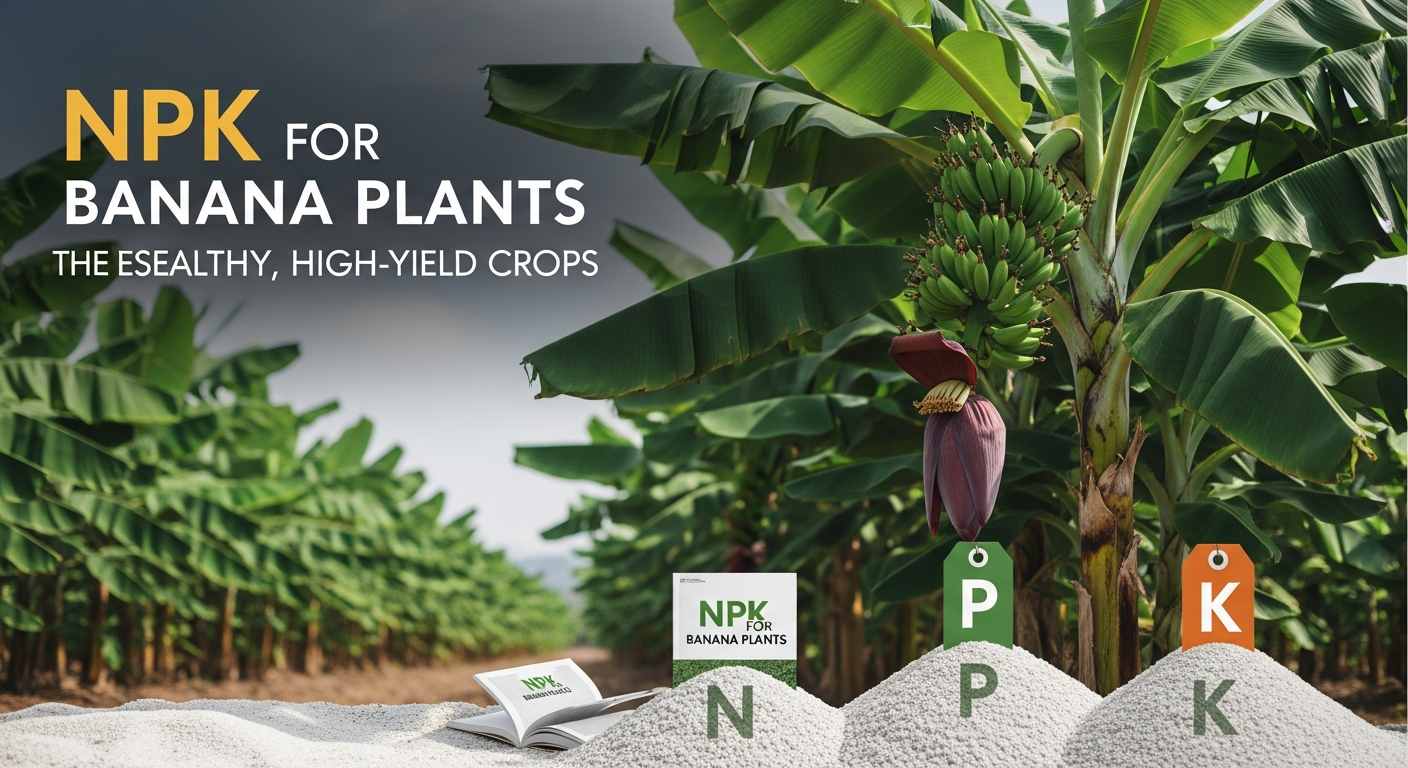
Banana plants are known to be very hungry and need a complete dietary regime of nutrients, so that they can grow tall, strong, and produce lots of fruit. The use of the correct NPK for banana plants is key in supporting the rapidly developing foliage, stems, and the overall health of the leaves.A good nutrient management program will ensure that banana plants remain healthy and that they will support the large fruit bunches that will eventually develop.
Banana plants require N, P & K as part of their growth cycle. Each of N, P, K plays an important part in the production of fruit. The nitrogen provides for the lush green foliage. The phosphorus supports the root development and plants early in their growth cycle. The potassium helps with the size and sweetness of the fruit as well as the resistance in the plants to diseases. When each of these elements is present in the correct amounts, the nutrients are easily absorbed by the plant which improves all aspects of the performance of the plant.
The application of the correct npk fertilizer for banana plants also reduces nutrient stress on the plants, prevents nutrient deficiencies, and improves the resistance of banana plants to adverse environmental conditions like drought and heat. The balanced nutrients will produce better flowering, uniform fruit development, and improved bunch weights.
The consistent and sequential application of NPK for banana plants from banana suckers to fruit-bearing banana plants can double or triple the yields and improve the quality of the fruit. With the right fertilizer program, farmers can produce better-quality banana plants.
Understanding NPK: What It Means for Banana Plant Growth
Fat-growing banana trees produce lots of fruit; thus, nutrition is essential for their healthy development. Knowledge of the effect of NPK on banana plants allows the grower to feed the trees both early and consistently so they produce timely and sufficiently large quantities of fruits. The effect of NPK fertilizer on banana growth and throughput is the foundation of successful banana farming.
Planning and the use of NPK fertilizers for banana trees also make it possible to have continual availability of nutrition for the crop throughout its entire production cycle. Good nutrition supports the growth of the plants as well as enhances the size, quality, and resistance to pests and diseases of the harvested fruit. Thus, good NPK banana management practices are the outcome and basis for banana producers making a profit.
NPK Meaning and Its Importance in Banana Nutrition
The entire plant-growing process from young to mature, including all stages, can be supported with an NPK mix. Each one of the three components of NPK serves an important function, contributing to the healthy growth of the banana plant.
NPK will help to:
- Encourage rapid leaf and pseudostem production.
- Enhance root health to maximize nutrient absorption.
- Promoting flowering and development of, and bunch production.
- Providing better quality fruit, maintaining fruit for longer periods.
When selecting an NPK appropriate for banana production, it will help to avoid nutrient stress on the banana plant and provide optimum growth of the banana plant through critical periods.
Role of Nitrogen, Phosphorus, and Potassium in Banana Plants
All three elements of npk are critical functions in the banana plant.
- Nitrogen (N): is responsible for the green foliage of the banana, the development of the pseudostem and maximising the plant’s photosynthetic potential, which is critical to rapid early plant growth.
- Phosphorus (P): helps the banana to develop roots and to establish excellent early growth, as well as allowing for energy transfer when the banana begins flowering and becomes a complete plant.
- Potassium (K): is the most important nutrient within the banana plant due to influencing the weight of the bunch, the size of the fruit, the sweetness of the fruit, and the disease resistance of the banana plant.
Why Balanced Fertilization Is Critical for Banana Yield
Banana crops are incredibly sensitive to nutrients being out of balance. An excess of Nitrogen may create weak stems, leading to lodging while a lack of Potassium reduces both the size and quality of the fruit produced on the plant. With balanced levels of N, P, and K applied to banana crops, all nutrients will function correctly as a “whole”.
Benefits of Balanced NPK Fertilization:
- Heavier Bunches & Uniformity of Fruit Size
- Reduced Plant Stress And Nutrient Disorders
- Healthier Plants With Better Wind Resistance
- Higher Market Value & Export Quality

The Ideal NPK Ratio for Banana Plants at Every Growth Stage
Banana plants require a different ratio of nutrients at each stage of growth; so to have healthy banana plants and produce lots of bananas, banana growers should use the right amount of nutrient (NPK) fertilizer at the correct growth stage (from young suckers to fully mature, producing fruit) to produce vigorous plants, flowers at the correct time, and high quality fruit. By applying an NPK fertilizer that is appropriate for the growth stage of the banana plant, they will get the best amount of nutrients for the banana plant and avoid wasting nutrients on the banana plant.
A well developed NPK banana nutrition plan provides a continuous supply of N-P-K nutrients to allow the banana plants to grow at an equal rate, producing high quality fruit with a higher shelf-life and higher market price.
Best NPK Ratio for Young Banana Plants
Young banana plants (the time from when they are first planted until the time they are established) require strong root systems and rapid leaf growth (the establishment of new leaves). Nitrogen is the most important nutrient at this time for creating new leaves. Phosphorus is very important for establishing roots.
When choosing an NPK ratio for young bananas, you should consider the following factors:
- High Nitrogen (N) (early growth)
- Moderate Phosphorus (P) ( root structure)
- Moderate Potassium (K) ( for mild stress)
Suggested NPK ratios for young banana plants
- 12:6:6
- 10:10:10
Benefits of early application of NPK for young bananas is:
- Quicker time for establishment after planting
- Production of healthy leaf canopies
- A strong foundation for producing bunches.
Using the correct NPK fertilizer composition during the early growing period will keep bananas growing uniformly and producing better crop yields in the future.
Recommended NPK Banana Ratio for Vegetative Growth
Bananas need constant nourishment through the vegetative growing phase of their lifecycle. This allows the banana plants to produce a robust pseudostem and large leaves to allow them to capture the amount of light necessary to produce food for the plant.
Recommended of NPK Banana Fertilizer Ratio for Vegetative Stage:
- N - High Nitrogen for Leaf and Pseudostem development
- P - Moderate Phosphorous to deliver nutrients to grow and transfer nutrients
- K - High Potassium for plant strength
Recommended Ratios for Banana Fertilizer NPK:
- 20-10-10
- 15- 15-15
Benefits of NPK Fertilizer for Bananas during the Vegetative Stage
- Decreased risk of lodging (stronger pseudostems)
- Increased leaf surface area means greater energy production!
- Improved plant vigor, uniform growth
A balanced NPK fertilizer applied to banana plants during the vegetative stage directly affects the size of the bunches produced at the end of growth.
Optimal NPK Fertilizer for Banana Plant During Flowering and Fruiting
Within banana growing, one of the most demanding times for nutrient application is when the bananas are flowering and when they are fruiting. Potassium is the most important nutrient at this stage, but there must also be some control of Nitrogen application to prevent excess vegetative growth.
Best NPK Fertilizers for Banana Plants at Flowering Stage & Fruiting Stage.
- Low to Medium nitrogen (N)
- Medium phosphorus (P) for floral support
- High potassium (K) for fruit dimension & quality
Recommended Ratios:
- 10-5-20
- 8-10-24
Advantages:
- Increased weight of the bunch.
- Better overall size of fingers in terms of weight/color/sweetness.
- Better resistance to diseases and improved shelf life.
Using a potassium-dominated NPK fertilizer during flowering and fruiting stages will yield the best-quality bananas, which leads to higher market prices.

How Each NPK Nutrient Supports Banana Growth and Fruit Production
Bananas are very thirsty for nutrients, so you need to know how NPK works to help your banana plants grow and produce. Each of the 3 NPK nutrients will help with a different growing stage: nitrogen will help with growing leaves; phosphorus will help with developing roots; and potassium will help with producing fruits. When these nutrients are mixed together, they create a balanced fertilizer that will allow your banana plant to grow in a uniform manner, remain healthy, and produce an abundance of high-quality bananas.
By supplying your banana plants with the appropriate NPK nutrients for each stage of their development, you will be able to capitalize on how much energy a plant can produce, how much of an energy shortage can lead to poor crops, and how you can consistently produce high yields.
Nitrogen Benefits for Leaf Growth and Canopy Development
Nitrogen is the primary factor in promoting vegetative growth of banana plants. This includes the size of a leaf, the number of leaves, and the overall canopy size (area) that the plant can use to produce energy through photosynthesis.
Some Key Benefits of Nitrogen For Banana Plants (through npk fertilizer)
- Rapid development and expansion of leaves
- Strong and robust development of the pseudostem
- Improved photosynthetic efficiency, which leads to increased carbohydrate (sugar) production.
- Increased early plant vigor and uniform growth.
Symptoms of Nitrogen Deficiency
- Pale green or yellow colored leaves
- Small in size and slow growth rate (deficient)
- Low vigor of the plants and will likely have little or no yield.
It is critical to provide plants with a proper application of Nordish Fertilizers/Fertilizers (npk; Nitrogen), especially during the early growing periods of the plants.
Phosphorus Role in Root Strength and Early Establishment
In the early stages of development, phosphorus assists with the establishment of a viable root system which in turn supports nutrient and water absorption throughout the lifecycle of the banana plant.
The following are the most important aspects of phosphorus in NPK nutrition for bananas:
- Phosphate fosters healthy, robust root systems
- Phosphate aids in producing vigorous early plant growth that is consistent and uniform
- Phosphate supports energy movement throughout the plant
- Phosphate promotes timely flowering and bunch initiation
Sufficient phosphorus applied via NPK methods will provide better establishment and long-term stability for the banana plant.
Potassium Impact on Bunch Size, Fruit Quality, and Yield
Potassium plays a crucial role throughout the production of bananas for each nutrient. The amount of potassium that is in a banana plant directly impacts the overall weight of the compost and banana and the amount of sweetness that is developed.
Benefits of potassium from using an NPK fertilizer on a banana plant:
- Increase the size of the bunch and weight of the finger
- Result in increased colour of the fruit, good taste, and the fruit will stay fresher longer
- Help to provide plants with increased strain resistance and help them cope with stressful periods.
- Regulates the movement of water and nutrients in the plant.
To maximize the production of bananas from an NPK fertilizer and to produce high-quality fruit, there needs to be a high level of potassium present during flowering and fruit set.

When and How to Apply NPK Fertilizer to Banana Plants
The success of the banana crop greatly depends on the timing and method of NPK fertilizer application. Since banana plants are continuous feeders, applying the NPK at an incorrect time or with an inappropriate method can cause the plants to lose nutrients, produce weakly, and give small amounts of bunches. A fertilization plan ensures to supply bananas with nutrients in a constant manner throughout the field's life cycle.
A successful NPK banana program consists of using the proper time to apply NPK, the right NPK formulation, the right amount of NPK, and the appropriate preparation of the soil. Banana plants will develop strong root systems, grow tall or sturdy pseudostems, and produce quality fruit bunches.
Best Time to Apply NPK Fertilizer for Banana Plant
When it comes to applying NPK fertilizer (nitrogen-phosphorus-potassium) for the best growth of your banana plant, you have to consider when they need the most nutrition.
Type of Timing for NPK for the Banana Plant:
- At Planting: Early establishment and root development
- Growth Stage 1–5 Months: Accelerated leaf/stem growth
- Pre-Flowering Stage: Preparation for bunching
- Flowering Stage: Increase weight of bunches and improve quality of fruit.
Using multiple applications of NPK fertilizer versus one heavy application will maximize the amount of NPK that the banana plant can take and decrease the amount of NPK that will leach out.

Granular vs Liquid Fertilizer Application Methods
Granular and liquid NPK fertilisers are appropriate forms of NPK banana nutrition; each has advantages according to the production method and stage of growth of the banana plant.
Granular NPK Fertilisers
- Gradual, more prolonged release of nutrients
- Appropriate to apply to the soil around the root zone.
- Most economical for larger banana plantations.
- Suitability for application at the basal and vegetative stages of banana plant development.
Liquid NPK Fertilisers
- Rapid absorption of nutrients.
- Most suitable for use in fertigation or foliar applications.
- Provides uniform distribution of nutrients.
- Most suitable for use during the flowering and fruit stages of development.
Properly applying the right type of NPK fertiliser for the development stage of the banana plant will maximise fertiliser efficiency.
Dosage, Frequency, and Soil Preparation Tips
Proper application rate and preparation of the soil is critical to achieving a balanced nutrient ratio for your banana plants and optimising the benefits of NPK nutrients.
Application Rate & Interval Recommendations
- Apply smaller doses of NPK fertilizer applied regularly.
- Increase potassium supply during flowering and fruiting stages.
- Modify your application rate according to the results of your soil analysis.
Soil Prep Tips
- Make Sure That The Soil Has Good Drainage And Fertility Before You Plant!
- Add Some Organic Matter To Improve The Physical Properties Of The Soil.
- Don't Forget To Supply Sufficient Moisture In The Growing Medium To Allow The Nutrients To Be Available For Plant Use!
Organic vs. Synthetic NPK Fertilizers for Banana Plants
Banana growing requires proper fertilizer selection in order to be successful. Each of the two fertilizers supplies essential nutrients but has a different release mechanism, thus affecting soil quality and impact on banana productivity over time. Therefore banana growers should consider yield objective/soil condition/sustainability practices when selecting which fertilizer they will apply to their banana crops.
In order to achieve the highest possible yield and maintain soil fertility a balanced fertilizer strategy usually consists of a combination of both organic and chemical (or synthetic) fertilizer. Understanding the relative benefits and drawbacks of each option allows producers to make informed fertilizer management decisions.
Organic NPK Sources and Their Benefits for Banana Farming
The use of organic NPK fertilizer sources for banana cultivation will not only develop soil structure and improve nutrient availability over time but also create a significant increase in microbial activity, which further helps to improve the availability of nutrients.
Common Organic NPK Sources for Banana Agriculture Include:
- Farmyard Manure (FYM)
- Compost & Vermicomposting
- Neem Cake & Oilcakes
- Green Manures & Biofertilizers
Benefits of Organic NPK for Banana Cultivation
- Improved Soil Health/Water Holding Capacity
- Increased Microbial Activity and Nutrient Cycling
- Decreased Nutrient Leaching and Soil Degradation
- Support for Eco-Friendly/Sustainable Agriculture
Using Organic NPK Fertilizers for the Banana Tree will significantly contribute to the Long-term Viability of Both the Soil and Plant Health.
Advantages and Limitations of Chemical NPK Fertilizers
Farmers rely heavily on chemical fertilizers for banana production because of their immediate availability for plant uptake as well as their precise proportions of nutrients.
Benefits of using Chemicals NPK for Bananas:
- Rapid plant uptake of nutrients resulting in quick growth response.
- Precise NPK ratios for all stages of banana growth.
- Easy to apply and will provide expected results.
- Can be used effectively with high-density plantations of bananas.
Drawbacks of Chemicals NPK for Bananas:
- Overuse can lead to degradation of soil organic matter.
- Increased likelihood of nutrients being lost through leaching/runoff.
- Will not enhance the physical characteristics of soil.
- Long-term dependence if used exclusively.
It is important for farmers to use NPK Fertilizers responsibly and within the recommended dosage to minimize any detrimental effects.
Choosing the Right Fertilizer Type for Sustainable Banana Cultivation
To continually grow bananas in a sustainable manner, banana producers need to choose an integrated approach to managing all nutrients. By incorporating natural organic and synthetic chemical fertilizers, this combination will yield the highest levels of nitrogen, phosphorus and potassium (NPK), therefore providing bananas with the most effective resources for growth while also providing a sustainable growing environment for the banana-growing soil.
Best Practices for Selecting Fertilizers:
- Make Natural Organic Fertilizers Part of the Soil Improvement Plan
- Use Synthetic Chemical NPK During the Time of Peak Nutrient Demand
- Modify Selection of Fertilizer Based on Results of Soil Tests
- Use Different Types of Fertilizer Alternately to Maintain Balance of All Nutrients

FAQs
Q1. What is the best NPK ratio for banana plants?
The best NPK for banana plants depends on the growth stage, but 15:15:15 for vegetative growth and 10:5:20 during fruiting are commonly recommended.
Q2. How often should NPK fertilizer be applied to banana plants?
NPK fertilizer for banana plants is usually applied every 30–45 days in split doses throughout the growing cycle.
Q3. Can organic manure be combined with NPK fertilizer for banana plants?
Yes, combining organic manure with npk banana fertilizers improves soil health and nutrient efficiency.
Q4. What happens if potassium is low in banana plants?
Low potassium reduces bunch size, fruit quality, and increases susceptibility to diseases and stress.
Q5. Is foliar feeding effective for banana NPK nutrition?
Yes, foliar feeding provides quick nutrient absorption and is effective for correcting deficiencies in NPK for banana plants.
Conclusion: Give Your Banana Plants the Right NPK Boost—Grow Greener and Harvest Bigger!
Utilizing the proper balance of N, P, and K fertilizer in your plant's deep-root systems is essential to sustaining healthy plants, establishing large root systems, and providing large yield-producing crops. Understanding how N, P, and K have distinct roles in how a banana grows through its various stages gives farmers the opportunity to provide all three nutrients when their banana plants constitutionally derived maximum benefit from all three nutrients. Proper application techniques (application method, application timing, and application rate), coupled with the appropriate ratios, ultimately provides your plants with the correct amount of nutrients while preventing nutrient loss and waste.
When you blend the correct ratios of N, P, and K using either organic or chemical fertilizers—or a hybrid of both—you enhance your ability to increase soil quality, enhance nutrient absorption, and reduce pest pressure from weather extremes. The result will be an improved quality of fruit in terms of (1) grade, (2) taste, and (3) longevity.
Growers can maximize their growing strategies and increase the sustainability of their farms by correcting common mistakes made when fertilizing their crops and implementing an incremental plan to apply the proper ratios of N, P, and K throughout their plant's lifecycle. Start boosting your banana crops today by providing them with the proper ratio of N, P, & K to produce healthier bananas and larger yields all year round.