

Unlocking the Secrets of Mango NPK: The Ultimate Guide to Boosting Your Mango Yield
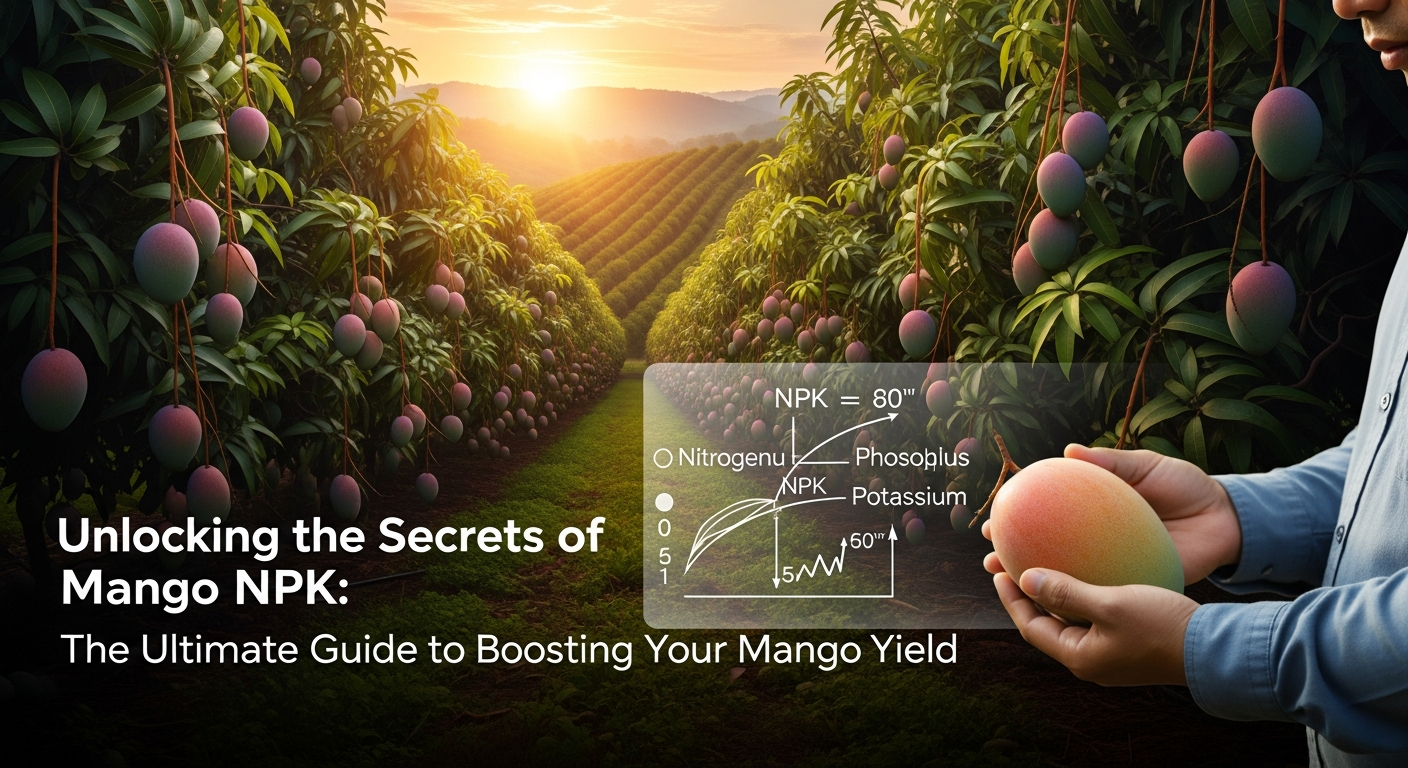
Proper nutrition and the various elements that fall under the label of NPK are important to ensure your mango trees are healthy, produce numerous flowers and quality fruit. Similar to how a balanced diet helps a person maintain their health, providing the appropriate nutrient ratio is required to ensure the proper development of mango trees from their initial vegetative stages through fruiting and the subsequent ripening process. By utilizing a well-balanced NPK, your mango trees will grow vigorously and give consistent, high-quality, and abundant yields every year.
A well-balanced NPK will provide the required nutrients to the mango tree. Nitrogen supports leafy growth; phosphorus provides a firm root ball; potassium supports the size, sweetness, and disease resistance of the fruit produced off the mango trees. When correctly fertilized with NPK elements, the mango root system will efficiently absorb and utilize the nutrient(s) supplied, especially during times of plant stress (flowering and setting of fruit) due to the high level of energy expended by the tree during these two distinct phases of growth.
Coordinated application of all NPK elements to the mango trees will not only improve the trees overall health through improved soil conditions but also increase the overall health of the mango tree and its natural defence against insect (pest) infestations and weather stresses. Together, these factors will help ensure that the mango is grown in an environmentally-responsible manner and that the fruit will improve in quality, appearance and will remain on the market for a longer period of time.
From young mango saplings to mature-bearing mango orchards, providing the proper, well-balanced NPK at the appropriate time will produce significant results. Proper nutrient management can result in more abundant and healthier mangoes.
Understanding Mango NPK: What Does It Mean for Your Orchard?
Mango NPK is the basis of producing mangoes successfully, by understanding NPK you will have everything you need to grow your mango trees and have an abundant harvest. The three major nutrients, nitrogen (N), phosphorus (P) and potassium (K) are an essential part of the development of mango trees, and each stage of growth requires different levels of the Macros for the mango tree to have balanced growth, proper flowering, setting fruit and quality of the fruit produced on the tree.
Using the right NPK fertilizer will ensure that there is no nutrient deficiency or excess in the tree. Balancing the right levels of N, P, and K will promote tree vigor, enhance flowering and reduce the number of fruits lost before they are harvested, while increasing both the quantity of fruit and quality of the fruit. A properly managed NPK program for mango trees will also promote the long term health of the orchard and the fertility of the soil.
Mango NPK Meaning and Its Role in Orchard Nutrition
Mango NPK are balanced nutrients specifically formulated for the growing of mango trees. The three macronutrients, NPK, are essential to the nutrition of mango trees in different ways.
- Nitrogen (N): N contributes significantly to bushy growth and canopy development as well as promoting healthy overall tree vigor. Sufficient amounts of N lead to good photosynthesis and vegetative development.
- Phosphorus (P): Phosphorus is vital for root development, early tree growth, flowering, and making fruit. The addition of phosphorus helps to make strong roots and helps in the uptake of all nutrients.
- Potassium (K): Potassium affects fruit's size and sweetness, color and shelf-life and also helps prevent disease in mango fruits during fruit development and maturation.
A quality formulated NPK fertilizer for mango trees contains all three macronutrients and will fertilize growing mango trees evenly and productively for the duration of the growing season.
Why Nutrient Balance Is Critical for Mango Tree Health
Mango tree health and common orchard issues can be prevented by using balanced NPK in your fertilizer. If you apply too much nitrogen, you will have a lot of leafy growth, but few flowers will set. If you use very little potassium, you will have poor fruit quality and less disease resistance.
The advantages of using a balanced mango NPK fertilizer include:
- Increased flower production and fruit set
- Reduced fruit drop and physiological problems
- Increased resistance to pests, diseases, and adverse weather conditions
- Larger, tastier, and higher-valued fruit
The proper balance of mango NPK nutrients will allow them to work together, rather than in competition, which will promote a healthier tree and a more uniform crop.
Understanding What NPK Means in Mango Cultivation
In mango cultivation, NPK is not a one-size-fits-all formula. The nutrient ratio must be adjusted according to tree age, soil condition, and growth stage. Proper planning of npk fertilizer for mango ree application helps maximize nutrient efficiency.

The Role of Nitrogen (N), Phosphorus (P), and Potassium (K) in Mango Growth
Mango Orchard management depends greatly on balanced NPK nutrient levels in your trees. Nitrogen (N), Phosphorus (P), and Potassium (K) are three main nutrients and affect directly how your mango trees will grow and produce flowers, fruits and overall productivity. Providing the proper NPK fertilizer to your mango trees at the right time will give you healthy trees, high quality fruits, and a lot of fruit.
Each nutrient has a specific function. If they are not balanced then flowering will be minimal, fruit quality could be low, plus the tree will grow too much in height or length. Knowing how NPK for mango trees works will give the farmer the tools needed to maximize the benefits of fertilizing and reduce nutrient runoff from his/her orchard; thus contributing to the sustainability of the orchard.
How Nitrogen Supports Vegetative Growth in Mango Trees
Mangoes are supported by nitrogen for all of their vegetative growth. In particular, nitrogen influences how leaves are created, the rate of shoot growth, and the structure and density of the canopy, all of which has a direct impact on photosynthesis and energy production.

If there is too much nitrogen in mango tree npk fertiliser, the tree will produce an excess crop of leaves at the expense of flowers or fruits; thus, nitrogen levels in mango tree npks must be carefully managed during flowering and fruiting.
Phosphorus Importance for Root Strength and Fruit Development
Phosphorus plays an important role in the development of roots and the reproduction of mango trees. The NPK nutrients collectively work to enhance the efficient absorption of nutrients leading to a better flowering.
- Phosphorus strengthens roots and aides in the efficient absorption of nutrients
- Phosphorous promotes the early flowering and greater set of fruit
- Phosphorus is vital to assist in the energy transfer of the plant
- Phosphorus enhances seed and fruit development
It is critical that the required level of phosphoric is supplied through an NPK balanced fertiliser to establish a strong base for the mango tree in order to support heavy yields of fruit prior to the start of the growing and flowering period.
Potassium’s Role in Flowering, Fruit Quality, and Disease Resistance
Potassium is a very important nutrient in mango nutrition (NPK) and therefore, plays a major role in flowering, fruit size, sweetness, colour and resistance to pests and diseases.
Benefits of potassium during crop establishment of mango:
- Increases flower attributes thereby reducing fruit drop
- Increases the size and flavour of fruit and improves its colour and shelf life
- Increases resistance to drought, pests and diseases
- Regulates water balance and enzymatic activity
An NPK nutrient that has potassium is extremely important during fruit development and maturing stages of mangoes as it directly affects the market value of mangoes and the quality of mangoes for export.
Best NPK Ratio for Mango Trees: How to Get It Right at Every Growth Stage
Mango trees have specific nutritional requirements throughout their growing cycle; therefore, it is critical that you select an appropriate mangotree NPK ratio. Similar to humans who require different foods as they progress through childhood, mango trees require different nutrients during different developmental stages. Applying an appropriate mango tree NPK ratio also promotes strong roots and balanced vegetative mass while allowing for timely blooming and high-quality fruit.
Developing a comprehensive mango tree NPK fertiliser programme will eliminate nutrient loss, cause less stress to the trees, and increase the production of the orchard as a whole. A basic understanding of the changing NPK ratios according to the age and growth phase of plants is necessary for farmers to achieve maximum benefits from fertiliser applications.
Ideal NPK Ratio for Young Mango Plants
When mango trees are 1-3 years old they are concentrating on root establishment and developing their canopy. Most of the nutrients need to be from nitrogen with a well-balanced amount of phosphorus and potassium.
Recommended NPK Ratio For Young Mango Trees:
- More Nitrogen (N) To Grow Leaves/Shoots
- Moderate Amount Of Phosphorus (P) To Maintain Root Strength
- Moderate Amount Of Potassium (K) To Provide Stress Tolerance
Commonly Suggested NPK Ratios Are:
- 12-6-6
- 10-10-10
Advantages Of NPK Ratio For Young Mango Plants:
- Quicker Canopy Development
- Healthy Root Structure To Support Future Growth
- Increased Uptake Of Nutrients
Applying the correct NPK ratio fertilizer to your mango tree will help to ensure that you will have a high yielding orchard.
Recommended NPK Fertilizer for Mature Mango Trees
Fully grown mango trees (4+ years) require proper nutrition to keep trees healthy while also encouraging the development of flowers and how many buds will produce fruit for the next year. Therefore the right balance of nutrients becomes increasingly important as the tree matures; using too much nitrogen at this stage may reduce the tree's flowering capacity.
NPK Ratios to Recommend
- Moderate Nitrogen to support limit vegetative growth.
- Higher Phosphate to promote flowering on trees.
- Higher Potassium for fruit quality and disease resistance.
Recommended NPK Ratios
- 8:8:16
- 6:12:18
Major Benefits to Using NPK Fertilizer
- More flowers produced will improve the likelihood of having more fruit.
- Your fruit will be larger, brighter and sweeter compared to other years.
- The larger/better the fruits produced, the less likely they will be attacked by insects/diseases.
By using a balanced NPK for mature mango trees, you can expect to have fruit produced every year without fail.
Optimal NPK Mix for Flowering and Fruiting Stages
Mango trees are most sensitive to nutrient deficiencies or excesses at the time of flowering and fruit development.During this time, potassium (K) is the most important nutrient, while nitrogen (N) must be carefully controlled to minimize excessive vegetative growth.
Recommended NPK Ratios for Mango Trees During Flowering and Fruit Development:
- Low to Moderate Nitrogen To Avoid Vegetative Growth That Interferes With Flowering
- Adequate Phosphorus for Flower and Fruit Strength
- High Potassium for Fruit Development and Quality
Suggested NPK Ratios:
- 5:10:20
- 3:9:24
Benefits Of Applying The Appropriate NPK Fertilizer For Mango Trees At This Stage Include:
- Reduced Flower and Fruit Drop
- Enhanced Fruit Size and Fruit Sweetness
- Improved Marketability and Shelf Life
Utilizing the appropriate fertilizer when applying NPK will provide the best quality mangoes for your harvest this year.

How to Apply NPK Fertilizer Effectively in a Mango Orchard
How well you apply mango NPK can be just as important as the type of fertilizer applied. If applied incorrectly, even the "best" NPK fertilizer for mango trees will not produce expected results. Correct application conditions will allow improved nutrient uptake, reduced wastage of fertilizers and more successful and healthy mango tree growth throughout the growing season.
Using an effective NPK strategy which includes the correct method (i.e., soil, foliar or fertigation), the appropriate fertilizer form (i.e., granular or liquid), and the right time to apply them, taking into consideration the age of the tree and its growth stage, will increase fruit production through increased flowering, increased retention of fruit on the tree, and improved quality of the fruit.
Soil Application vs Foliar Feeding for Mango NPK
When it comes to mango NPK management, both Soil Application (base nutrition) and Foliar Feeding (quick correction) will provide different methods for applying nutrients to a mango tree. Each application will have different functions and benefits depending upon the conditions surrounding the applications.
Soil Application (Base Nutrition):
- Application will be made around the root zone or drip line.
- Long-term and sustained supply of nutrients.
- Young trees, pre-flowering and post harvest stages are all ideal for soil applied nutrients.
- Supports root growth and overall health of trees.
Foliar Feeding (Quick Correction):
- Application of nutrients is made directly on the leaves of the mango tree.
- Nutrients absorbed quickly by mango trees through leaves.
- Application used for rapid recovery from sudden nutrient deficiency.
- Ideal times are during flowering and fruit development when results are needed quickly.
Best Practice:
Use soil application as primary application method and supplement with a foliar application to boost the nutrient performance of NPK fertilizers for the mango tree.
Granular vs Liquid NPK Fertilizer for Mango Trees
Choosing the right fertilizer form is essential for efficient NPK for mango tree application. Both granular and liquid fertilizers have unique advantages.

Timing, Dosage, and Fertigation Methods in Orchards
By timing and applying NPK correctly, you can maximize benefits from your mango NPK application. Too much NPK application can cause nutrient imbalance and too little can impede growth and yields.
Recommended Timing of NPK for Mango Trees:
- Right After Harvest - Nutrients stored in the tree and recovery from fruiting.
- Just Before Flowering - The initiation of flowering and reliable flowering.
- Fruit Development - Improving fruit size, quality, and retention.
Dosage Guidelines:
- For Young Trees - A Little More Often
- For Old Trees - A Little Less More Often (2–3 applications)
Drip Irrigation (fertigation)
- Delivers NPK directly to the root zone of the mango trees.
- Allows more efficient use of nutrients.
- Reduces loss of nutrients and labour.
- Ideal for modern orchards, especially in water-limited areas.

Organic vs. Synthetic NPK Fertilizers for Mango Trees
Selecting a suitable fertilizer for mango trees can be important when making an effective selection for the management of nutrient inputs (NPK). There are two main types of fertilizers – organic and synthetic. Both organic and synthetic fertilizers provide needed nutrients (NPK) but they do tend to differ with respect to their rate of release of nutrients, their effect on the soil, their cost and their long-term sustainability. In order for an orchardist to choose the correct NPK fertilizer for growing mango trees, a grower should first consider the goals of the orchard, the health of the soil, and the farming practices.
An appropriate balance between organic and synthetic NPK sources for the nutritional needs of a mango tree will help to promote yield consistency and maintain soil fertility. Developing an understanding of the relative strengths and weaknesses of each of the two types of fertilizers will help growers to make informed decisions regarding short-term productivity and long-term health of the orchard.
Benefits of Organic NPK Sources for Mango Orchards
Organic NPK sources will help create a more well-structured soil as well as provide a slow nutrient release to your mango trees. By using organic NPK sources, the soil will have more biological life that will help in the availability of the nutrients over time.
Some of the most common NPK sources are:
- Farmyard Manure (FYM)
- Compost and Vermicompost
- Oil Cakes (Neem Cake, Groundnut Cake)
- Green Manure/Bio Fertilizer
Key Benefits of Using Organic NPK for your Mango Tree are:
- Increase Soil Texture and Capacity to Hold Water
- Increase Microbial Activity and Nutrient Cycling
- Decrease the likelihood of Nutrient Leaching and Nutrient Toxicity
- Promote Sustainable and Environmentally Friendly Farming
Using organic” NPK” fertilizers for your mango tree will give your orchard long-term health and is an ideal way to enhance degraded or low fertility soils.
Advantages and Limitations of Chemical NPK Fertilizers
Chemical (or SYNTHETIC) fertiliser gives us concentrated available nutrients. Put simply, it is commonly used in commercial mango production to achieve fast and consistent results.
The following points are advantages of using chemical NPK fertilisers on mango trees:
- Immediate availability of nutrients
- Nutrient ratio matching a specific growth stage
- Easy to apply and fast results
- High yielding and suited for commercial orchards
The following points are disadvantages of using chemical NPK fertilisers on mango trees.
- Soil quality can deteriorate if overused
- Increased risk of nutrient loss through leaching and runoff
- Do not help improve soil organic matter
- Long term reliance without adequate management
When used carefully and in conjunction with organic inputs, chemical NPK fertilizer for mango trees produces the desired results.
Choosing the Right Fertilizer Type for Sustainable Mango Farming
When it comes to growing mangoes sustainably, it is important to use a combination of both organic and chemical (synthetic) fertilizers; using Integrated Nutrient Management (INM) will combine the best of both methods to attain maximum efficiency with NPK applied during mango farming.

Common Mistakes with Mango NPK Management and How to Avoid Them
Good use of NPK for managing mango trees relies on both the proper amount of fertilizer and timing. Many problems that can occur in orchards, such as insufficient blooms, low yield/fruiting, or poor tree health, can arise from improperly applying fertilizer rather than the lack of the fertilizer itself. When too much or too little NPK fertilizer is applied to a mango tree, it can ultimately have an adverse impact on the orchard's ability to perform
Making it possible for farmers to manage NPK for mango trees more effectively, is accomplished by identifying some of the most frequent errors and preventing them before they cause problems with crop production or the health of the soils over the duration of the crop cycle.
Over-Fertilization Risks and Nutrient Toxicity in Mango Trees
Over fertilization (especially nitrogen) is one of the leading causes of trouble with managing NPK (Nitrogen-Phosphorus-Potassium) for mango. While nutrients are critical for good growth, too much fertilizer can cause injury to your mango trees.
Risks of Over Fertilization Include:
- Increased amount of vegetative growth resulting in decreased flowering;
- Burns to foliage and injury to roots as a result of accumulation of salts;
- Increased incidence of pests and diseases;
- Increases in poor quality of the fruit and delays in maturity.
Common Causes of Over Fertilization Include:
- Applying a high dose of NPK fertilizer to mangos without first conducting soil tests;
- Frequent applications of fertilizers; without taking into consideration the age of the tree;
- Blindly repeating fertilizer applications every year.
Ways to Avoid Over Fertilization Of Mangos Include: Always base your NPK application for mango trees on the results of soil and leaf analyses and split applications of fertilizer; instead of dumping on large amounts of fertilizer all at once.
Signs of Under-Fertilization and Nutrient Deficiency
Mango trees can have the same problem with under fertilization as they do when they do not get enough nutrients to properly grow and produce fruit. Signs of deficiencies in nutrients will generally take time to show up and affect yield greatly.
Common Symptoms of Nutrients Deficiencies in Mango Trees:
- Pale, yellow leaves from Lack Of Nitrogen
- Lack of Root Growth & Delayed Flower Production From Lack Of Phosphorous
- Tiny, Dull Fruits and Branches From Lack Of Potassium
Consequences of Under-Fertilization:
- Slowed growth of trees with little to no height
- Few flowers & Lots Of Flowers Dropping Off
- Reduced Size, Quality, & Commercial Value of Fruit.
Routine Monitoring For And Applying On Time Will Eliminate Nutrient Deficiencies Prior To Affecting Your Mango Tree's Production Rate.
Correcting Nutrient Imbalances with Proper NPK Management
Proper fertilizer management will restore balance to mango trees’ nutrient levels. Properly balanced NPK management ensures that all nutrients are present within a tree's overall health and support consistent production of healthy mangoes.
The following steps can be taken to restore balance to the nutrients in a tree:
- Conduct soil tests and leaf analyses to determine if there are any nutrient deficiencies or excess
- Adjust your ratio of NPK fertilizer for mangoes based on the growth phase of the tree
- Use organic materials in combination with chemical fertilizers
- Apply foliar sprays when necessary to quickly correct nutrient deficiencies.

FAQs
Q1. What is the ideal mango NPK ratio for high yield?
The ideal mango NPK ratio varies by growth stage, but 6:12:18 or 8:8:16 is commonly used for high yield and better fruit quality.
Q2. How often should NPK fertilizer be applied to mango trees?
NPK fertilizer for mango trees is usually applied 2–3 times a year, split across pre-flowering, fruit development, and post-harvest stages.
Q3. Can I use NPK fertilizer for mango trees along with organic manure?
Yes, combining NPK for mango trees with organic manure improves soil health and enhances nutrient efficiency.
Q4. What is the best time to apply NPK for mango trees?
The best time to apply mango NPK is before flowering, during fruit development, and after harvest for tree recovery.
Q5. Does excess nitrogen affect mango flowering?
Yes, excess nitrogen promotes leaf growth and can significantly reduce flowering and fruit set in mango trees.
Conclusion: Maximize Your Harvest with the Right Mango NPK Strategy—Start Today!
Having a proper NPK strategy for mangoes will give you a solid foundation for growing a healthy and highly productive mango orchard. The proper use of nitrogen, phosphorus, and potassium ratios throughout the plant's life cycle ensures complete development, an abundance of flowers and quality fruit from each tree. A factual based NPK programme that focuses on both soil and plant needs generates consistent and sustainable results, while using 'winging it' as your primary form of growing is often unfounded.
Fertilizing your mango tree with the correct ratio of organic, chemical, or a combination of both, will allow for continued soil fertility and meeting of plant nutritional requirements. Correctly applying fertiliser, timing applications accurately, and using split application methods will help to reduce nutrient spillage lose, reduce tree stress and promote effective nutrient utilisation, in turn improving yield and also improving fruit size, sweetness, colour and shelf life, both of which are critical to long-term marketability.
Correcting common nutrient management problems and continuous monitoring of orchard plant and soil health will allow farmers to maximise the potential of their mango trees. Begin implementing an intelligent NPK programme for mangoes now in order to establish stronger orchards and achieve greater yields, along with establishing long-term profitability from mango farming.