

Unlocking Healthy Growth: The Benefits of Humic Acid for Trees
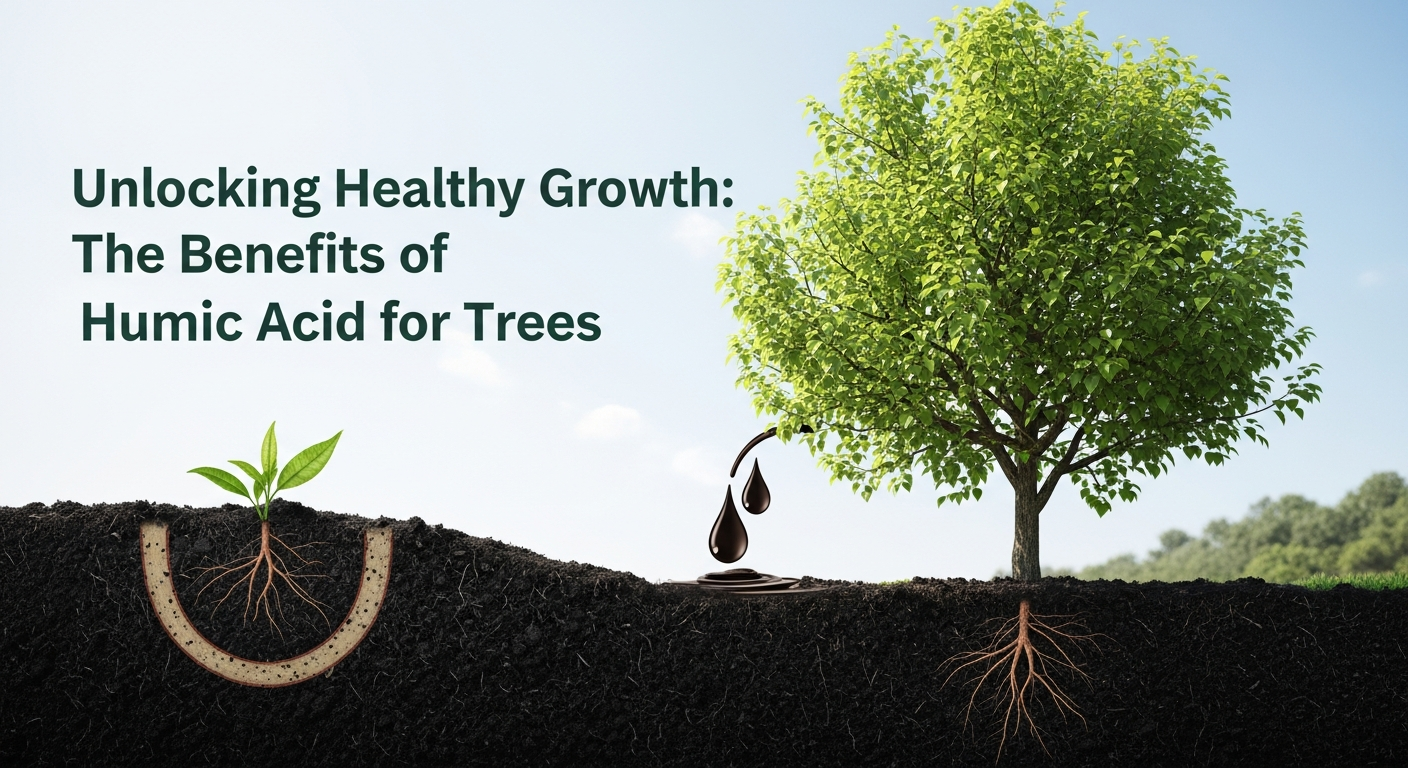
Humic Acid is a naturally occurring organic compound formed as the result of the breakdown of organic matter (plant and soil) over millions of years; it plays a vital role in creating new, productive soils by enhancing and enriching the soil's natural ability to grow healthy plants and crops. Humic Acid contains large amounts of carbon, trace minerals, and many different types of bioactive materials. These natural elements can be easily absorbed by the tree roots and are therefore considered to aid in building strong root systems, promote more efficient nutrient absorption, and support trees over time. All of the root zones of fruit trees, shade trees, ornamental tree species, and forest tree species get the benefit of the soil building and the sustained growth characteristics of Humic Acid.
What Is Humic Acid and How Does It Work for Trees?
Humic acid is an organic compound that occurs in nature and is essential for healthy soil and tree growth. Humic acid is created when decomposing organic matter is broken down by microorganisms. Humic acid improves soil structure, makes it easier for plants to use nutrients from the soil, and enhances biological activity in the soil. When developing healthy soil for long-lived plants such as trees, the addition of humic acid can provide the necessary foundation for continued tree growth, establishment of vigorous roots, and the longevity of the tree itself in orchards, plantations, and landscapes.
Understanding Humic Substances and Their Role in Tree Nutrition
Some of the primary benefits of humic substances for tree nutrition are:
- Improvement in the availability of primary nutrients (nitrogen, phosphorus, and potassium).
- Ability to chelate (bind) most trace micronutrients (such as iron, zinc, magnesium, etc.) for easier uptake by the roots.
- Enhanced efficiencies of nutrient utilization and less fertilizer lost when using humic substances to enhance tree nutrition.
- Assurance of a balanced nutrient flow throughout the entire life cycle of the tree.
How Humic Acid Acts as a Natural Soil Amendment for Trees
Increase the quantity of stable organic matter over time.

Key Ways Humic Acid Supports Long-Term Tree Health and Growth
Humic acids provide numerous cumulative benefits that are especially useful for perennial crops (trees).
Long-term Benefits:
- Encourages formation of deep, healthy root structures
- Increases drought resistance & ability to withstand environmental stress
- Increases overall health of leaves, supports flowering & fruiting efforts
- Allows for reduced nutrient deficiency in soil on a long-term basis
- Provides for a reliable & consistent growth pattern for many years to come.
The Science Behind Humic Acid: Why Trees Need It
Long-lived trees depend upon healthy soils to support their steady growth, anchorage, and ability to withstand stress. As soils age, they lose essential components such as organic matter, nutrients, and beneficial microbes, which can affect the health of trees. Therefore, humic acid plays an important role in the health of trees. Humic acid improves the availability of nutrients, stimulates root development, and promotes biological activity in the soil at the soil-root interface. By building a strong base for a tree, humic acid will help support and sustain the health of that tree throughout its entire lifecycle.
Improved Soil Health and Higher Nutrient Availability
Humic acid functions as a highly effective soil conditioner to improve soil fertility and nutrient utilization in tree root zones.
Humic Acid Provides Many Benefits:
- Improves the soil structure of compacted or degraded soils
- Increases the overall nutrient holding capacity (CEC)
- Prevents nutrient leaching when irrigated/rained upon
- Increases the availability of nitrogen, phosphorus, potassium, and micronutrients
- Enhances soil fertility over time to support continued tree grow
Enhanced Root Development and Stronger Tree Anchorage
An abundant root system provides stability, nutrient access, and drought resistance for trees.
Main benefits:
- Supports Increased Depth And Weight Of Roots
- Strengthens the Strength of the Roots Hairs and Provides Greater Absorption From The Soils
- Helps To Provide Support For Trees With Wind/Erosion And Improve The Anchoring Of The Trees
- Supports Fast Establishment Of Young Trees
- Improves The Drought Resistance Of Young Trees/Transplant Shock Reduction
Supporting Microbial Activity and Tree Vitality Through Humic Acid
Healthful biology of soils directly influences both the cycling of nutrients and the vitality of trees.
Main benefits:
- Encourages Beneficial Microorganisms in the Soil
- Encourages the Improved Mineralization Of Nutrients In Soils
- Encourages Balance In Soil Biology
- Increases the Health of Roots and Reduces the Stress of Root Zones
- Increases The Dry Climate Resistance Capacity of Trees/Juvenile Trees and Overall Tree Health

Top Benefits of Using Humic Acid on Your Trees
To grow tall, healthy and productive trees, they must have the right amount of soil support (strength of the soil), balanced nutrition and adequate root systems. The use of humic acid with trees increases the structure of the soil, enables the tree to capture nutrients from the soil and assists in strengthening the tree's overall vitality. too does humic acid aid in supporting trees throughout their life cycle (root establishment, canopy development, fruit production).The above visual depicts the main benefit of using humic acid fertilizers with trees for healthy trees and long-term tree performance.
Faster Tree Growth and Better Canopy Development
The use of humic acid with trees, when applied as fertilizers, can be an excellent way to stimulate quicker growth of trees. Humic acid stimulates faster growth because it helps with nutrient absorption and root efficiency.
Key Benefits:
- Increases the size and number of the roots (deeper and wider)
- Increases the uptake of nitrogen, phosphorus, potassium, and all micronutrients (e.g., zinc, iron, etc.)
- Increases the rate of growth for both shoots and branches
- Encourages trunk thickness and stronger growth structures (e.g., stronger root anchoring).
Increased Drought Tolerance and Stress Resistance
Humic acids will significantly benefit the overall health of all tree species growing under drought, hot, or poor soil conditions.
Key Benefits include:
- Increasing soil water retention
- Allowing access to moisture for roots, even during dry periods
- Reduction in transplant shock in young trees
- Increase in heat, salt, and soil compaction tolerances

Better Fruit Yield, Leaf Color, and Disease Prevention
Trees that are healthy (and therefore produce better quality fruit, produce more vibrant green leaves, have greater resistance to disease) benefit from humic acid.
Key Benefits of humic acid include:
- Increased production of chlorophyll (more vibrant green leaves)
- Increased flowering and fruit set on fruit trees
- Enhanced plant's ability to defend itself against pests and diseases
- Reduction of nutrient deficiency signs and symptoms.
How to Apply Humic Acid to Different Types of Trees
Different varieties, ages and growing environments require different nutrient needs for trees. When optimally applied, humic acid provides the most significant improvements for trees. Humic acid, when applied to the root zone of trees, has the ability to improve soil structure; enhance nutrient availability for plants, and support long-term healthy root growth. Whether you're managing fruit trees (many fruit tree managers prefer to use this term) or then areas within your landscape that feature ornamental trees, how to properly apply humic acid will help your trees be healthier, stronger, and grow more productive. Continue reading to learn more about the purpose of applying humic acid to your fruit trees.
Applying Humic Acid to Fruit Trees for Better Yield and Quality
As a heavy feeder, the use of humic acid is highly beneficial to all fruit trees, and especially during their flowering and fruit developing stages. The following key benefits of applying humic
acid to fruit trees are:
- Better ROI = Better Fruit Size and Quality
- Stronger Rooting Systems = Higher Yield Stabilized
- Better Soil Moisture Retention Around Root Zones
- Increase in Number of Flowers and Greater Number of Fruits
If you're ever looking for a way to maximize the yield and quality of your fruit tree crops, the application of humic acid is an incredibly beneficial tool for your arsenal.
Best Practices for Ornamental and Shade Tree Care
Great soil health is critical for the long-term growth and overall attractiveness of ornamental and shade trees.
Key Benefits:
- Encourages deeper, more stable root growth
- Increases the amount of green foliage and density of the canopy of the trees
- Provides trees with increased ability to withstand urban condition and heavy compaction of soil
- Increases the amount of active soil microbial life around the roots
Dosage Guidelines and Foliar Spray vs. Soil Drench Techniques
The correct dosage and application method of humic acid leads to maximum benefits from the product with no waste.
Key Points:
- Soil Drenching = Long-term improvements in the health of the tree's roots and soil.
- Foliar Spraying = Immediate relief from tree stress through the delivery of nutrients.
- Liquid humic acid is easier for trees to use in comparison to granular forms.
- Frequency of application will depend on the tree's age and soil condition.

Choosing the Best Humic Acid Products for Your Garden or Orchard
There are a variety of different types and quality of available humic acid products; therefore, it's important to choose wisely for optimal tree health. A healthy tree depends on the long-term improvement of its soil, rather than on spikes of nutrient availability; therefore, humic acid is an important component of an orchard, plantation, or garden landscape. By selecting the proper fertilizer product, you will enhance root strength and nutrient uptake, create supporting structures within the soil, and improve the overall vitality of your tree. The following information can help you identify the best type of humic acid to provide for your trees.
Liquid vs. Granular Humic Acid: Which Works Best for Trees?
Liquid humic acid is water-soluble and is readily available to be taken up by the soil and root zone.
Benefits to Trees:
- Provides quick results with young or stressed trees
- Helps to increase nutrient uptake throughout the growth phase
May be used as part of a drip irrigation program (soil watering) and a fertilizer program using the soil as a carrier.Supports the recovery of trees from drought conditions or transplanting stress and nutrient deprivation.
Granular Humic Acid Releases Nutrients over Time as Well as Improves Soil After Time.
Benefits to Trees:
- Gradually increases the long-term storage of organic matter in the soil
- Increases the structure and ability of the soil to retain moisture
- Strongens the mid-range root system of trees.
- Best When Growing Mature Trees, Orchards and Plantation Crops.
How to Identify Quality Humic Acid Fertilizer for Agriculture
Different brands of humic acid products do not produce the same effects. The quality of humic acid products is determined by their source, concentration and how they are made.
5 Key Quality Factors of Humic Acid Products:
- Derived from leonardite or high-quality organic material
- Labeled clearly indicating the percentage of humic acid
- Water-soluble with a good ability to bind nutrients
- No heavy metals or toxins present
- Recommended for agricultural and orchard applications

Avoiding Common Mistakes: What to Watch Out For When Using Humic Acid on Trees
Humic acid is a key ingredient in soil conditioning products designed to support healthy tree roots through improved nutrient uptake and promote tree health over the long term. While there are many benefits associated with using humic acid as an agricultural product, if used incorrectly, it may not provide the intended results. The most effective way to utilise humic acid for tree growth is to use the recommended rate in conjunction with appropriate compatibilities. By avoiding common mistakes when applying humic acid for tree growth, you avoid wasting your time and resources while gaining maximum benefits from this product.
Preventing Over-Application of Humic Acid Fertilizer
- Humic acid fertilisers are very concentrated. Therefore, applying a higher quantity than what is recommended will not result in any better results.
- Provided that you do not use excessive quantities of humic acid on your tree, you will not cause any damage; however, using excess amounts will not provide additional advantages.
- The presence of excessive concentrations of nutrients (due to the presence of excess amounts of humic acid) may lead to a temporary imbalance of available nutrients.
- Applying small, consistent amounts works better than applying large quantities.
Ensuring Compatibility With Fertilizers, Pesticides & Amendments
Humic acid is compatible with nearly all agricultural products when appropriately mixed.
- Works best with N-P-K fertilizers and Micronutrients.
- Stimulates nutrient uptake from Fertilizer.
- Can be safely used in conjunction with compost, manure, and organic amendments.
Should not be mixed with strong acids (i.e. sulfuric acid, phosphoric acid, nitric acid, hydrochloric acid, etc.) or extremely alkaline solutions (i.e. sodium hydroxide etc.).
A jar test must always be performed prior to tank mixing.
Proper Timing and Frequency for Maximum Tree Growth Benefits
Humic acid response of trees depends intensely on their timing of application.
- Timing of applications should coincide with periods of active root growth.
- The specific timing for application of humic acid is primarily in early spring and after harvest.
- For young trees to receive maximum benefit from humic acid, multiple applications should be made.
- In contrast, only one or two well-timed doses of humic acid are necessary to achieve optimal results with mature trees.
Application of humic acid should not occur during periods of extreme heat and/or drought conditions.

FAQs:
Q1: What is humic acid and why is it beneficial for trees?
Humic acid improves soil health, increases nutrient uptake, and supports stronger root development for healthier tree growth.
Q2: Can humic acid fertilizer replace regular fertilizers?
Humic acid fertilizer cannot fully replace regular fertilizers but helps trees absorb nutrients more efficiently, reducing fertilizer needs.
Q3: How do I apply humic acid to trees?
You can apply humic acid for trees as a soil drench, mix it into the root zone, or use a diluted foliar spray.
Q4: How often should humic acid be used on trees?
Apply humic acid every 4–6 weeks during active growth periods for best results.
Q5: Is liquid or granular humic acid better for trees?
Liquid humic acid works faster for quick absorption, while granular forms improve long-term soil health.
Conclusion: Transform Your Landscape—Give Your Trees the Advantage of Humic Acid Today!
Healthy trees have healthy soils, and the foundation of that relationship is built on the importance of Humic Acid in creating a better environment for the tree to thrive. When applied to the soil where trees grow, Humic Acid is able to enhance the structure of the soils, improve nutrient supply, and create a better environment for beneficial microorganisms that are necessary for healthy root development.
Trees grown with Humic Acid have stronger root systems and have more vibrant leaf/ Canopy color, as well as greater resistance to environmental stressors such as drought and poor soil conditions.
Humic Acid is also bridging the gap between productivity in modern agriculture and landscape management with a more sustainable method of producing trees. By enhancing the efficiency of fertilizer application, Humic Acid reduces nutrient losses and the need for excessive chemical applications. Whether you have an orchard or plantation, utilize Agroforestry systems, or manage landscape trees, Incorporating Humic Acid into your management practices will benefit you by improving soil health for consistent tree performance, lower input costs, and environmentally sound practices for years to come.
Adding humic acid to your tree care program represents an investment in both increased growth and better production of your trees, as well as the overall health of the land you grow on. The more robust roots, vegetation, and fertility of the soil result in healthier trees and a stronger landscape overall. Use humic acid today to give your trees the edge they require to become larger, healthier, and higher-performing over the course of time.