

Higher Rice Yields with Humic Acid for Rice Crop
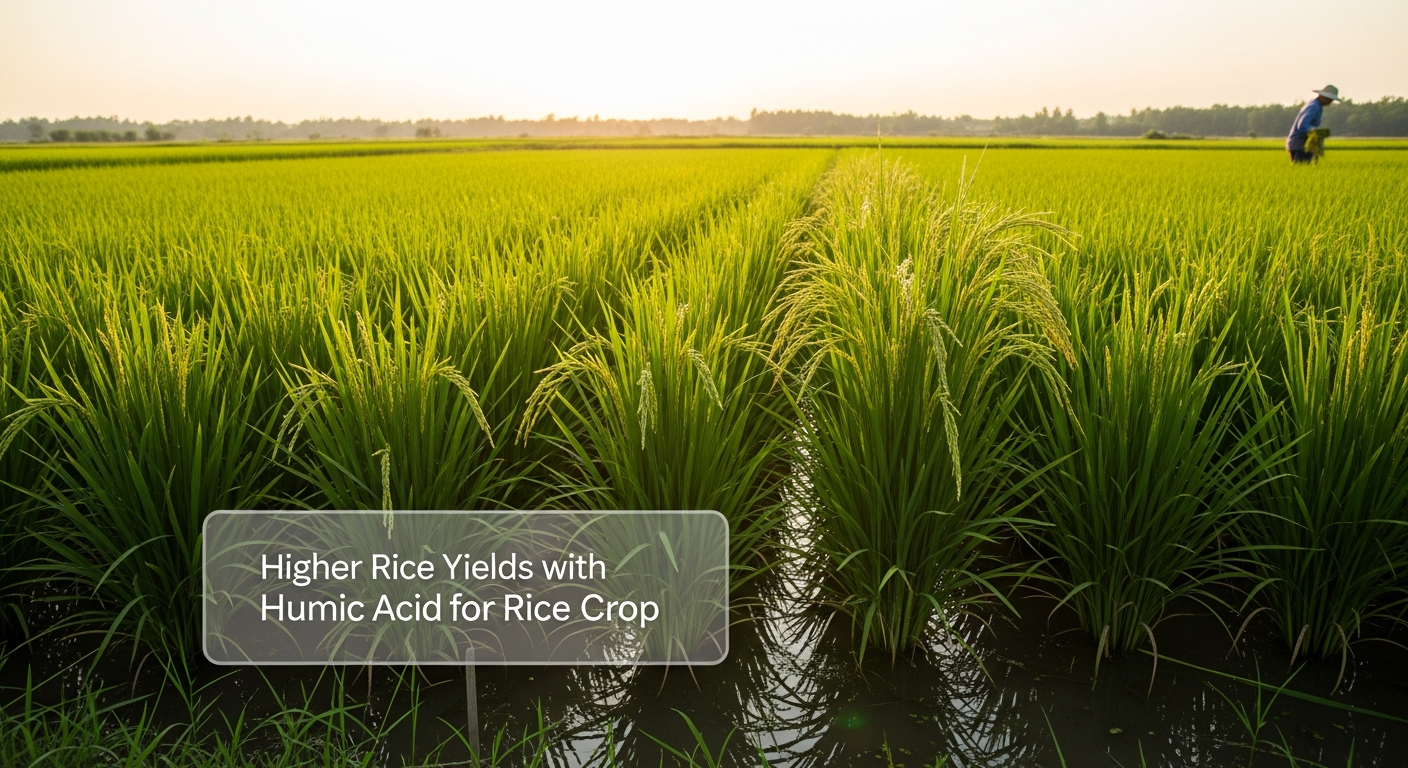
Humic acid is an organic soil additive created by the breakdown of living organisms over many years. Using humic acids as a soil additive to enhance crop yields has been done by farmers for many years. Some of the main components of humic acids include carbon rich compounds, organic acids & mineral substances; thus, humic acid is known to benefit rice production & paddy rice growing conditions.
The aforementioned components and nutrients in humic acid provide an easy pathway for absorption into rice plant roots, allowing for improved nutrient uptake & better root structure & function; resulting in improved overall health, especially in low nutrient or wet (flooded) soil conditions.
As a natural soil conditioner throughout the growing period (from seedling establishment through tillering) to provide more robust crops and more bountiful harvests (high yield) of quality rice.
Understanding Humic Acid in Rice Agriculture
A key element of rice cultivation is healthy soil, with strong root systems, and excellent nutrient availability; especially in flooded or semi-flooded conditions. Humic acid has a major impact on the quality of the soils and will result in increased efficiency of the nutrients available to the rice through the improvement of the so-called 'structure' of the soils.
The health of the soil, in addition to the umbilical activity of the roots, will support the long-term sustainability of rice production. Long-term understanding of how humic acid works will lead to improvement in the growers' ability to maintain the fertility of their soils and continue growing rice consistently at acceptable yield levels.
What Is Humic Acid
The organic compounds that comprise humic acid are created when plant and microbial matter decomposes over time.
Important points
- Rich in stable organic carbon.
- Contains bioactive compounds that support the growth of plants
- Improves chemical and biological characteristics of the soils.
- Improves the availability of nutrient materials to the roots of the plants.
Provides a natural method of enhancing soils and should not be viewed as a 'fertilizer' to directly increase yields.
Why Humic Acid for Rice Crop Matters
Rice paddy fields typically lose a significant number of nutrients to leaching, runoff and poor retention by the soil, where humic acid is particularly effective.
Key Points
- Reduces nutrient loss in flooded paddy fields
- Enhances root development and tiller production.
- Increases nitrogen/phosphorus/potassium efficiency.
- Assists with early seedling establishment.
- Supports increased vigor for the plant and improves tolerance to stress.

Humic Acid as a Soil Conditioner
In addition to providing nutrition, Humic Acid provides a way to condition soils in rice growing systems.
Key Points
- Positive impact on soil aggregation and structure.
- Increased ability of the soil to hold moisture.
- Reduced Soil Compaction after draining.
- Encouragement for beneficial microbial activities.
- Improved long-term fertility of soils.
As a soil conditioner, Humic Acid provides improvement of both the physical and biological characteristics of rice growing soils through the creation of better soil aggregation allowing for more productive root growth and nutrient uptake by rice plants.
How Humic Acid Improves Rice Crop Growth
The crop growth of rice is reliant on soil nutrients, to have a healthy root system, and to uptake nutrients efficiently under consistently moist or semi-flooded conditions. Humic Acid has become an integral part of agricultural practices in rice production by improving soil fertility, making more nutrients available, and increasing the strength of the plant growth cycle.
The improvement of both the vegetative phase of plant development and the grain development phase through the use of humic acid has led to an increase in the health and yields of rice plants.
Improved Nutrient Uptake
Humic Acid substantially increases the availability and ability of rice crops to take up essential nutrients.
Key Points on Increasing Nutrient Availability:
- Improves the ability to utilize nitrogen, phosphorus, and potassium.
- Acts as a chelator of micronutrients, such as iron and zinc.
- Reduces the loss of nutrients through leaching in flooded rice fields
- Increases the efficiency of fertilization practices.
- Achieves a balance of nutrient supply to the developing crop at all stages of growth.
The most beneficial function of humic acid fertilizer is its capacity to improve the ability of the rice crops to uptake nutrients. In flooded rice fields, there is substantial nutrient loss due to the movement of water and to fixation on the soil particles.

Root Development Support
The development of healthy roots allows rice plants to be able to uptake nutrients better and to survive waterlogged areas.
KEY POINTS
- Allow for deeper and denser root systems.
- Increase root branching and proper formation of feeder roots.
- Allow for greater oxygen exchange in the root zone.
- Provides for greater anchorage and formation of tillers.
- Provides for greater resistance against environmental stressors.
Plant Growth Enhancement
Humic acid provides support for the rice plant's growth from initial establishment up to and including the time of grain filling.
KEY POINTS
- Increase seedling vigour and early growth.
- Enhancement of tillering and canopy development.
- Enhances photosynthesis and production of chlorophyll.
- Minimises the effects of saline water and nutrient imbalance.
- Creates uniform plant growth.
With the application of humic acid we see a positive enhancement of the physiological processes in the rice plant, such as photosynthesis and enzyme activity. The result is a healthier leaf, stronger stem and greater uniform development across the entire field. When farmers apply humic acid fertilizers, they generally notice greener plants, improved tiller formation and greater grain filling, resulting in more consistent and higher rice yields than those with less or no humic acid application.
Key Benefits of Humic Acid Fertilizer for Rice Farmers
The successful cultivation of rice requires healthy soils for the aerobic and anaerobic functions that support plants, good agricultural production practices, a high level of nutrients in the soil and strong root systems, particularly when grown in flooded or semi-flooded environments. Humic acid fertilizers enhance soil structure and function as well as the health of the plant and therefore, assist rice farmers in achieving maximum and sustained yields.
The addition of humic acid to rice crops increases the potential for high-yielding production by providing nitrogen, phosphorus, and potassium to improve nutrient availability, allowing for improved fertilizer utilization efficiency for water management, and improving plant growth potential during all growth stages.
Increased Rice Yield
Humic acid is responsible for the enhancement of rice yields by increasing the rate of development of the root system and the uptake potential of all nutrients.
Key Highlights
- Increase in the amount of tillering of rice plant
- Increased nutrient uptake potential during the vegetative stage and during the reproductive stage of growth
- Increased amount of filling of grain and number of panicles produce
- Reduction in the effects of transplanting and early plant stress
- Enhanced uniformity in crop production
One of the more visible advantages of using humic acid fertilizers for rice farming is the increased yield of rice. By enhancing the performance of roots, including nitrogen, phosphorus, and potassium, rice plants will be able to more efficiently absorb these essential plant nutrients through improved root performance. As a result, improved tillering of rice plants will produce more panicles and increased amounts of grain produced.

Improved Soil Fertility
This Table Shows the Types of Soil That Are Affected by Humic Acids
- Increased Soil Organic Matter Stability
- Improved Nutrient Retention in Flooded Soils
- Increased Microbial Activity in Paddy Fields
- Reduced Nutrient Losses Due to Leaching
- Increased Long-Term Soil Productivity
Rice soils are highly productive; however, because of continuous flooding of rice soils, nutrient leaching and compaction occur. The addition of humic acid to the rice soils binds the soil particles together and forms stable aggregates; therefore, increasing the organic carbon content of the soil.
Better Water Retention
Water is an important factor in rice farming; therefore, by adding humic acid, rice crops are able to produce more efficiently. Humic acid increases the soil's capacity to hold moisture while allowing for proper aeration of the root zone. This increases a plant's resistance to short dry periods and reduces plants from becoming stressed when there are uneven water levels.
- Improved Water Management for Rice Farming
- Water Management is the Key to Rice Farming
- Increased Water-Holding Capacity of Soil
- Reduced Water Stress During Dry Spells
- Increased Root Oxygen Availability
- Stable Plant Growth During Water Level Changes
- Increased Efficiency of Irrigation Water Use
Application Methods of Humic Acid for Rice Crop
The application of humic acid to rice crops must be done correctly so that the advantages of using humic acids for paddy rice can be maximized. Rice is planted in a very unique situation of being grown in flooded soils, with many times the nutrient loss, as well as limited aeration for the roots. Because of the way that humic acids react in flooded soils, they are an effective way to increase the amount of nutrients that can be made available to the plant, as well as improve the root systems of the plant, and support a healthy soil structure.
Soil Application Method
The application of humic acid directly onto the soil is one of the most tried and true methods for applying humic acid in rice production.
Highlights:
- Application directly onto soil before transplanting or during the early development stages of the crop.
- Improved soil structure and less leaching of nutrients into the ground.
- Increased microbial health/ activity in flooded soil.
- New roots are established (higher) due to the application of nutrients.
When the product is applied to the soil, humic acids will bind to the elements that make up the oxygen and carbon in the root zone to keep them available for the plant to take up, even when submerged. This method of application is ideal when applying the initial fertilizer when the land is prepared or as a part of the basal fertilizer program.

Foliar Application Method
Foliar application delivers nutrients rapidly to crops during peak vegetative growth.
Important Information
- Plants can absorb nutrients directly from their foliage
- Foliar fertilizer increases a plant's ability to absorb other nutrients
- Foliar fertilizer increases the plant's ability to do photosynthesis and grow
- Foliar fertilizers help the plant recover from abiotic stress
- The best time for applying foliar fertilizer is during tillering and panicle initiation.
Humic acid is quickly absorbed by the plant's leaves and provides an immediate boost to the plant by supplying it with organic material, and depending on the crop, it is very effective when applied during high-stress situations, such as nutrient-poor soils, rapid plant growth or weather stress.
Best Application Timing
Timing is one of the most important factors for the successful use of humic acid for rice production.
Important Points
- Apply humic acid at the early stages of root development.
- Do not apply humic acid if the weather is excessively hot
- Multiple applications of humic acid will provide better results.
When applying humic acid during tillering and the formation of the panicle, the application will have the best effect. The application of humic acid should be done as part of the regular fertilisation schedule.
Humic Acid Fertilizer vs Conventional Inputs
Soil health, nutrient availability, and stress management are critical to successful rice production, particularly when rice is grown in flooded and semi-flooded conditions. Traditional fertilizers provide nutrients to the soil quickly but also tend to have a higher risk of losing those nutrients through leaching, fixation, and runoff. In contrast, humic acid fertilizer does not offer new nutrients to the soil but rather improves soil quality and nutrient utilization.
When comparing humic acid for rice crops to traditional inputs, you can see why many farmers are transitioning to a more holistic method of nourishing their crop and producing greater long-term sustainability.
Reduced Input Stress
Humic acid addresses physiological and nutritional stresses associated with the use of excess and/or under-utilized inputs on crops grown in flooded environments.
Essential Points
- Increased efficiency of nutrient absorption
- Reduced salinity and/or chemical stress in flooded paddy soil
- Reduced loss of nutrients in flooded conditions
- Facilitated recovery of plants from transplanting shock
- Promoted consistent growth during critical growth periods
Traditional fertilizers provide rapid release of nutrients; this rapid release can cause stress on rice plants; especially during early establishment and tillering stages of development. Conversely, through the use of humic acid in rice production, the potential for stress due to nutrient overload and under-utilization is significantly reduced. Humic acid works as a buffer for nutrient availability by providing a gradual supply of nutrients to the root zone of rice plants.
Long-Term Soil Improvement
Long-term soil improvement is achieved through the continual addition of humic acids.
- Improves levels of organic carbon in the soil
- Improves aggregation and structure of the soil
- Increases water holding capacity of the soil
- Enhances the activity of beneficial microorganisms in the soil
- Decreases soil compaction over time
The use of humic acid on rice fields has been shown to produce healthier soils that are capable of holding nutrients and moisture for longer periods than conventional fertilization, which only provides nutrients to the crop. By maintaining a balanced nutrient supply, humic acid fertilizers improve the physical, chemical, and biological properties of the soil, ultimately allowing for healthy, well-structured soils, leading to better root zone conditions and improved agricultural yields during future growing seasons.
Balanced Crop Nutrition
Balanced crop nutrition is critical to the overall success of growing rice.
- Chelates macronutrient and micronutrient elements
- Prevents the fixation of nutrients in the soil
- Enhances the efficiency with which nitrogen and phosphorus are used
- Supports tillering and panicle formation
- Contributes to the quality and quantity of grain filled during development
During the development of rice crops, balanced nutrient synchronization is needed for each growth stage of the crop. Humic acid fertilizer acts as a stabilizer to keep nutrients in the form that can be utilized by the plant and hold the nutrients in reserve for gradual release. By holding nutrients in reserve for gradual release, humic acids can prevent nutrient deficiencies and excesses that commonly occur when fertilizers are applied.

Choosing the Right Humic Acid Fertilizer for Rice
When choosing humic acid fertilizer for rice, a key first step is choosing the correct product for the highest quality results. Due to the high demand for nutrients in rice and the common occurrence of losing nutrients and/or getting them to be unbalanced due to either soil being flooded or semi-flooded, it is crucial to select a humic acid product that retains nutrients, encourages root growth, and supports soil health throughout the growing period.
Quality Indicators of Humic Acid
The effectiveness of humic acid on rice crops is related to its quality, composition, and how the plant uses nutrients from the soil.
Important factors to consider:
- The greater the quantity of humic acid present in a product, the better the product will condition the soil.
- The less ash and impurities present in the humic acid product, the greater the capacity of the rice crop to absorb nutrients.
- The more soluble the humic acid is, the quicker it will act in a rice paddy.
- If the ratio of humic acid to fulvic acid in the product is balanced, then root uptake of nutrients will be positively affected.
- Products that are certified and tested will provide farmers with consistent results.
The first consideration when choosing humic acid for rice crops is the quality of the humic acid. When properly formulated, high-quality humic acids can provide the best benefits to rice crops. A high-quality humic acid product will promote good soil structure, greater nutrient chelation, and increased levels of microorganisms.
Liquid vs Granular Humic Acid
Depending on the farming method used, different types of formulations of humic acid are most beneficial for the growing of rice.
The main differences are;
- Liquid humic acid will work faster in the flooded conditions of a rice farm.
- On the other hand, humic acid will assist in the development of soil structure long term.
- A liquid form of humic acid is best used in fertigation and foliar application.
- Whereas, a granular form of humic acid works well at the time of land preparation.
- The optimum form of humic acid that a farmer would opt to utilize depends on both the type of soil and the method of irrigation to be used.
Both forms of liquid and granular humic acid fertilizer offer rice farmers multiple advantages in the cultivation of rice. Liquid form of humic acid is mixed with irrigation water very easily, thus the applications of humic acid will provide benefits early on in the growth stage of the rice crop by giving excellent plant response due to its uniform distribution in a puddle planted field, where granular(s) humic acid takes a longer time period to give the rice crop nutrients with slow and steady availability.
Consistency in Field Performance
The following bullet point provides an overview of how Humic Acids provide reliable field performance for growers of rice.

A well-formulated humic acid fertilizer has one of the best ways to provide consistent performance in the rice field. In rice growing regions, growers often experience ineffective nutrient uptake due to patchy crop growth and inconsistent tillering. Humic acid, a well-studied organic amendment, increases nutrient mobility and allows greater utilization of nutrients in the majority of soils.
FAQs:
Q1. What is humic acid for rice crop used for?
Humic acid for rice crop is used to improve soil fertility, enhance nutrient uptake, and increase rice yield.
Q2. Can humic acid fertilizer be used with other inputs?
Yes, humic acid fertilizer is compatible with most fertilizers and crop protection inputs.
Q3. Is humic acid suitable for all rice growth stages?
Yes, humic acid can be applied from early seedling stage to tillering and grain filling.
Q4. How often should humic acid be applied in rice fields?
Humic acid is typically applied every 20–30 days during active rice growth.
Q5. Does humic acid improve soil health long term?
Yes, humic acid improves soil structure, microbial activity, and nutrient retention over time.
Conclusion: Improve Rice Productivity with Humic Acid
Humic acids have a significant role to play in both improving the production of rice and maintaining the health of the soil and maximizing the utilization of nutrients within the soil. Improving soil structure, nutrient availability and facilitating the correct development of roots during initial development will contribute positively to a rice plant's size and uniformity throughout the growing season. The resulting improvements in tillering, grain filling and total yield are due to these benefits from the application of humic acids, even in soils that have high rates of nutrient loss through drainage and/or the potential for water logging.
Another additional benefit of using humic acids as a fertilizer is that it enables farmers to utilize the applied fertilizers in a more efficient manner while reducing leaching of nutrients and/or the expense associated with buying inputs for the soil. Regular application of humic acid to the soil increases microorganism activity and the amount of organic matter in the soil, thereby improving the quality of the soil and producing healthier, more productive rice fields.