

What Are Amino Acids and Why They Matter in Agriculture
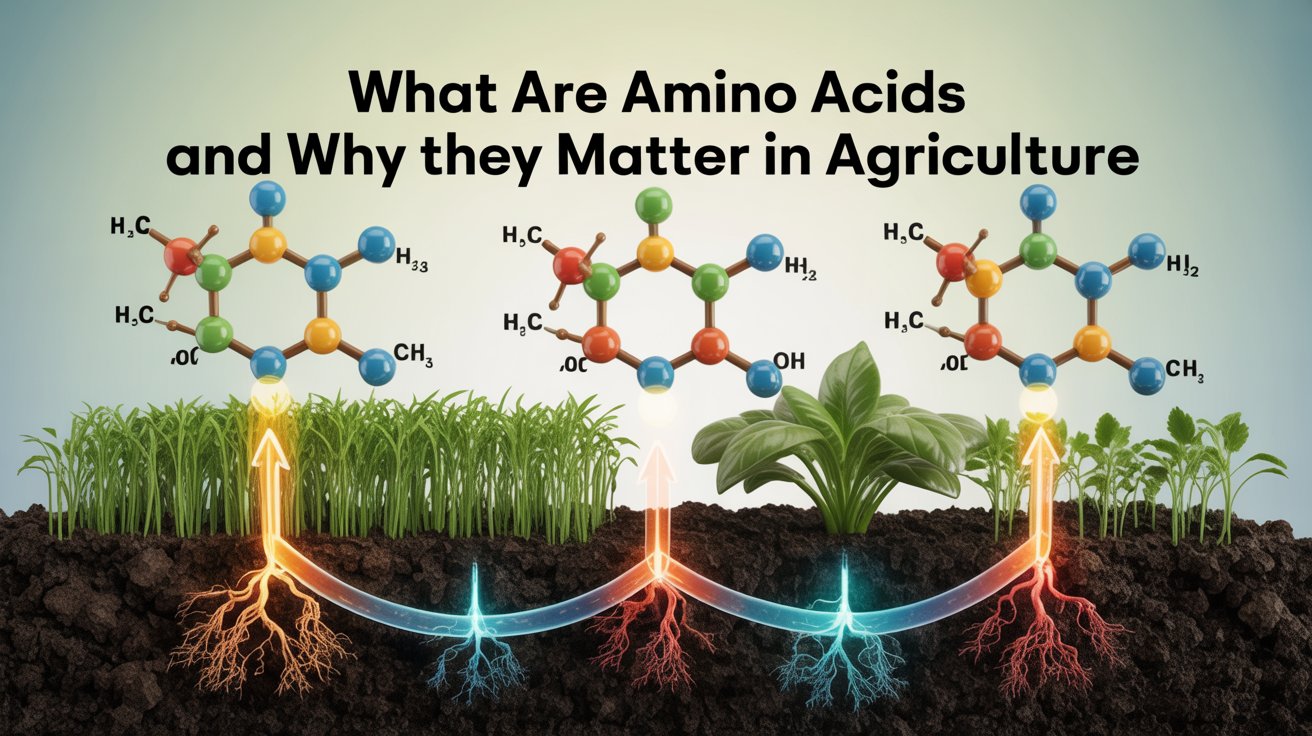
What are amino acids, and how do they relate to agriculture? Amino acids are organic compounds that make up the basic units of proteins, plus, amino acids are necessary for all living things. In agriculture, amino acids are essential for growth stimulation and improved plant health. Better yet, amino acids are an organic compound that is biodegradable, unlike synthetic chemicals, amino acids are a sustainable choice for modern agriculture.
So what do amino acids do for plants? Amino acids help plants uptake nutrients, enhance enzymatic activity, and improve the production of chlorophyll that is needed for photosynthesis. By enhancing a plant's metabolic activity, amino acids make crops more resistant to drought, heat stress, and salinity in the soil. In both foliar sprays and soil applications, amino acids will enhance root growth and overall plant performance, leading to healthier crops with better quality and yields.
Introduction: The Building Blocks of Life in Farming
In agriculture, knowing how the basic components of plant health influence sustainable and productive farming practices is essential. Among the most important components are amino acids sometimes referred to as the "building blocks of life." Amino acids are crucial to the entire crop lifecycle from nutrient uptake and drought resistance to plant health and growth rate. When applied in agriculture, amino acids increase the vitality of soil and crops in an environmentally-responsible manner, while improving the vigor of the plants during their lifecycle and thus crop productivity.
What Are Amino Acids?
What are amino acids? Amino acids are organic molecules made up of Nitrogen, Carbon, Hydrogen and Oxygen, they are the fundamental units of proteins which are necessary for all living organisms including plants. In agriculture, amino acids were found to be powerful biostimulants to enhance key functions of plants including cell division, activation of enzymes, and chlorophyll production.
Amino acids unlike synthetic agro-chemicals offer a natural form of nutrition that is more easily utilised by plants for growth, and has additional benefits to help plants resist environmental stressors including drought, salinity and extreme seasonal temperatures. These benefits are part of amino acids' role as a natural chelator, assisting with nutrient uptake and assimilation to ensure plants are receiving the maximum value and nourishment from soils.
How Amino Acids Are Derived for Agricultural Use

Why Amino Acids Are Essential for Plant Health
What role do amino acids play in plants? They have many important functions that promote plant health, increase stress tolerance, and ultimately increase plant productivity.
- Increase Nutrient Uptake: Amino acids tend to act as natural chelators. They chemically bond to micronutrients (iron, zinc, magnesium), making them more soluble and facilitating their uptake by plant roots.
- Increase Photosynthesis Productivity: Amino acids stimulate chlorophyll production, which is essential for the photosynthesis process. This directly affects the plant's ability to convert sunlight energy into plant growth.
- Help with Enzymes and Hormones: Amino acids are precursors for several plant hormones (i.e. auxins, cytokinins) and alter enzyme functions that regulate many metabolic processes that occur within the plant system.
- Increase Plant Stress Tolerance: Under metabolic stresses induced by drought, salinity, heat or other physiological conditions, amino acids stabilize the cellular structures of plants and reduce oxidative stress and damage. Moreover, during the recovery phase, the increased synthesis of amino acids leads to length of time to recovery.
- Promote Root Development: Some amino acids direct root elongation and branching, increasing the plants ability to acquire water and nutrients from the soil.
- Enhance Flowering and Fruit Set: Amino acids optimally influence the flowering and fruit set stages of plant development by enhancing flower number, viability of pollen, and fruit quantity.
Types of Amino Acids Used in Agriculture
Amino acids can be important in improving crop productivity and improving soil. However, amino acids do not have the same abilities in agricultural settings. Different types of amino acids provide limited value based on plant growth stages and stress conditions. Understanding the different classifications of amino acids is critical for farmers that want to maximize crop growth while utilizing conditions for sustainable agriculture.
Let's look at what amino acids are, amino acid types and how they can enhance agricultural uses.
Essential vs Non-Essential Amino Acids in Plants

Free Amino Acids vs Peptide-Bound Amino Acids

Branched-Chain Amino Acids (BCAAs) and Plant Growth
Branched-Chain Amino Acids (BCAAs) like Leucine, Isoleucine, and Valine are a unique and specific group of essential amino acids known for their unique structure and functionality. Although BCAAs have become a common part of supplements in human nutrition, they also play a key role in agriculture.

When applying fertilizers enriched with BCAAs or BCAA focused biostimulants, farmers will be able to produce crops with improved resilience and get enhanced plant growth in important periods of growth, such as flowering and fruiting.
What Do Amino Acids Do for Crops and Soil?
In the context of agriculture, knowing what amino acids are and their functional role is valuable in improving plant health and soil productivity. Amino acids are more than “nutrients.” They are important components in essential biological activities that govern how a crop grows, responds to stress, and takes up resources from the soil. In this article, we will expand upon what amino acids do for crops and soil production.
Amino Acids as Natural Biostimulants
In agriculture, one of the most critical roles of amino acids are their roles as natural biostimulants. Biostimulants, as opposed to fertilizers, are substances that enhance growth and resiliency, which is done biologically and not nutritionally,

As a biostimulant, amino acids help the plants reach a higher level in terms of optimal performance, which leads to healthier and improved productivity in crops.
Improving Nutrient Uptake and Assimilation
Where do amino acids fit into soils? There are many functions, but one of the most valuable is their facilitation of nutrient uptake and assimilation processes. Amino acids are natural chelating agents, that is, they bind with essential minerals and trace elements in soils, increasing solubility for plant root uptake. The more soluble the minerals and trace elements, the more available they are for plants to absorb into their tissue.
- Chelation of Micronutrients: Amino acids can complex with the minerals and elements in soil that plants need, for example, iron, zinc, and magnesium have complexation examples of soil from amino acids, hence improving bioavailability of the minerals for uptake into root systems.
- Root Stimulation: Certain amino acids, when absorbed by plants, stimulate either root elongation or root branching; both will increase the root surface area for uptake, thus improving nutrient uptake into plant tissue.
- Transport in the Plant: Once nutrients are absorbed, the amino acids will assist in the translocation of those nutrients to various parts of the plant. Amino acids effectively operate to increase the ability of cells to obtain and secure nutrient digestion and transport of nutrients to enhance growth.
As a result, value is created by increased nutrient use efficiency, which not only improves plant vigor but can ultimately reduce fertilizer use for growing food.
Enhancing Photosynthesis and Chlorophyll Production
Photosynthesis is the center of plant life and amino acids play an important role in maximizing photosynthesis. For plants to convert to usable energy from sunlight, plants need sufficient chlorophyll which amino acids are intimately involved in building.
- Improve Chlorophyll Production: Amino acids such as Glutamic acid and Glycine are directly involved in the production of chlorophyll, giving rise to nice green leaves and optimal photosynthesis.
- Enhance CO₂ Assimilation: Enhancing photosynthetic enzymes bring amongst a number of benefits the ability to grab and retain carbon dioxide.
- Enhance Energy Metabolism: Amino acids are involved in the physiological pathways that result in ATP (energy currency) production in plant cells that fuel growth and development.
By enhancing photosynthesis and other related plant processes it ensures that the plant is producing more energy and as a consequence more biomass and fruit set resulting in increases in yield.
The Role of Amino Acids in Soil Health
Sustainable agriculture begins with healthy soil. Chemical fertilizers and compost will add nutrient elements to the soil, however amino acids are working biologically to enhance vitality and structure. To learn how amino acids offer an opportunity for improved quality and sustainability on soils, you must first understand what amino acids are, and what do amino acids do for soil health and sustainability.
Stimulating Beneficial Soil Microorganisms
The soil is full of life, and beneficial microorganisms are essential to micro nutrient cycling, organic matter decomposition and plant health. So what do amino acids do here? Amino acids can provide a rich source of carbon and nitrogen to provide the necessary fuel for microorganisms to grow and be active.
 .
.
By feeding and nourishing beneficial microorganisms found in soil, amino acids also provide the means to use ecosystem services to improve plant nutrient accessibility, associated crop nutrient use efficiency and crop disease resistance at natural levels.
Enhancing Soil Structure and Water Retention
Beyond microbial stimulation, what do amino acids do to improve the physical properties of soil? Amino acids contribute to better soil structure, which is essential for root development, aeration, and water retention.

What are amino acids doing in this context? They not only support the biological life in soil but also physically improve the soil's texture and structure, resulting in better moisture availability and reduced compaction, especially in degraded or sandy soils.
Amino Acids in Organic & Sustainable Farming
Embracing organic and sustainable farming practices is rapidly increasing in importance in contemporary agriculture. Due to their natural origin and multifunctional benefits, amino acids are perfect for supporting eco-friendly practices.
- Act as Eco-Friendly Biostimulants: Aligning with organic certification standards, amino acids promote the health of plants and soils without the addition of synthetic chemicals.
- Reduce Dependency on Chemical Inputs: Use of eco-friendly biostimulants, such as amino acids, enhances nutrient and stress response boosting, which reduces the need for chemical fertilizers and pesticides.
- Support Soil Regeneration: Ongoing application of amino acids restores the biological activity and structure of the soil, thus maintaining long-term soil health, fertility, and sustainability.
Amino acids are key inputs for supporting crop productivity and practicing environmental stewardship. They also help in the adoption of regenerative and organic practices.
Application Methods: How to Use Amino Acids in Farming
Having covered what amino acids are and how they are beneficial for plants and soil, it is important to know what amino acids do when applied by various means. The efficacy of amino acids in the field of agriculture is heavily reliant on the method used to apply the amino acid to the crops. Amino acids, and any other applications for that matter, can be used as a foliar spray, soil drench, or seed coating. These methods have benefits in relation to the crop, the stage of growth, and the farming objectives. Here's a summary of the main ways of applying amino acids in an agricultural setting.
Foliar Spray Application of Amino Acids
Foliar spraying is one of the best methods of providing amino acids directly into the plant tissue. Foliar application of liquid trace amino acids (sprayed on leaf) allows for quicker uptake through stomata as well as the epidermal cells.
- Quick Uptake of Nutrients: One of the main benefits of foliar applications is the immediate uptake of nutrients. This is especially important for amino acids during the plant's critical growth stages or stress conditions.
- Increase Photosynthesis Efficiency: When used as a foliar application amino acids can boost chlorophyll. More chlorophyll improves the plant's efficiency of converting sun energy into energy.
- Reduced Impact of Stress: Foliar sprays support improved recovery from stress conditions such as drought, heat stress, and pest activity by stabilizing cellular processes in plants.
Foliar application is an ideal input to ensure optimal performance of the crop due to a fast increase in tonic response during flowering, fruit setting and in periods of environmental stress.
Soil Drenching and Fertigation with Amino Acids

Amino Acid Seed Treatments and Coatings
Coating seeds with a formulation that is rich in amino acids is another effective way to use amino acids, as it ensures that the young seedlings receive proper nutrition from the start.
- Amino acids improve the early metabolic activity in seeds which makes the germination faster as well as achieve uniformity in germination.
- Amino acids help seedlings to develop stronger roots and shoots which are essential for healthy plant growth.
- Amino acids help seedlings to better cope with soil pathogens, drought, and salinity even in the early stages.
As a whole, the practice is cost-effective which greatly enhances plant vigor while improving crop yield.
Benefits of Amino Acids in Crop Stress Management
One of the most important issues farmers face today is the protection of crops from environmental stresses such as drought, heat, salinity, and soil contamination. In relation to the above challenges, it is essential to understand what amino acids are. Besides nutrition, amino acids play an important metabolic role in stress protection helping crops to adapt and recover from different conditions. Lets see the other side of the coin, what do amino acids do in the context of stress management for crops and how do they protect crops for better resilience and yield.
Helping Plants Combat Drought and Heat Stress
Drought and extreme temperatures exhibit detrimental effects to plant metabolism which may lead to poor yields and sometimes total crop failure. In relation to above challenges what do amino acids do for plants: what are their roles and how do they achieve such physiologic mitigations.
- Support Osmoregulation: Proline and some other amino acids are known to accumulate in plant cells under conditions of water deficit. They help to maintain cell turgord and cell pliancy and thus prevent wilting and cell loss.
- Activation of Heat Shock Protein: Protection of different plant enzymes as well as cellular structures from denaturing heat damages require the synthesis of heat shock proteins. Certain amino acids are known to trigger their synthesis.
- Increase Water Use Efficiency: Especially during periods of drought, amino acids help in sustaining plant hydration, which is important for root development and water uptake.
Foliar sprays or soil applications of amino acids help plants withstand drought and heat stress, aiding their growth and survival during adverse climatic conditions.
Reducing Salinity and Heavy Metal Toxicity Effects
Saline soils and heavy metal contamination are major obstacles in agriculture, hampering nutrient uptake and leading to toxicity symptoms in plants. Understanding what are amino acids and their detoxifying role is key to overcoming these problems.

What do amino acids do in such environments? They serve as natural chelators and protectants, helping plants detoxify harmful substances while maintaining essential metabolic functions.
Enhancing Crop Resilience to Environmental Stressors
Plants are subjected to numerous environmental threats over UV radiation and powerful winds to pests and herbicide strain. Under all these strains, amino acids provide additional protection and help plants to recover from these challenges.
- Amino Acids and Antioxidants: The environmental strains that are brought upon plants also generate free radicals, but amino acids help to increase the production of these radicals’ antidote glutathione, thus supporting antioxidant synthesis.
- Amino Acids and Antioxidants: Due to numerous outside factors, plants face oxidative bursts that weaken and damage their cells. Amino acids aid in stabilizing the cell membranes so that they are resistant to such breakdown.
- Amino Acids and Repair: Events like mechanical damage or pesticide application, provoke stress to crops. Post stress, they are able to repair the damaged tissues and recover much faster due to the presence of amino acids.
Moreover, amino acids are known to help farmers develop stress tolerant plants that are still able to yield crops while facing variable environmental conditions.
Combining Amino Acids with Other Agri-Inputs
One of the primary goals of modern agriculture is to increase the effectiveness of inputs while remaining eco-friendly. What role do amino acids play? In this case, amino acids serve as multifunctional bioactive substances since they benefit plants directly and also improve the effectiveness of other agri inputs. Used with fertilizers, pesticides or soil conditioners, amino acids help with better nutrient uptake, help to eliminate input overuse and enhance crop growth.
Compatibility with Fertilizers and Pesticides
Amino acids have a wide range of compatibility with a variety of chemical and organic fertilizers and pesticides. They do not compromise the stability or effectiveness of other products when added to foliar sprays, soil drenches, or fertigation solutions.
What do foliar and soil sprays do when combined with fertilizers? They act as natural chelating agents and improve the absorption of macro and micro nutrients such as nitrogen, phosphorus, potassium, iron, and zinc. This helps to bolster the efficiency of nutrient use, therefore guaranteeing plants the best possible value from every application.
Amino acids when combined with pesticides help reduce phytotoxicity (chemical burn) by stabilizing the membranes of plant cells. They aid in the quicker recovery of post pesticide stress crop and help to minimize the growing disruptions. This helps aid farmers by being able to consolidate multiple input applications saving time, labor, and resources.
Synergy with Humic and Fulvic Acids
For organic and sustainable farmers, the combination of amino acids with humic and fulvic acids creates a powerful synergy that strengthens soil and plant health. They work together as humic and fulvic acids enhance soil structure, soil water retention, soil microbial activity, and amino acids stimulate plant metabolism and nutrient uptake.
How do amino acids affect this combination? Nutrients bound to humic substances can be transported into plant tissues and roots more efficiently with the help of amino acids. In addition, amino acids enhance the soil’s enzymatic activities triggered by humic and fulvic acids. This combination increases the nutrient supply, supports healthy root growth, and improves the action of biofertilizers and organic fertilizers.
This synergistic effect contributes toward creating a complete nutrient cycle, which allows both the soil and plant to receive the advantages of increased biological activity and less reliance on chemicals.
Amino Acids in Integrated Nutrient Management Programs
In Nutrient Management (INM) programs, the focus is on optimizing crop nutrition by reinforcing the organic, inorganic, and biological inputs in a balanced and rational way. The inclusion of amino acids is a plus in this strategy considering their natural origin and their multifunctional roles in physiology of the plant.
What is the role of amino acids in INM? They serve as a bridge between the conventional fertilizers and biological inputs as they enhance nutrient absorption, help in stress coping mechanisms, and enhance the sustainability of soil health. Wastage of fertilizers is minimized through the action of amino acids as they enhance the uptake and translocation of nutrients within the plant.
Furthermore, their use helps in the gradual reduction of chemical fertilizers which help sustain the ailing soil productivity and ecological balance. The integration of amino acids into INM programs help sustain crop performance, yield, and ecological balance.
Myths and Facts About Amino Acids in Agriculture
In spite of the increasing role of amino acids in agriculture as crop growth enhancers, soil health enhancers, and agriculture facilitators, there remains a lack of knowledge which is resulting into misconceptions which is hindering the maximum utilization of amino acids by many farmers. Knowing what amino acids are and what is their role in modern farming is a prerequisite in separating facts and falsehoods. Let us now attempt to clear the air on some of the common misconceptions around amino acids in agriculture.
Myth: Amino Acids Are Only for Hydroponics
It is a common belief that amino acids are helpful only in hydroponic or controlled farming systems. Some consider only their role in a soilless cultivation to be devoid of any traditional agriculture.
What is the real role of amino acids in agriculture? Regardless of the cultivation method, amino acids are critical in the metabolism of the plants. Their application, whether in hydroponic systems or open field crops, enhances nutrient uptake, stress tolerance, and growth regulation. They also promote biological activity and nutrient cycling in the soil by interacting with soil microorganisms. They are beneficial in all systems of farming, whether organic, conventional, or hydroponic.
Debunking the "Amino Acids = Synthetic Chemicals" Myth
Amino acids can significantly enhance plant and soil health in all types of soils including sandy, loamy, clayey and saline. No matter a farmer's soil texture or composition, amino acids can weather adapt to the changing needs of the agricultural systems.
What are the uses of amino acids in different types of soils? In sandy soils amino acids help to some extent with the water retention and also with the nutrient holding capacity. In clay-heavy soils, they help with root penetration and also help in better aeration. In saline soils, amino acids help with the ion balance which helps to control salt stress. Their function as natural chelators also guarantees that plants get the needed nutrients in spite of the poor and degraded soils.
So, in all conditions, soils amino acids help to increase soil fertility which helps in growth of the plants and helps in better sustainable agricultural practices.
Choosing the Right Amino Acid Products for Your Crops
The increasing use of amino acids in farming has created the new market of amino acid g-biostimulant fertilizers. This is a breakthrough for farmers because the options available are numerous. Nevertheless, picking the right one demands a complete identification of the issues regarding relevance of amino acids and their association to crop and soil requirements and conditions. This simplifies the selection during farming and ensures that the amino acids are used in the right manner for stronger crops and boosted productivity.
Key Factors in Selecting Amino Acid Fertilizers
The following are the fundamental factors to remember for agriculture amino acid product selection:
- Source of Amino Acids: Check the origins of amino acids. Are they plant based, animal protein based, or derived from microbial fermentation. In terms of environmentally responsible farming, plant based or enzymatically hydrolyzed amino acids are preferred.
- Type of Amino Acids Present: Check and ascertain that the product has a mix of both essential and non essential amino acids. Products containing a good quantity of branched BCAA are of particular relevance in difficult times.
- Purity and Bioavailability: Good quality amino acid products will state the proportion of the bio-active components. This information is crucial since free amino acids are quickly absorbed while peptides are a slower source of nutrition.
- Application Method Compatibility: Based on your farm’s infrastructure and crop requirements, select products suitable for foliar sprays, fertigation, or soil drenching.
Knowing the role of amino acids during a plant’s growth phase enables you to choose products for helping seedlings, supporting vegetative growth, for flowering, or for recovering from stress.
Understanding Labels and Concentrations
Using amino acids correctly necessitates reading and understanding the product labels.
- Amino Acid Concentration: Biochemical products containing amino acids and free amino acids should list their concentrations on the label. For foliar applications, products containing 10%-20% free amino acids are effective, while soil-applied products may need to be concentrated.
- Source Transparency: Trustworthy brands provide the source of the amino acids and hydrolysates (plant, animal, or microbial) and indicate the hydrolysis method used (preferably enzymatic hydrolysis rather than chemical).
- Additives and Synergists: Some products are blended with micronutrients, humic acids, and seaweed extracts. Ensure they are in line with your crop nutrition plan and will not conflict with other agro-inputs.
Carefully observe the prescribed doses and the frequency of applications. Wastage and nutrient imbalance may result from exceeding the prescribed amino acid application.
Knowing how to identify amino acids on a product label ensures you are applying the appropriate amount at the appropriate crop stage.
Best Practices for Maximum Crop Yield Results
In application and integration, there are some amino acid application best practices that must be followed in order for optimal outcomes to be achieved including :

If farmers stick with the right products, they can synergistically bolster crop health, stress tolerance, yield efficiency, and overall performance with amino acids while practicing sustainable agriculture.
FAQs
Q1. What are amino acids and how do they benefit plants?
Amino acids are beneficial organic compounds because they help in the formation of proteins in plants. They help in the absorption of nutrients, enzymatic activation, and in improving plant growth and health. In addition, amino acids help in the stress management of plants.
Q2. What do amino acids do to improve crop yields?
Amino acids are essential for better photosynthesis, nutrient uptake, and plant hormonal activities. All of these functions improve the activity of the plant and therefore crop yields, quality, and value.
Q3. Are amino acid fertilizers safe for organic farming?
Yes. Most amino acids fertilizers are safe and approved for organic and sustainable farming. Though, it is important that amino acid fertilizers are obtained from plant sources or through enzymatic hydrolysis.
Q4. How often should amino acids be applied to crops?
Amino acids can be applied every 10-15 days to crops during the critical growth phases of the plant. Such phases include the vegetative, flowering, and fruiting stage. Depending on the type of crop and the environment conditions the frequency of application may vary.
Q5. Can amino acids replace chemical fertilizers completely?
Amino acids do not entirely replace the usage of chemical fertilizers. Rather, they reduce the need for chemical fertilizers. They increase nutrient efficiency and sustainable farming by reducing the need of chemical inputs.
Q6. Do amino acids help in stressed or degraded soils?
Critical microbial functions are important for soil in agriculturally stressed ecosystems. The application of amino acids is known to enhance microbial activity, help in soil structure, and assist in nutrient mobilization. Therefore, amino acids are useful in recovering stressed and degraded soils.
Q7. How are amino acids different from humic acids?
Humic acids enhance the properties of the soil such as the ability to retain water and nutrients, while amino acids are the building blocks of proteins and exert their effects on the metabolism of the plant. Both of them have a positive role in agriculture.
Conclusion: Embrace Amino Acids for Sustainable Farming
In modern farming practices, sustainability and productivity go hand in hand. Chronic underinvestment in effective amino acid research makes farming more sustainable and efficient. Understanding amino acids helps in better farming practices and environmental conservation. They are more than just nutrients. By integrating them with other changes on the farm, amino acids can lead to stronger agriculture and stronger farming systems.
Amino Acids as a Key to Healthier Crops & Soil
Amino acids and their strategic use on the farm can solve different agricultural issues at the same time. They collaborate with soil microorganisms to better soil and promote construction in the soil. This encourages the growth of useful organisms which boosts the organic matter improving the soil structure. If a farmer aims to attain optimum soil fertility and maximize crop production, introducing amino acids will go a long way. With amino acid use, the chances of plant diseases will diminish significantly leading to better agricultural productivity.
Eco-Friendly Farming with Amino Acid Solutions
Amino acids are becoming a vital component in the approach towards eco-friendly farming through the global shift in farming eco-friendly practices. What do amino acids do in eco-friendly farming? They help reduce over-reliance on chemical fertilizers, aid in pollution-free and residue-free soil biodegradation, and encourage biological soil health. Farmers striving to get organic certified see amino acids as a blessing because amino acids ascertain biodegradability, non-toxicity, pollution-free and residue-free cleans the farming practices. These attributes make them fit perfectly for farming that are clean, green, and sustain the nature eco-system.
Future of Amino Acids in Precision Agriculture
Amino acids will help shape the farming future with precision agriculture as the focus turns onto allocation farming inputs and streams to optimize efficiency. Amino acids will play a vital role in this transition by nutrient management through targeted application, stress monitoring of plants, and bio-availability of essential micronutrients. Data-driven varietal bases prescriptions for foliar and fertigation are on the rise and as technology gets better, amino acid use will become even more target; as part of herbicide and pesticide application. With these technologies in place, farming will have better crops and will help support a greener planet.