

NPK Meaning: Unlocking the Secrets to Healthier Plants and Thriving Gardens
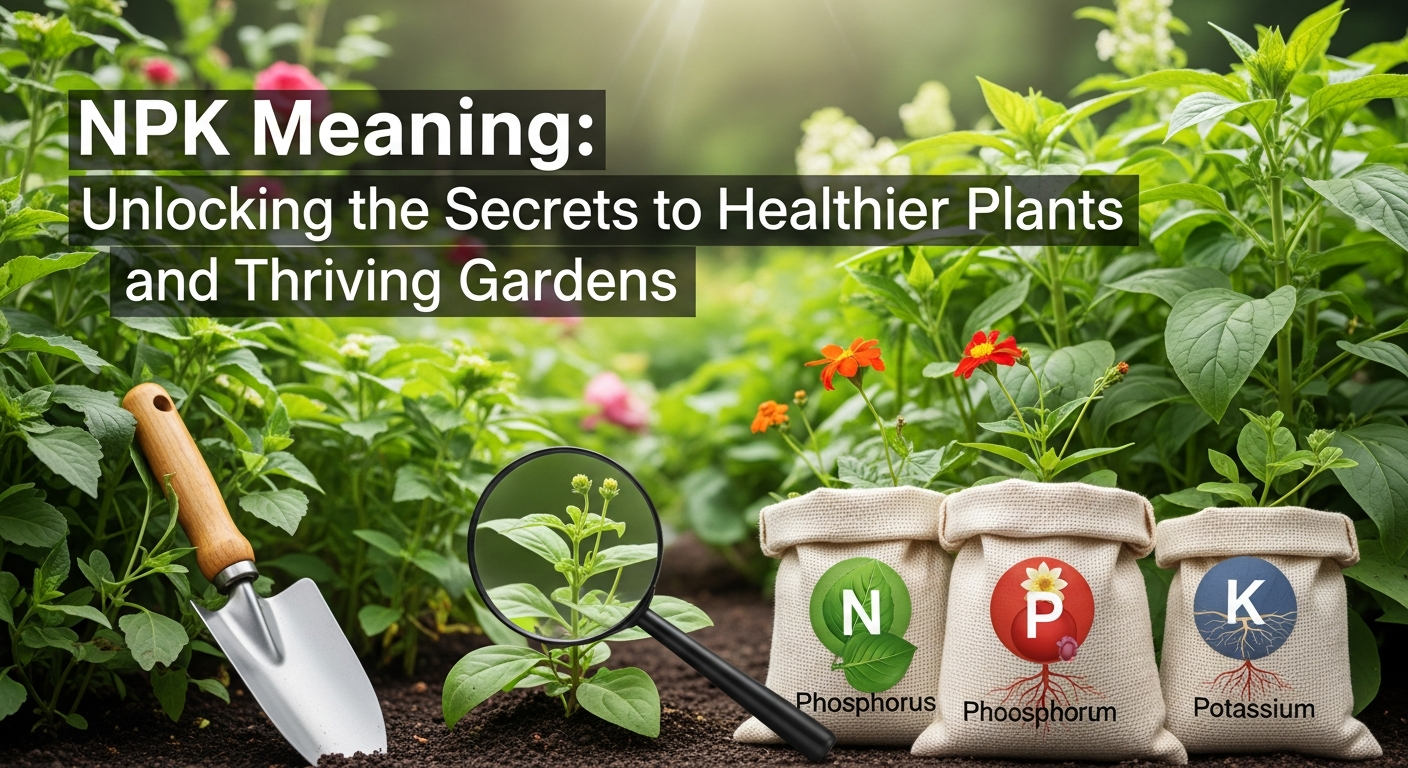
NPK is an age-old formula for the farmers and gardeners that supports the growth of most plants in their healthiest form. To put it simply, NPK stands for nitrogen, phosphorus, and potassium—three of the essential nutrients that all plants require to be healthy and productive, and they must be present in proper proportions to achieve a balanced nutrient supply for healthy growth. Each of these nutrients is vital to the development of a plant, and they work together to supply all the essential components of a plant's structure, including the foliage, roots, flowers, and fruits. NPK Fertilizer contains three different types of nutrients: Nitrogen, Phosphorus and Potassium. Nitrogen helps the plant grow lots of leaves, phosphorus helps the roots to grow and flowers and potassium helps plants resist disease and produce more growth and survive better. So together these nutrients make an NPK Fertilizer a complete nutrient source for all kinds of plants and soils and so every type of plant will be able to absorb and use these nutrients well!
Understanding NPK: What Does NPK Stand For?
Farmers all over the world have been using an important and fundamental formula known as NPK for many years, to help ensure that their crops grow healthy and strong. NPK stands for the three most important macro-nutrients that plants require for every stage of growth, nitrogen (N), phosphorus (P), and potassium (K).Understanding NPK helps the farmer identify what type of fertilizer they are applying, as well as to understand how the fertilizer impacts their soil and their crop production. Just like a young child needs a well-balanced diet to grow up strong, a plant requires NPK in balanced amounts in order to grow effectively on a farm or in a garden.
NPK Meaning and Full Form Explained for Agriculture
The NPK meaning is the representation of the percentage of Nitrogen, Phosphorus and Potassium contained in a specific fertilizer.
Each of the NPK macro-nutrients serves a different function in improving the overall health of plants.
- The macro-nutrient Nitrogen(N) improves the ability of plants to grow healthy green top vegetation (i.e., leaves, stems).
- The macro-nutrient Phosphorus(P) supports improved root development and flowering of plants.
- The macro-nutrient Potassium(K) helps improve both fruit quality and plant disease resistance.
Farmers depend on the NPK numbers of their fertilizers to determine how much and when to apply the nutrients in order to get maximum production from their crops.
What NPK Fertilizer Means for Plant Nutrition
Farmers define NPK as a combined formulation that provides complete feeding to the soil.
NPK fertilizer provides the following benefits to plants:
- Gravel soil (immediate plant nutrition) so that the plant gets its nutrients quickly to assist with maximizing potential growth rate;
- Balanced development of the root, stem and fruit on the plant;
- Maximized soil health during proper application.
NPK fertilizers are available in various ratios, including but not limited to 10-10-10, 19-19-19, and many other crop-specific blends that are targeted toward a specific type of vegetable, grain, fruit, or flower.
Why Nitrogen, Phosphorus, and Potassium Matter in Farming
Each nutrient (N, P and K) in farming has an important role to play in the life of a plant

Based on this, these three nutrients make up a complete system to give your crops optimum health and high levels of productivity from the time of planting to cose time.
The Role of Nitrogen (N), Phosphorus (P), and Potassium (K) in Plant Growth
Plants require the same amount of nutrients as humans to grow optimally. The nutrients (N), phosphorus (P), and potassium (K) are collectively known as the N-P-K Group and provide the plant with essential nutrients to grow at every stage of plant development. Each nutrient supports the plant in a different manner, such as developing a thick leafy stem, developing a strong root system, giving flowers bright colours, and improving the overall quality of the crop harvested from the plant.Each nutrient in the N-P-K group has its own unique role, but combined they form the basis for healthy thriving gardens with high crop yields.
plants also receive different types of benefits from each of the N-P-K group nutrients. This is true because it is important for a plant to receive balanced and sustained nutrition throughout the growing season.
How Nitrogen Supports Leaf and Stem Development
Nitrogen is the nutrient that promotes the growth of rich green leaves and solid stems. It helps plants produce more chlorophyll, which aids in the plants' ability to create their own food using photosynthesis.
Reasons Plants Need Nitrogen:
- Promotes rich green foliage
- Provides plants with strong, tall growth
- Enables photosynthesis and energy creation
- Affect vegetables such as spinach, coriander and lettuce as well as all leafy crops.
Unique Nitrogen Benefits
Nitrogen plays an important role early on in a plant's growth cycle by creating the leaf structure for plants. A lack of nitrogen will result in pale, weak, and stunted growth of plants, similar to the growth of babies who are missing essential nutrients early on in life.
Symptoms of Nitrogen Deficiency
- Leaves turning yellow
- Growth is slow
- Stems are thin, weak.
Why Phosphorus Is Essential for Roots, Flowers, and Energy Transfer
Phosphorus is a primary component of plant development: it affects the foundation for root, flower, and Internal Energy Systems and should be applied to all stages from seedlings to flowering plants.
Why Add Phosphorus to Plants
- Promotes development of strong roots
- Helps develop flowers and fruit set
- Enhances energy transfer through plant
- Helps speed up germination of seeds
The Benefits of Phosphorus
Phosphorus is like brain food for plants—it enables energy (food) to flow through a plant's internal system. Crops such as tomato, brinjal, potato, and fruit trees do well when supplied with adequate levels of phosphorus.
Signs That a Plant is in Need of Additional Phosphorus
- Poor flower production
- Leaves that are purple or very dark
- Rots that are weak.
The Importance of Potassium for Strength, Immunity, and Yield Quality
Potassium protects, strengthens, and supports plants across the board. Potassium helps produce healthier plants that are able to survive in extreme heat, cope with insect and disease damage, and increase the yield of their crops.

Why You Should Use Potassium for Plant Nutrition
Potassium serves as a protective barrier for crops. The addition of potassium to your soil will improve the yield of your crops, and their quality after harvest. The correct amount of potassium is necessary for reaching optimal growth potential for the following plants: Fruits, flowers, root vegetables and cereals.
Signs of Low Potassium Levels in Your Plant
- Brown edges on the plant leaves.
- Poor quality fruit produced.
- Plants that are poorly adapted to the heat and insects.
How to Read Fertilizer Labels: Deciphering the NPK Ratio
The different types of fertilizers all contain a different NPK ratio to meet the specific needs of the plant. Every fertilizer label lists its NPK ratio which shows the percentage of the three elements contained in the fertilizer; Nitrogen (N), Phosphorus (P) and Potassium (K). This information is very helpful in determining which blend of fertilizer will provide the necessary nutrients for the crops. Whether you're growing leafy or flowering plants or producing fruit crops, the way you read the NPK ratio will ensure the plants receive adequate nutrients to maximize their potential.
Understanding Fertilizer Numbers and Their Meaning
A regular fertilizer bag displays its ratio of nitrogen (N), phosphorus (P), and potassium (K) as numbers such as 10-10-10 or 20-10-5, which directly correspond to how much of each component is included in terms of percentage.
The ratio has specific applications:
- N= For the promotion of foliage, chlorophyll production, thick stalks, and healthy plants.
- P= To enhance root development, flower and fruit production, and overall plant health.
- K= For building up a plant's resistance to pests, helping a plant grow stronger, and improving its overall quality.
Choosing the Right NPK Ratio for Farm Crops and Gardens
Different types of plants will have different requirements based upon their growth stage; healthy, sustained growth requires that all of the necessary NPK nutrients be present at each stage of development in order to optimize or continue healthy growth cycles.
When Selecting an NPK Ratio, Consider These Factors:
When selecting an NPK ratio based on the type of plant, consider these nutrients needed by each plant type:
1. Green Leafy Vegetables (Example: Spinach, Lettuce) – Needs More Nitrogen
2. Flowering Plants (Example: Marigold, Rose) – Needs More Phosphorus
3. Vegetables/Fruits (Example: Tomato & Mango) – Needs More Potassium
4. Grass Lawns Prefer Either Balanced Or High-Nitrogen Fertilizer To Produce Dense Thick Green Grass.
Examples of NPK Values for Vegetables, Fruits, and Field Crops
Fertilizer ratios for different crops will not be the same. The table below contains NPK (Nitrogen, Phosphorus, Potassium) fertilizer ratios that many farmers use to determine what NPK
Ratios are successful for their crops.
- -NPK Ratio Table for Common Crops

Choosing the Right NPK Fertilizer for Your Plants
Like babies, who require nutritional items to grow, so do plants. These plants need the proper fertilizer to grow the healthiest way possible. To find the ideal NPK fertilizer, you must know what your plants require and when they will need it in their growth cycle. You need a Fertilizer that provides your plants with all of the necessary nutrients, including healthy roots, healthy foliage, brilliant flowers, and superior yields. The best way to find your optimal fertilizer is to map out your plant's Nutrient Requirements by comparing them to what your plants are, how your soil is, and how your plants grow during the season.
Best NPK Ratios for Vegetables, Flowers, Lawns, and Farms
Each type of plant has a different preference for their NPK Ratio. Below is an easy guide to assist you with selecting the proper fertilizer for your plants:
Vegetable Plants (Tomato plants, Chili Pepper Plants, Leafy Green Plants)
- These plants require healthy foliage, as well as a constant supply of blooms
- Ideal NPK Ratio: 10-10-10, 19-19-19, or 12-32-16 for Fruit/Bearing Crop Plants
Flowering Plants (Rose Plants, Marigold Plants, Hibiscus)
- These plants require phosphorus to create a maximum number of blooms
- Ideal NPK Ratio: 10-20-10 or 15-30-15
Grass/Cultivated Turf (All types of Grass)
- These plants require a great deal of nitrogen in order to develop a lush green appearance.
- Ideal Ratio: 24-0-6 or 16-4-8 NPK
Agricultural Crops (Wheat, Paddy Rice, Corn, Sugar Cane)
- These plants require equal/consistent growth as well as good yields
- Ideal Ratio: 17-17-17, 20-20-20 or specific ratio for each crop made by individual crop manufacturers.
Balanced vs. Specialized Fertilizers: When to Use Each

Organic vs. Synthetic NPK Fertilizers in Agriculture
Agriculture has long benefited from the use of both organic and synthetic fertilizers. Each have their own strengths and weaknesses depending on the type of soil, the type of crops being grown, and what you want to accomplish in your farming practice.
Organic NPK Fertilizers
- Derived from natural sources such as compost, manure and bone meal.
- Improve the structure and microbial life of soils.
- Nutrients in organic fertilizers are released into the soil slowly and consistently.
- Are environmentally friendly and help develop a soil's long-term health.
Synthetic NPK Fertilizers
- Produced to provide rapid release of nutrients.
- Provides accurate ratios of NPK for application to crops.
- Best for large scale production and rapid development.
- Provide optimal growing conditions to plant when the crop needs immediate nutrients.
The Impact of Incorrect NPK Use and How to Avoid Common Mistakes
Giving a baby the wrong amount of certain types of food can cause an upset stomach, but giving a plant too much or too little of the wrong type of NPK fertilizer can do the same thing. It is common for inexperienced farmers to misinterpret the nutrient requirements for fertilizer application, resulting in less than desirable crop production and yield as well as weakened, poor quality plants that have little or no structural integrity. Farmers who apply too much fertilizer, use incorrect NPK ratios, and do not know how often to apply fertilizer will cause imbalances in the nutrient composition of their soils, ultimately resulting in reduced crop health.
If applied incorrectly, NPK fertilizers can affect root formation and development of flowering and can burn the leaves of plants. Therefore, understanding NPK and how they work is critical to implement good agricultural practice. When applied correctly and within recommended guidelines, NPK fertilizers are an excellent way to promote healthy plants and improved crop production.
Over-Fertilization: Soil Damage and Burn Symptoms
The process of over-fertilization occurs when a plant receives excess nutrients from fertilization that the plant is unable to utilize, thus causing toxic levels of that nutrient to form. Over-fertilization of N,P or K is one of the many common errors made by farmers when fertilizing.
What Happens When Plants Over-Fertilize?
- Plants will be affected by the burn that results from over-fertilization; the edges on their leaves will be dark brown or crispy.
- Plant roots are damaged and therefore they can no longer take up water correctly.
- The build-up of salts caused by over-fertilization will hinder a plant's ability to take up any nutrients from the soil.
- The over-fertilisation of a plant will decrease the amount of flowers/fruits that a plant can produce.
What Are the Signs of Over-Fertilisation?
- White crust on top of soil.
- Plants that wilt quickly even after receiving sufficient watering.
- Slow or stunted growth.

Signs of Nutrient Deficiency or Excess in Plants
The type of fertilizers can change based on your plants' needs. Knowing when to use a balanced fertilizer or a specialized fertilizer will allow your plants to maximize their growth.
1. BALANCED FERTILIZERS (10-10-10, 20-20-20):
- provide general maintenance for all plants.
- -deal for beginner gardeners as well as general gardeners.
- Indicate that the nutrient status of the soil is not known.
- Encourage steady growth.
2. SPECIALIZED FERTILIZERS (15-30-15, 30-10-10):
- Correct nutrient deficiencies.
- Used mainly when plants are flowering or fruiting.
- Allow for growth in a specific area of the plant.
- Recommended after testing the soil.
Tip: Use a balanced fertilizer when you want your plants to grow evenly. Use a specialized fertilizer when your plants are off balance or require an additional nutrient supply based on their environment.
Best Practices for Safe and Effective NPK Application
Good application of NPK supports healthy plant growth without stress or interference from other factors. Like providing balanced meals to babies at their appropriate time promotes better health. A good understanding plus application of the correct product at the proper time will produce a greater degree of soil fertility improvement and a higher level of crop production than any other method available today.
Safe Application Tips
- Follow the manufacturer's recommended application rate
- Apply NPK when the soil is slightly moist—this promotes nutrient uptake by plants
- Never apply NPK during periods of direct sunlight—this prevents burning the leaves of the plant.
Use a slow-release or even formula to promote steady growth.
- Smart Fertilizing Practices
- Soil should be tested on a regular basis to determine what nutrients are needed
- The NPK ratio should be matched to the stage of plant growth
- After fertilizing, the plant should be watered to activate the nutrients
- Never combine different types of fertilizer unless directed to by the manufacturer.
FAQs:
Q1. What is the true NPK meaning in agriculture?
NPK meaning refers to nitrogen, phosphorus, and potassium—the three primary nutrients essential for plant growth.
Q2. What does NPK fertilizer mean for farmers?
NPK fertilizer means a nutrient blend that supports healthy crop growth, root strength, and higher yields.
Q3. How do I choose the correct NPK ratio for my crops?
Select the NPK ratio based on crop type—leafy crops need more nitrogen, flowering crops need more phosphorus, and fruiting crops need more potassium.
Q4. What happens if I use too much NPK fertilizer?
Excess NPK can burn plants, damage soil health, and reduce overall crop productivity.
Q5. Can all crops use the same NPK fertilizer ratio?
No, crops have different nutrient requirements, so fertilizer ratios must be adjusted to each crop’s growth stage and needs.
Conclusion: Harness the Power of NPK to Transform Your Garden’s Success
When you understand NPK, which means nitrogen, phosphorus, and potassium, you can make smarter choices about what fertilizer to use to grow healthy plants. By understanding how NPK will help the growth of your plants, you can determine the correct NPK ratio of fertilizer that will strengthen your plant's roots, encourage blooming, and help create a healthy crop as a whole. Fertilizing with the correct ratios of N-P-K provides the plants with the proper nutrients and will allow for healthy explosive growth.
Selecting the appropriate N-P-K ratio for each specific plant will aid in avoiding oversaturation and over-application as well as facilitate creating optimum environmental conditions for successful gardening. Fertilizers that are applied and used consistently with the proper amount of information to support their use will reduce the occurrence of nutrient deficiencies, increase the soil's overall structure, and enhance the quality of future crops produced from that specific garden area. Applying fertilizers, such as NPK, using the proper methods and ratios will not only help increase the productivity of the garden area, but also improve the overall experience of gardening. In addition, through the improvement of fertilizer application techniques and the improvement of soil structure, the gardeners will be able to produce healthier, stronger and more vibrant plants.