

Unlocking Plant Potential: The Powerful Benefits of Mycorrhizae on Roots
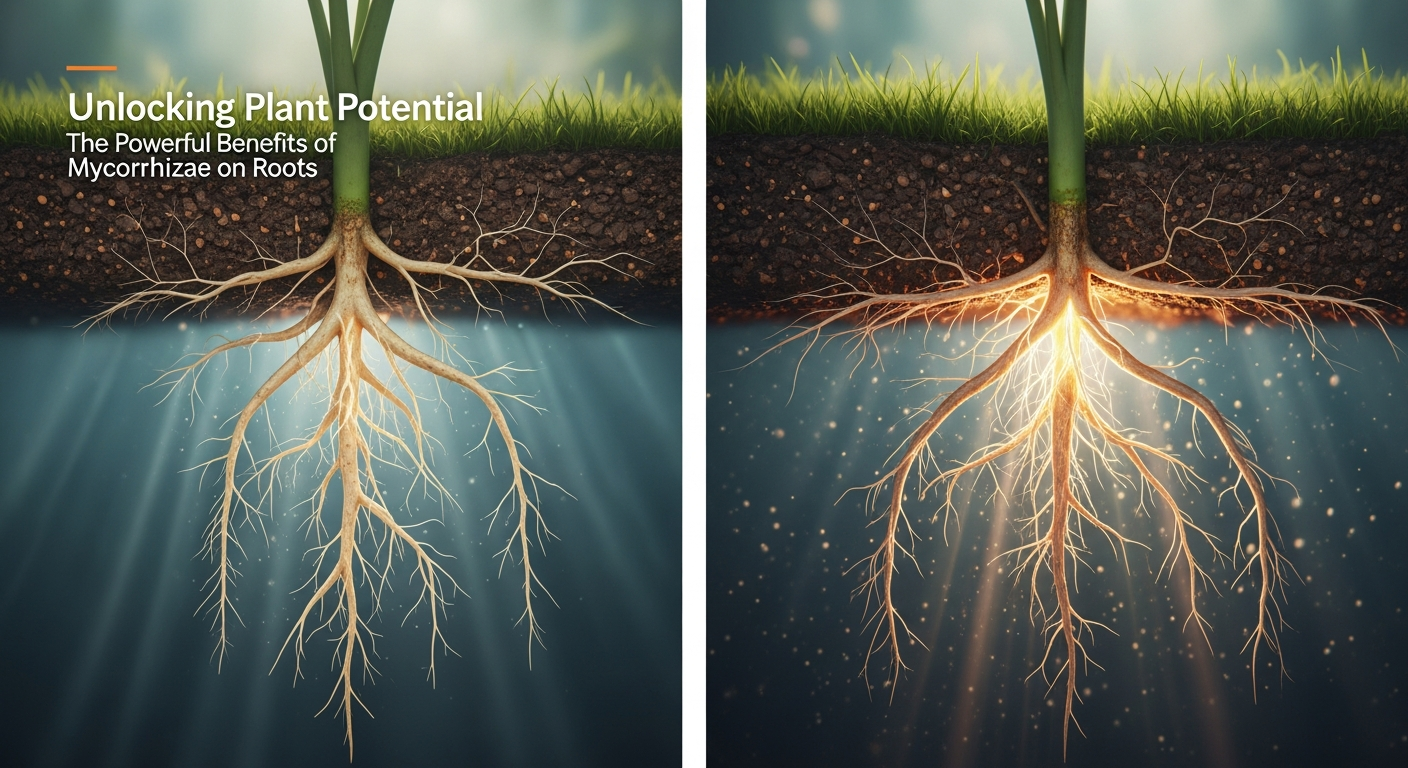
Mycorrhizae (fungi) growing on the roots of plants are an extremely beneficial relationship that has contributed to the successful growth of plants for millions of years. In this relationship, beneficial fungi attach to the roots of plants, expanding a plant's root system. The mycorrhizae help the plant get access to nutrients and water from the soil, providing the plant with an extended root system, making it easier for the plant to get nutrients than if the plant relied exclusively on its roots.
Mycorrhizae on the roots of plants support and improve the plant's ability to absorb nutrients from soil, e.g., phosphorus, zinc, and other micronutrients. The mycorrhizae grow through the soil in a network of fine threads, increasing the effective surface area of the roots and therefore increasing the efficiency at which the plant absorbs nutrients from the soil, including when growing in poorly constructed or compacted soils.
In addition to providing nutrition, mycorrhizae on the roots of plants help improve the health and strength of the roots of plants, increasing the plant's ability to withstand stress, increasing plant immunity to soil-borne diseases. As a result of the benefits of mycorrhizae, plants are observed to exhibit increased rates of growth in the early stages of development, higher ability to withstand drought, and more stable yields during the growing season.
The natural advantages of mycorrhizae are currently being utilized by introducing them into agricultural soils through the application of mycorrhizal biofertilizer, which introduces beneficial fungi into the soil in a controlled manner. By utilizing mycorrhizae, farmers and gardeners can unlock the full potential of a plant while developing healthier soils, improving its sustainability and growing multiple crops each season or year.
Understanding Mycorrhizae: Nature’s Root Allies
The application of mycorrhizae helps support the roots of plants (known as the root system) by providing enhanced performance of the root system and thereby contributing to the health and performance of the overall plant. The mycorrhizae on the roots form a living bridge from the plant to the soil nutrients that can enhance the ability of the roots to be more effective in taking up and using nutrients in the soil than they could on their own. The application of mycorrhizae to the land surface has been around for thousands of years, and the use of mycorrhizal biofertilizer in agriculture to create sustainable and resilient crop systems is growing rapidly.
Farmers and gardeners can make sound decisions pertaining to soil, management of soil nutrients, and long-term productivity by understanding how the roots and fungi associate in the model of root-fungus relationships.
What Are Mycorrhizae and Why Roots Depend on Them
Mycorrhizal fungi are beneficial organisms that can attach or enter plant roots by forming the root mycorrhizae. By doing this, the fungi will extend a plant's root system deep into the surrounding soil. As a result, mycorrhizal fungi act as nutrient scouts by penetrating soil and accessing nutrients even if it is beyond the reach of roots.
Mycorrhizal fungi provide several advantages to plant roots:
- They help to increase the amount of phosphorus, zinc, and micronutrients that can be absorbed
- by plant roots
- They help to improve the ability to obtain water when the soil is dry
- They increase the surface area of roots without creating additional root growth
- They support the establishment of healthy and rapidly growing plants
Plants that have mycorrhizal fungi at their root tips are much more likely to survive and thrive in nutrient-poor soils, compacted soils, and/or when they are under physical stress.
Symbiotic Relationship Between Roots and Fungi
Roots and mycorrhizal fungi have a mutually beneficial (symbiotic) relationship. Plants make carbohydrates during photosynthesis and provide them to fungi, while fungi provide plants water and other nutrients needed for plant growth.
The way this relationship (symbiotic) works is as follows:
- Roots send out signals that attract mycorrhizal fungi to their root zone.
- Mycorrhizal fungi will colonize the roots of the forest plants without damaging them.
- The plant receives nutrition and fungi receive sugars.
The benefits of having mycorrhizal fungi associated with the roots of plants are:
- Stronger root systems.
- Increased resistance to diseases in the soil.
- Increased resistance to drought, salinity and heat stress.
This natural equilibrium provides the scientific basis for the application of mycorrhizal biofertilizers today.
Types of Mycorrhizae Found on Plant Roots
Different plants form different types of mycorrhizal associations depending on their species and environment. Each type plays a unique role in nutrient exchange and root support.

How Mycorrhizae Interact with Plant Roots
One of Nature’s Most Efficient Symbiotic Systems is the Relationship Between Plants and Fungi That Occurs Between Mycorrhizae on Roots, Creating a Living Network That Supports Root Function and Increases Nutrient Uptake and Resiliency in Plants. The Process Is Natural and Occurs Below Ground. Though This Connection May Go Unnoticed, It Is One of the Most Important Components to Plant Vigour and Yield. Farmers Are Now Applying This Natural Process Through Intentional Use of Commercial Mycorrhizal Biofertilizer.
Learning How Mycorrhizae Interact to the Roots of the Plant Explains Why Plants With Mycorrhizal Roots Are Stronger, Establish More Quickly, and Are More Productive When under Stress.
The Mycorrhizal Colonization Process
The emergence of mycorrhizal colonization starts with the roots of plants releasing chemical signals that attract the fungus into the soil surrounding the root.
Mycorrhizal colonization is a step-by-step process:
- The root exudes sugars and signaling compounds.
- Fungal spores in the vicinity of the root germinate.
- Fungi attach to or penetrate the roots in a safe manner.
- Stable structures are formed as a result of the Hz/Az connections between roots and fungi.
Once mycorrhizal fungi are established on the roots of a plant, they will remain active for the lifetime of that plant, continuously assisting with nutrient uptake and development of the roots.
How Nutrient and Water Exchange Works
One of the main advantages of mycorrhizal fungi associated with roots is an efficient means for the exchange of nutrients and water. Since a fungal hypha is much thinner than a root, it can explore many tiny pores throughout the soil.
What Fungi Give to Plants:
- Phosphorus, Nitrogen
- Zinc, Other Trace elements
- Water, from deeper layers of soil
What Plants Give to Fungi:
- Carbohydrates produced in the process of photosynthesis

Strengthening the Root System Through Fungal Networks
Mycorrhizal fungi do much more than help plants access nutrients – they also provide a significant boost to the overall structural integrity of a plant's root system. Due to the way in which fungus forms inter-connecting networks (mycelium) in the ground, they bind soil together and establish stable connections for roots to grow.
The benefits of mycorrhizal networks include:
- Better branching and structure of roots
- Greater anchoring ability and less root stress
- Greater ability to resist soil-borne pathogens
- Enhanced ability to withstand periods of drought and/or extreme heat.
By establishing a mycorrhizal network in the ground, you create an underground support system that helps to support your plants' roots for long periods of time. The use of mycorrhizal biofertilizers can provide these same benefits even when applied to low-fertility or degraded soil.
Types of Mycorrhizal Associations Found on Roots
Fungi that live on the roots of many plants form different relationships according to the type of plant, what kind of growth you are wanting to achieve with the plant, and what type of growth the plant has. Mycorrhizae on the root systems of plants create a symbiotic relationship, allowing the plants to thrive in various types of soil by facilitating nutrient, water, and protection through the mycorrhīgae. Successful understanding of these mycorrhizal associations leads to more successful mycorrhizal biofertilizers that can be effectively used for particular trees, crops, and ecosystems.
All types of root mycorrhizal associations contribute to healthy long-term plant growth, while also providing different benefits to the soil environment.
Arbuscular Mycorrhizae (AM) in Agricultural Crops
Agricultural crops are primarily supported by the most frequently occurring mycorrhizal fungi, called arbuscular mycorrhizae (AM). Arbuscular mycorrhizal fungi invade root cells and create specialized structures within them that help facilitate an efficient exchange of nutrients between plants and fungi.
What are the main characteristics or characteristics of arbuscular mycorrhizal fungi?
- Found in many different plant species, including cereals, legumes, vegetables, and oilseeds
- Good at increasing phosphorus availability
- Enhance early root development and overall crop health
- Form the basis of the majority of available commercial mycorrhizal biofertilizers
What are the benefits of having arbuscular mycorrhizal fungi in our agricultural systems?
- Improved yields and nutrient efficiency
- Reduced reliance on chemical fertilizers
- Improved crop resilience and stress tolerance
If we want to create sustainable and productive crop systems, we must use arbuscular mycorrhizal fungi.
Ectomycorrhizae in Trees and Forestry Systems
Ectomycorrhizal roots have a different rooting system than other types of root mycorrhiza. They are formed by a fungus surrounding the surface of the roots, while other forms of mycorrhiza involve fungi entering the root cells. This type of association is generally found on long-lived woody plants, such as many kinds of conifers and hardwood trees.

Ectomycorrhizal networks also function as an underground connection between trees, and therefore play an important role in nutrient cycling and maintaining overall forest ecosystem resilience.
Specialized Root Mycorrhizae in Orchids and Ericaceous Plants
Many plants survive and reproduce with very specific mycorrhizal relationships with their roots. Orchids and ericaceous plants, such as tea and berries, require these specially adapted fungi to survive.
Some summary examples of these specialized associations include:
- Mycorrhizal relationships for orchids are required for seed germination and initial root development.
- Mycorrhizae for ericaceous plants are required to access nutrients from the acidic, low-nutrient growing mediums they thrive in.

Mycorrhizae on Roots in Sustainable Gardening and Agriculture
Sustainable gardening/agriculture should be done through working WITH nature instead of AGAINST her; this includes mycorrhizal fungi working with the roots of plants. Mycorrhizal fungi (mycorrhizae) work together with plant roots to increase nutrient use efficiency, create healthy soil ecosystems, and help sustain production over time. This natural relationship has been enhanced by the use of mycorrhizal (biological) fertilizers and good farming practices.
As more people understand the importance of soil health, using organic materials, using regenerative methods to produce crops, root mycorrhizae will become an integral part of sustainable crop and garden practice.
Reducing Chemical Fertilizer Dependency Naturally
Mycorrhizae provide many benefits to the root system; among these are the reduction of dependence upon synthetic fertilizers. Mycorrhizal fungi process existing nutrients already available in the soil, which allows access to the nutrients naturally.
Following are the methods by which root mycorrhizae can reduce the use of chemical fertilizers:
- Increase phosphorus availability and availability of many micronutrients
- Increase the efficiency of utilization of nutrients
- Reduce nutrient leaching to ground water and runoff of nutrients from agricultural fields
- Provide consistent growth of the plants without overfeeding
Going through these natural cycles of nutrient availability allows farmers to produce the same yield while decreasing their costs and having less negative impact on our environment.
Role of Mycorrhizal Biofertilizer in Soil Health
Mycorrhizal biofertilizer can add beneficial fungi to the soil and promote the creation of healthy mycorrhizal roots. These beneficial fungi improve the biological and physical properties of soil.
Soil health benefits include:
- Improves soil structure and creates better aggregation of particles
- Increases diversity of microorganisms present in the soil
- Increases ability of soil to hold, retain and introduce water into the soil
- Improves contact between roots and soil

Supporting Regenerative and Organic Farming Practices
The regenerative and organic methods of growing food produce a means of returning to the biological processes of nature while rebuilding (regenerating) the soil. Mycorrhizae at the roots of plants are an exact correlation to this end objective with restoring the function of soil and aiding in plant resiliency.
The mycorrhizae also provide these key benefits to regenerative farming methods;
- Improvement of root structure and storage of soil carbon
- Increasing drought tolerance and the ability to adapt to changes in climate
- Providing for an increase in biodiversity both above and below ground
- Providing for reduced reliance on outside chemical inputs.
The use of mycorrhizal biofertilizer, when integrated into sustainable agricultural practices, will increase the health of the crop plants, the quality of the soil, and the ability to maintain long-term ecological balance.
The Science Behind Success: Research on Mycorrhizae and Roots
Numerous sources of scientific evidence support the association between vital mycorrhizal fungi on root systems and improved levels of crop yield, soil quality, and overall agricultural sustainability. Current scientific studies validate what was previously documented in natural, wild ecosystems through laboratory research, greenhouse trial data, and/or test results from large field-scaled tests. Therefore, it is clear that root-associated mycorrhizal fungi are recognized as one of the key components contributing to successful biological farming, which has contributed to the world-wide recognition of mycorrhizal biofertilizers.
Ongoing research supports the assertion that root systems with strong mycorrhizal associations develop into extremely healthy, productive crops.
Key Scientific Studies on Root Mycorrhizae
There has been a plethora of scientific research on the impacts of root mycorrhizae on nutrient uptake, plant growth, and plant adaptation to stress. Controlled studies looking at both mycorrhizal and non-mycorrhizal plants clearly demonstrate that the presence of mycorrhizae provides several benefits.
Some of the key findings of these research studies include:
- Increased phosphorus and micronutrient uptake
- Greater root branching/surface area
- Increased drought and salinity tolerance in plants
- Better establishment of crops in their earlier stages.
Studies have shown that mycorrhizae on the root systems of plants dramatically increase the efficiency of plants, even in soils low in nutrients.
Field Trials Showing Yield and Root Health Improvement
Field trials validate the advantages of utilizing mycorrhizal applications in the environment outside of lab studies. Numerous field trails with a wide array of crops and climates have uniformly demonstrated improvement as a result of the use of mycorrhizal biofertilizers.
Net benefits observed in field trials include:
- Increased crop yield and consistency of growth
- More vigorous, deeper rooted plants
- Reduced fertilizer use with no reduction in yield
- Improved plant survival during times of stress

Long-Term Soil Biology Benefits Proven by Research
Research showing long-term benefits of mycorrhizal associations has demonstrated that these associations do not only have an instant effect on the growth of crops, but also develop the biology of soils for many years into the future.

Mycorrhizal biofertilizer supports the development of soil life through the enhancement of sustainable yields and soil regeneration. It is an essential practice for any farming system that is forward-thinking.
FAQ’s
Q1. What are mycorrhizae on roots?
Mycorrhizae on roots are beneficial fungi that form a symbiotic partnership with plant roots to improve nutrient and water absorption.
Q2. Do all plants benefit from root mycorrhizae?
Most plants benefit from root mycorrhizae, especially crops, trees, and vegetables, though a few plant families do not form these associations.
Q3. How does mycorrhizal biofertilizer improve root health?
Mycorrhizal biofertilizer strengthens roots by enhancing nutrient uptake, improving root structure, and protecting against soil stress.
Q4. Can mycorrhizae replace chemical fertilizers?
Mycorrhizae can significantly reduce the need for chemical fertilizers but usually work best when combined with balanced nutrient management.
Q5. How long do mycorrhizae stay active on roots?
Once established, mycorrhizae remain active on roots throughout the plant’s life as long as soil conditions remain favorable.
Conclusion: Harness the Power of Mycorrhizae on Roots for Thriving Plants and Sustainable Growth
The key to utilizing the advantages of mycorrhizae on roots is to cooperate with nature’s most effective aid to the development of plants. Through the establishment of a strong root-mycorrhizal association between plants and mycorrhizal fungi, plants have improved access to nutrients, enhanced water uptake efficiency, and increased natural resistance to soil stresses and disease. This fungal root association begins as soon as a seed germinates, which helps to develop stronger roots, resulting in increased health and crop resilience across multiple growing environments.
Organic farmers and gardeners have increasing concerns about soil degradation and the excessive use of chemical inputs in agriculture, and therefore mycorrhizae are an ideal alternative crop solution for sustainable agriculture. Mycorrhizal biofertilizers will allow gardeners and farmers to incorporate beneficial mycorrhizal fungi back into their soils, thus increasing nutrient use efficiency and restoring the soil’s life and structure. As a result, these practices will ultimately reduce the reliance on fertilizers and enhance long-term soil fertility.
Sustainable food production through the incorporation of mycorrhizae in traditional farming and gardening practices is on the horizon. The integration of mycorrhizae will provide plants with health today while contributing to the development of soil and ecosystems that will support future generations and therefore creating a productive, resilient, and environmentally sustainable food supply.