

Unlocking the Power of Mycorrhizae and Plants: Transform Your Garden and Farm Naturally
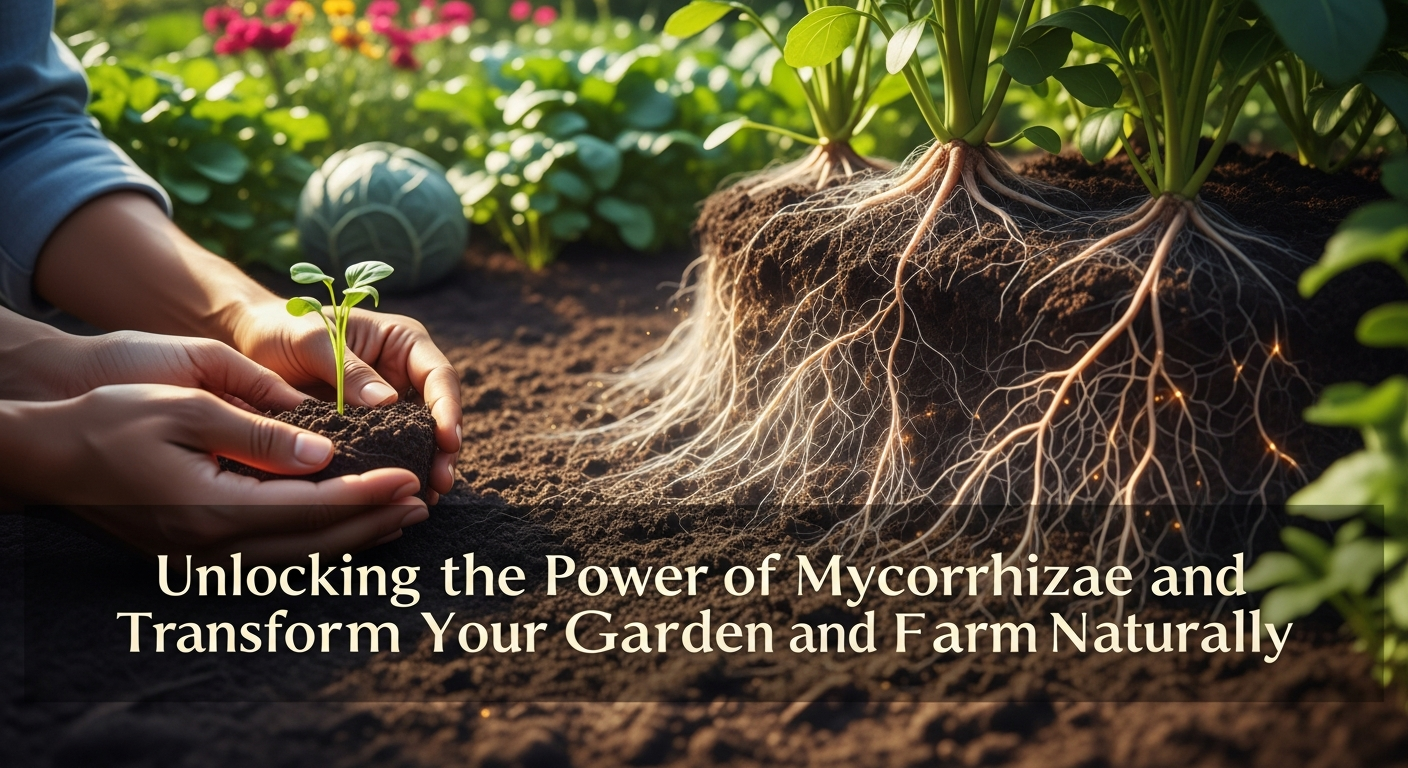
Mycorrhizal fungi are a type of helpful fungus that live in the soil. They are microscopic and have been working with plants since the beginning of time. When there are Mycorrhizal fungi in the soil, they allow nutrients like nitrogen, phosphorus, micronutrients, and water to be taken up by plants much easier than if there were not any fungi present. The connection between Mycorrhizal fungi and plant roots has a huge positive effect on plant growth, soil quality, and resiliency, so using Mycorrhizal fungi can help farmers, home gardeners, or others who want to enhance the natural growth of plants. Mycorrhizal fungi and plants work together to ensure that all roots receive the essential nutrients that they require for healthy and robust growth!
Understanding Mycorrhizae: Nature’s Plant Partners
There are many types of mycorrhizal associations, and all types can be very good natural partners for a growing plant. They are gentle on the soil, they are easy to inoculate into the soil, and they can help with crop viability at all points of a plant's growth cycle. A mycorrhizal association will support the growth of plants from below the soil, stimulating root strength, nutrient acquisition and plant wellness overall.
Here is a list of the major elements of a mycorrhizal partnership each mycorrhizal partnership is clearly outlined, with ample detail and an easy-to-follow format.
What Are Mycorrhizae and Why They Matter in Agriculture
Mycorrhizae, which are beneficial fungi found in nature, have a long-lasting partnership with the roots of plants. They help plants acquire important nutrients (such as phosphorus, nitrogen, and micronutrients), which are often found in the soil at high concentrations but can be challenging for roots to retrieve on their own.
Mycorrhizae have an exceptionally important role within agriculture for many of the following reasons:
- 1. Increased Root System Support and Stability
- 2. Increased Nutrient Absorption Efficiency, therefore, reducing the amount of Fertilizers Required
- 3. Improvement of Soil Health by creating a Network of Fungal Mycorrhizal Hyphae for Storage and Transportation of Nutrients
Because of this versatility and adaptability in function, Mycorrhizae are highly recommended as the first biological amendment for Farmers transitioning to either natural or organic farming due to their high success associated with most crops.
How Beneficial Fungi Interact with Plant Roots
The interactions between mycorrhizal fungi and plant roots begins when active root tip contact with fungal spores. After making contact, the fungal hyphae attach and grow into the root system and develop mycorrhizal structures that will exchange nutrients with the plant.

The mycorrhizal fungal connection to the plant roots is comparable to having an extended root system, which allows for greater access to nutrients, better growth and a better food source. The structure and texture of the fungal network provide an environment for root systems that is naturally protective, especially during early establishment.
Role of Soil Microorganisms in Supporting Mycorrhizal Growth
In fertile soils, lots of different types of microorganisms including bacteria, fungi, and protozoans, help plants thrive. Microorganisms create the optimal conditions for mycorrhizal fungi.
Microorganisms play an important role for plants in:
- Converting organic matter into nutrient form available for fungi and plants.
- Helping to adjust the pH balance and improve the structure of the soil.
- Increasing the speed at which plants benefit from colonization by mycorrhizal fungi.
Farmers and gardeners must maintain diverse populations of microorganisms to obtain maximum potential longevity of soil quality. Microbial-diverse soils are most responsive to the application of mycorrhizal inoculants and have markedly better yield and resilience than soils that are not as diverse.
The Science Behind Mycorrhizae and Plant Growth
Mycorrhizal fungi are among the strongest natural partners for plants. They form a symbiotic relationship with roots of many plants allowing for the extended root systems of the fungi to provide increased access to nutrients that the plants would not normally be able to acquire through their root systems alone. This partnership increases nutrient absorption and supports stronger crop production while also improving soil quality and health — thus, making mycorrhizae an important aspect of modern agricultural practices.
How Mycorrhiza Improves Nutrient Uptake in Crops
As roots become increasingly competitive for space, moisture, and nutrients, the fungi will continue to grow in support of the plant.
Benefits
- Fungi offer many benefits to the plant. The fungal hyphae increase root surface area by almost 100 times.
- They help the plant get all of the nutrients that are typically hard to reach (now easily accessible).
- The crop will be stronger, due to reduced reliance on synthetic fertilizers.
Phosphorus Absorption and Root Colonization Explained
Mycorrhizae can easily unlock phosphorus, which is normally very difficult for plants to access.
Benefits of mycorrhiza include:
Transposing non-available sources of phosphorus to a form of phosphorus that plants can use
Build deep-root colonization for sustained long-term nutrient flow
Help support plants to grow in phosphorus-deficient soils

Enhanced Plant Nutrition and Vigorous Growth Through Symbiosis
Mycorrhiza develops a two-way relationship between the plant and the mycorrhiza that allows for better overall health of the plant.
Benefits of mycorrhiza for your plant's overall health are:
- Better nutrient balance for your plant starting with the first days of development through to maturity.
- Improved plant’s immunity against disease.
- Faster and more vigorous above and below ground growth of the plant.
Types of Mycorrhizal Relationships in Plants
Several types of symbiotic relationships exist between mycorrhizae and plants, which offer mutually beneficial advantages to the plant and mycorrhizal type. The availability of these different types of symbiosis provides a unique way to increase nutrient absorption, improve soil structure and enhance the ability of crops to withstand adverse conditions. For example, arbuscular mycorrhizal fungi (AMF) occur throughout the majority of terrestrial ecosystems, while there are many types of specialized (or evolved) mycorrhizal symbionts associated with orchids and ericoids (heathers) that aid in the efficient functioning of the roots of those species, enabling higher overall efficiency in all types of agricultural and natural systems.
Arbuscular Mycorrhizal Fungi (AMF) for Most Agricultural Crops
- AMF represents ~80-90% of crops exhibiting mycorrhizal fungi and is found in the majority of crop species.
- The purpose of AMF maturity is the absorption of vital nutrients by Host Plants, such as P, Zn, etc. needed to promote optimal herbaceous plant growth.
- The structure created by AMF fungi, consisting of many tiny/intertwined branches (often referred to as "arbuscules") to aid in the absorption of nutrients by Host Plants, enhances the exchange of those same nutrients between fungi and host plants.
- AMF will provide excellent support for vegetable, grain, pulse, and fruit crops and are therefore considered an indispensable partner in sustainable agricultural systems.
Ectomycorrhiza for Tree-Based Farming Systems
Ectomycorrhiza establish connectivity with the roots of tree species and plantation crops, most commonly from types of oaks, pines, eucalypts, and walnuts. Unlike AMF (arbuscular mycorrhizal fungi), ectomycorrhiza (ECM) fungi do not enter into root cell interiors; instead, they form a sheath around the exterior of roots, thereby increasing a tree's/mineral absorption capability from deeper soil levels.
Ectomycorrhiza improves the tree's ability to withstand adverse conditions such as: poor soils, drought, and extreme temperatures. As such, ectomycorrhiza fungi are well suited for agroforestry, timber plantation, and orchard systems.
Specialized Mycorrhiza Types: Orchid & Ericoid Associations
All Orchid Species require orchid mycorrhizae for germination and growth.

Ericoid mycorrhizae support plants from the family Ericaceae (blueberries, heathers, rhododendrons, etc.) and some medicinal shrubs.
- Plants that grow naturally in acidic or sandy, nutrient-deficient, or peat-rich soils do not respond well to traditional fertilizers.
- Ericoid fungi decompose hard to break down organic materials and release nitrogen, sulfur, and micronutrients directly into the soil, helping plant roots absorb nutrients that they would not have access to otherwise.
- A plant's tolerance to the toxicity of aluminum, acid, and drought are enhanced with the addition of ericoid mycorrhizae.
Berry producers are using mycorrhizae combined with other plants to naturally produce higher yields of fruit that have more sweetness and larger root mats.
As a result, berry producers are experiencing an increase in nutrient uptake, greater berry production, and increased drought resistance.
How Mycorrhizae Benefit Your Garden or Crops
Mycorrhizae provide a range of growth advantages throughout the different life stages of the plant and crops. By enhancing the ability to absorb nutrients and enhancing the quality of the soil, they ultimately aid in increasing the resiliency of the plant. The mycorrhizal fungi provide a natural type of anchor or support to the roots of the plant, providing a good environment for planting vegetables in gardens, farming, orchard production, and the production of field crops.
Improved Drought Resistance and Water Efficiency
These mycorrhizal fungi provide an extensive underground network of hollow tubes (hyphae), providing plants with access to water held deeper in the soil and retaining that moisture longer through drought.
- Increased Crop tolerance to drought and/or Summer heat caused by erratic rainfall
- Significantly Reduced water usage through irrigation
- Provide protection for New transplants when experiencing transplant shock
- Increase drought tolerance of plants
These mycorrhizal solutions would aid farmers who live in areas with limited water sources, as well as home gardeners who must deal with increasing water usage restrictions.
Better Soil Structure and Stronger Root Systems
Mycorrhizae are a major mechanism of improving soil structure and porosity through creating a sponge-like structure that bonds together soil particles through binding the soil particles to each other. As such, mycorrhizae will improve the aeration and drainage of a soil while allowing nutrients to be held by the soil.
- Hyphal (fungal) filaments create loose, crumbly soils
- The roots of plants grow deeper, wider, and stronger.
- Over time, the soil will become less compacted.
- Mycorrhizae will also support the long-term fertility of the soil and the movement of water in the soil.
By using the process of natural soil engineering through the production of mycorrhizae, crops grow more vigorously and can produce greater yields.
Natural Disease Resistance and Reduced Crop Losses
The mycorrhizal fungi surrounding the roots of plants creates a barrier to harmful pathogens that can infect the plant's root system, stimulating the plant's defense mechanism so that it can be more resistant to the soil pathogens that can lead to soil-borne disease.

Farmers employing the use of mycorrhizal fungi typically have lower levels of crop failure and will have stronger overall health for their plants.
How to Introduce and Support Mycorrhizal Fungi in Your Soil
In addition to providing many types of benefits to almost all cultivated crops, mycorrhizal fungi are beneficial for enhancing growth rates and improving the increasing nutrition of crops grown by all forms of agriculture (i.e., vegetables, fruits, grains, ornamental plants, etc.). These are the most effective means to promote and maintain the highest levels of mycorrhizal activity in your soil.
Applying Mycorrhiza Fertilizer to Seeds, Soil, or Roots
For optimum effectiveness, the contact between mycorrhiza fertilizer with the roots, seeds or the rhizosphere of the plant is essential in allowing faster colonization and stronger growth.
The Mycorrhiza can be applied in three main ways:
1. Seed Application (Seed Coating):
- Ideal for grains, vegetables, legumes, and field crops.
- A light coat or dusting of mycorrhiza is applied to the seed before sowing.
- Facilitates the initial bonding between roots and fungi which results in a faster nutrient uptake.
2. Soil Application:
- Good for raised beds, containers, orchards, and large planter areas.
- This application method may be applied to a soil layer 2-3 inches beneath the surface.
- This method of application is especially useful for developing larger and stronger root systems in crops grown in the early stages of planting.
3. Root Dipping (Transplant Method):
- Great for transplanting tree saplings, seedling young plants, and vegetable plugs.
- The exposed roots are dipped into mycorrhiza before being placed in the planting hole.
- Dipping roots into a Mycorrhiza-enhanced solution during the transplanting process reduces transplanting shock, while also helping seedlings and saplings to become established quickly.

Best Conditions for Mycorrhizal Inoculation in Agriculture
Second, Mycorrhiza needs an environment where Soil and Environmental Conditions are favourable for Fungal(s). Expecting M. to thrive without appropriate Soil Conditions is like expecting a newly planted seed to thrive without the proper condition for Growth-Stage (e.g, appropriate growing medium) and Plant Performance.
Required Conditions:
Mycorrhizal success occurs in:
- Activated and Transported via Moist (non-wet) soil.
- Low or Moderate Phosphorus, as excess P will reduce Fungal Colonization.
- Soil Temp's between 15 Degree & 32 Degree (C); Optimal for All (Most) Ag (Agronomic) Fungi.
- Minimal Soil Disturbance - Tillaged soil will disrupt and/or break mycorrhizal/fungal networks.
- Soil Rich in Organic Material (or Organic-Matter); Promotes Mycorrhizal Community.
Some Practices That Help Create and Provide Mycorrhizal Establishment:
- Reduce Deep Tillage (reducing frequency/severity) - Protect Mycorrhizal Hyphae.
- Water Regularly - Avoid Over Saturation.
- Avoid Chemical Fungicides Until Early Colonization is Established.
- Add Compost (or Organic Matter) to Feed Supporting Microorganisms.
Companion Planting and Native Species for Enhanced Soil Biology
crops exist because specific species support and promote beneficial relationships between mycorrhizal fungi and the plant they colonies. These companion crops provide benefits to the soil and to the spread of mycorrhizal fungi through improvement in soil health and several species are good choices for supporting, protecting, and improving plant health.
BEST COMPANION CROPS FOR MYCORRHIZAL GROWTH
- Legumes such as peas, beans and chickpeas build up the soil’s fertility and support the growth of fungi.
- Cereals such as wheat, maize, barley serve as hosts for arbuscular mycorrhizal fungi (AMF).
- Fruit trees establish long-term relationships with mycorrhizal fungi.
- Grasses and cover crops keep roots in soil alive through the growing season.
PLANTS THAT DO NOT FORM MYCORRHIZA
Some families of crops naturally do not form associations with mycorrhizal fungi.

Crops from the foregoing groups should rotate carefully to avoid damaging mycorrhizal networks.
HOW NATIVE PLANTS ARE BENEFICIAL TO THE SPREAD OF MYCORRHIZAL NETWORKS
- Native plants have co-evolved with the area’s fungi.
- They assist in restoring degraded soils using methods of Sustainable agriculture.
- They naturally add to the soil’s texture, organic matter content, and microbe population.
Avoiding Common Mistakes: Ensuring Successful Plant-Mycorrhiza Connections
Mycorrhizae benefit plant development significantly; however, their utility rests upon the level of professionalism demonstrated in maintaining them within soils.. If a garden or field has been managed in a professional manner, the mycorrhizae will have created an abundance of mutually beneficial relationships with both the roots of the plants and the soil and, therefore, have improved plant growth through increased amounts of nutrients absorbed by the plant, increased efficiency of water usage by the plant, and increased ability of the plant to combat disease. Below are some common errors made by hobby and agricultural gardeners and the easiest ways to facilitate successful plant to mycorrhiza relationships.
Impact of Synthetic Fungicides on Mycorrhizae and Plants(graphic)
Synthetic Fungicides may protect plants from diseases but can also injure healthy fungi responsible for nutrient uptake and soil health.
Problem with Using Synthetic Fungicides:
- There are many products that kill beneficial Mycorrhiza spores prior to their colonisation of the host plant (,).
- Chemical residue from synthetic fungicides will increase the time that it takes mycorrhizae to grow in the soil and lower the overall function of the relationship with their host plant (,).
- The dependency created when a synthetic fungicide is used will create a situation where synthetic fungicide dependent plants will not use the healthy biological properties of their mycorrhizal hosts (,).
Best Management Practices:
- Apply synthetic fungicide only when needed and only use organic products (e.g., neem oil), and products that are Mycorrhiza Friendly.
- Apply Mycorrhiza at time of planting and use synthetic fungicides 2-3 weeks after planting if needed.
- Use neem oil, Bacillus Based Bio-fungicides, and plant extracts that will not injure Mycorrhizae.
How Excessive Fertilizer Use Reduces Mycorrhizal Effectiveness
High levels of fertilizer use, such as phosphorus-based fertilizers, prevent mycorrhizae from acting on the plants
- High levels of phosphorus, create an automatic “stop” signal for plant roots;
- Excess nitrogen inhibits growth of fungi in the root zone;
- Ultimately soil will become biologically inert over time;

After mycorrhizae are inoculated using chemical fertilizers, reduce the amount of chemical fertilizer by 20-30%;
Minimizing Soil Disturbance to Protect Fungal Networks
Mycorrhizal fungi build delicate interconnected networks underneath the soil that allow plants to more easily obtain moisture and nutrients located distant from the plant.
Why soil disturbance is damaging:
- Through deep tillage of soil, the “highways” that are used by mycorrhizal fungi to connect plant roots are destroyed.
- Disturbance of the soil forces the fungi to begin developing new networks from scratch.
- Repeated disturbance of the soil results in reduced soil structure and reduced carbon sequestration.
How to improve the way we farm:
- Utilize no-till or low-till farming practices.
- Utilize mulch to protect the surface of the mycorrhizal threads.
- Limit disturbance when planting to only the area surrounding the root zone — leave the remaining area undisturbed.
The Future of Agriculture: Harnessing the Potential of Mycorrhizae and Plants Together
Plants and mycorrhizae have been in collaboration for over 200 million years; this ancient relationship is rapidly changing how farmers use mycorrhizal fungi as part of sustainable farming practices.
World-wide farmers are actively utilizing mycorrhizal fungi for improving their soils, increasing their crops’ ability to endure extreme weather events, and eliminating or greatly reducing the amount of chemical fertilizers they apply to their crops.
By using mycorrhizal fertilizers, farmers will not only ensure healthier soils through improved nutrient cycling, increased root mass and structure, and improving the amount of water their soils retain; but they will also increase their overall productivity and resiliency to the impact of climate change while decreasing their overall impact on the environment.
The following are some examples of how mycorrhizas are already changing growing methodologies for certain types of crops.
Mycorrhiza-Based Sustainable Agriculture Models
The principles of mycorrhizal agriculture emphasize the development and use of beneficial fungi for the creation of a healthy, resilient ecosystem.
The basis for developing mycorrhizal agriculture is the fact that when mycorrhizal fungi are in contact with plant roots, they help plants absorb nutrients better, help develop soil structure, and enhance naturally occurring microbial activity.
Additional benefits:
- Mycorrhiza creates a living nutrient network surrounding plant roots.
- By relying less on synthetic fertilizers, plants are able to thrive using far fewer synthetic chemicals than they would otherwise have to use.
- Soil quality improves, becoming richer, more porous, and retaining more moisture.
- Cereals, vegetables, fruit trees, pulses, and oilseeds all benefit from this type of agricultural approach.
Through the use of mycorrhizal agriculture techniques, farmers are able to leave behind chemically dependent farming methods and shift towards a healthy approach to agriculture that regenerates and builds soil health.
Reducing Chemical Inputs with Mycorrhiza Fertilizer Technology
Mycorrhiza Fertilizer is a biological product that dramatically reduces the need for chemical fertilizers while producing healthy crop yields, and in many cases the crop produced is superior to that produced by the application of chemical fertilizers.
How Mycorrhiza Fertilizer Cuts Chemical Dependency
- Mycorrhiza Fertilizers Increase Phosphorous Uptake, Lessening the Need for Chemical P Fertilizer.
- Mycorrhiza Fertilizers Improve Nitrogen Utilisation, Reducing the Requirements for Urea.
- Mycorrhiza Fertilizers Support Enhanced Micronutrient Uptake (Zn, Fe, Cu, Mn).
- Mycorrhiza Fertilizers Increase Root Strength and Reduce the Need for Chemical Boosters to Promote Growth.

Role of Mycorrhiza in Regenerative and Climate-Resilient Farming
Mycorrhizae are essential for building regenerative farming systems that restore soil health, promote biodiversity and protect plants from environmental stress. Different species of mycorrhizae provide benefits to the farmer by providing different strategies for improving the resilience of their farms.
Benefits of Using Mycorrhizae in Regenerative Agriculture
- Mycorrhizae create stable aggregates of soil, thus restoring structure to degraded soils.
- Mycorrhizae increase the amount of organic carbon found in soils, which plays an important role in the regenerative process.
- Mycorrhizae enhance the diversity of soil microorganisms and maintain a healthy long-term supply of nutrients for plants.
Features of Mycorrhizae that Enhance Climate Resilience
- Mycorrhizae improve a plant's ability to retain moisture and thus survive periods of drought.
- Mycorrhizae increase the size and depth of root systems and improve a plant's ability to obtain water and nutrients.
- Mycorrhizae help plants withstand extreme temperatures, salts and poor-quality soils.
- Mycorrhizae allow plants to recover from environmental shocks quickly.
In summary, Mycorrhizae are a natural form of insurance for farmers by making their farms more resilient to the unpredictability of climate change.
FAQs:
Q1. What are mycorrhizae and why are they important for agriculture?
Mycorrhizae are beneficial fungi that attach to plant roots and greatly improve nutrient and water uptake for stronger, healthier crops.
Q2. How does mycorrhiza fertilizer improve crop growth?
Mycorrhiza fertilizer boosts root development and increases nutrient absorption, leading to faster growth, higher yields, and better stress tolerance.
Q3. Can all crops benefit from mycorrhizal fungi?
Most crops benefit from mycorrhizae, especially vegetables, grains, fruit trees, and field crops, except a few non-mycorrhizal species like cabbage and spinach.
Q4. How long does it take for mycorrhiza to colonize plant roots?
Mycorrhiza typically begins colonizing roots within 2–4 weeks after application, depending on soil conditions and crop type.
Q5. Do chemical fertilizers and pesticides affect mycorrhizae and plants?
Yes, high-phosphorus fertilizers and strong chemical pesticides can reduce or inhibit mycorrhizal activity, limiting their benefits to crops.
Conclusion: Embrace the Synergy Between Mycorrhizae and Plants for Thriving Farms and Eco-Friendly Agriculture
Mycorrhizae are one of the best examples of how plants and mycorrhizae can be used together to produce good results. The relationship between mycorrhizae and the roots of the plant provides many different benefits, including improved access to water and nutrients as well as increased protection from pests and diseases, as well as increased soil health without the need to add large amounts of synthetic fertilizers.
By using mycorrhizae fertilizers and/or inoculants, farmers can achieve long-term soil health, increased crop yield, and improved plant resilience in difficult climates, and the use of this environmentally friendly approach helps to produce a healthy plant today while rebuilding the soil for future generations.
From backyard gardens to industrial farms, nurturing the beneficial relationship between mycorrhizae and plants leads to better soil, stronger plants, and a more sustainable agricultural system.
If you want to improve your farm, your soil, and your environment each season, you should start incorporating mycorrhizae with your plants today!