

Unlocking the Power of L-Amino Acids in Agriculture: Essential Building Blocks for Crop Health
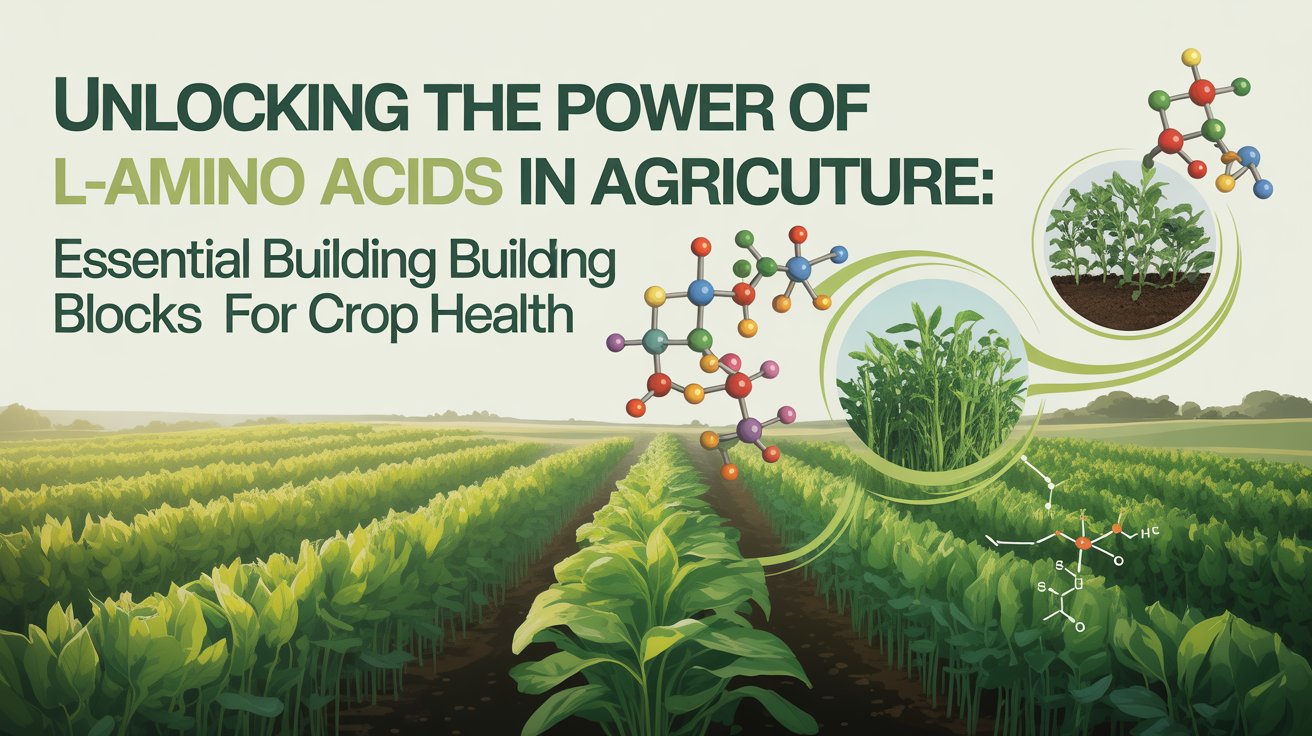
L-Amino acids indicate amino acids that are found in the natural state and are essential to both plants .
These amino acids help provide key functions such as the production of proteins, absorption of nutrients, and resistance to stress; therefore, they represent a basic component of agriculture today.
Plants use L-forms directly and thus are commonly called ideal amino acids; therefore, these amino acids help to improve the strength of crops, improve the rate of recovery, and improve performance under adverse environmental conditions.
As every application of L-amino acids aids in improving the quality & consistency of yields through enhanced soil health, L-amino acid applications are a great resource for support of sustainable, efficient farming practices.
Understanding L-Amino Acids in Agriculture
Modern agriculture heavily relies on L-amino acids, as they help promote plant development, increase nutrient uptake, and aid plants during stressful conditions.
Plants directly use these biologically active amino acids and are therefore much more efficient at this than other sources; as a result, they are being used by farmers more often than any other source of amino acids to provide the balanced nutrition needed for optimal crop quality and yield in a sustainable manner.
What Are L-Amino Acids in Plant Biology?
L-amino acids are the biological active, natural form of amino acids used by plants to create proteins and regulate their growth. L-amino acids are critical for plant metabolism, allowing plants to grow in the best way, even under adverse environmental conditions.
The key points are as follows:
- L-amino acids are the basic building blocks of plant proteins.
- L-amino acids support enzyme and hormone production.
- L-amino acids help in chlorophyll formation, and therefore photosynthesis.
- L-amino acids improve the uptake of nutrients by plants.
- L-amino acids promote plant recovery from stress

Why L-Form Amino Acids Are Biologically Active in Crops
Plants, in general, absorb L-form amino acids because they are the most efficient form for this absorption. This also means that they do not need to be converted into a different form before plants can use them for growth and development. As a result, L-amino acids are extremely effective in enhancing plant functionality and efficient nutrient usage.
KEY POINTS:
- Absorption is direct through roots/leaves
- There are no energy costs associated with converting to usable form
- The plant's physiological response is quicker and the results are more easily seen
- Increases plant efficiency with using nitrogen
- L-amino acids are useable by all plants, at any stage of growth

The Concept of “Perfect Amino Acids” for Optimal Plant Growth
A perfect amino acid is an even distribution of essential amino acids in a mixture that delivers complete nutrition to plants (crops); therefore, having the proper ratio of these amino acids will allow for optimum growth and development of the plant. Using the right ratio of amino acids will help improve the uniformity/quality/resistance to stress of your crops.
Key Points:
- Provide complete/balanced nutrition for plants
- Improve flowering and fruit set
- Improve drought and stress resistance
- Promote healthy roots/shoots
- Increase crop quality/market value

The Role of L-Amino Acids in Crop Metabolism
Active amino acids (which have an L configuration) are a very important part of the metabolic processes of plants. They are responsible for supporting the biochemical processes of a plant's growth and development. Active amino acids enable plants to efficiently convert nutrients into energy, proteins, and/or enzymes.
When used correctly, active amino acids will provide plants with all necessary characteristics and qualities of a perfect amino acid, which will then enable plants to carry out their metabolic functions smoothly and provide better quality crop production.
Supporting Protein Synthesis in Plants
L-amino acids are key components in creating proteins necessary for growth, development, and the structural integrity of plants. They are also important for creating enzymes and structural proteins needed for growing cells and developing tissue, resulting in stronger and healthier plants.
Benefits:
- Provide building blocks of plant proteins
- Assist with cell growth and division
- Aid in the development of new tissues
- Increase structural strength of plants
- Promote overall crop development

Enhancing Enzyme Activity and Nutrient Uptake
Enzymes are activated by L-amino acids which allow for a quicker reaction time of the metabolic processes within plants. These amino acids will also improve how plants absorb nutrients by increasing their ability to absorb minerals from the soil. As a result, L-amino acids aid in making more efficient use of fertilizers and improve the overall efficiency of the plant.
Key Benefits:
- Increased enzyme activation speed for faster reactions
- Increased efficiency of nutrient absorption
- Aiding in the chelation of micro-nutrients
- Increased fertilizer usage efficiency
- Aiding the overall metabolism of the plant

Improving Photosynthesis and Energy Transfer
L-amino acids promote chlorophyll synthesis; therefore, they improve the transfer of energy throughout the plant cell, enhancing the plant's ability to convert sunlight into energy and, in turn, increasing the speed at which crops develop and their yield potential.
Key Highlights:
- Increase chlorophyll form
- Increase the efficiency of photosynthesis
- Aid in as a source of energy for the plant cells
- Provide support for the formation of sugars/starch
- Increase the overall productivity of crops

L-Amino Acids vs D-Amino Acids in Agriculture
Maximizing crop yield requires a solid understanding of the distinction between L and D amino acids in agriculture. Although they both represent classes of amino acids, plants can only use L amino acids directly, so they are considered the best and most effective of the two groups of amino acids, or "perfect" amino acids, when it comes to supporting plant growth and development.
Structural Differences Between L and D Forms
The reason that both L-form and D-form amino acids have the same chemical structure but have different structures, which in turn influences any chemical interactions, is that plants have evolved to use only L-forms of amino acids. Thus, any D-forms of amino acids need to be converted by the plant before they can be used.
Key Facts:
- Same chemical structure, different structural orientation
- L-form amino acids are naturally active in plants
- D-form amino acids are not directly usable by plants
- Difference in structural orientation affects plant absorption of amino acids
- L-form amino acids are more efficiently absorbed by plants

Why Plants Prefer L-Amino Acids
Plants absorb and immediately use L-amino acids directly without needing energy or a conversion process to be able to do so. This allows L-amino acids to rapidly improve the metabolism, growth and yield of the plant.
Key Points:
- L-amino acids can be absorbed directly by the plant cells
- Energy is not required for the conversion of L-amino acids
- Rapid plant response
- Increased efficiency in plant metabolism
- Increased compatibility with plant systems

Impact on Soil Microbial Activity
The presence of L-amino acids can positively affect microbial activity within the soil. Beneficial L-amino acid nutrients for these types of microorganisms enhance soil fertility and help support both plant growth and development.
D-amino acids are limited in their effects, or have inconsistent effects, on soil biological processes.
- Stimulate beneficial soil microorganisms
- Improve overall soil fertility and structure
- Promote the cycling of nutrients within the soil
- Enhance the overall interaction between roots and microorganisms
- Support sustainable forms of agriculture

Agricultural Benefits of L-Amino Acids
Many benefits come from using L-amino acids in regard to increasing the size of the plant, resisting potential damage from stress, and increasing total yield per cycle; therefore, using these amino acids find good use as a natural growth stimulant or perfect form of amino acids in regard to agriculture's sustainable application.
Boosting Root Development and Vegetative Growth
Root development and growth of stems are stimulated through healthy root systems using L-amino acids, which will result in improved access to water and nutrients for the plants, as well as improving root health in addition to strengthening their overall structure. Therefore, L-amino acids can help increase establishment rates of crops and accelerate their early growth stages.
Benefits of L-amino Acids
- Stimulate root growth
- Increase absorption of water and nutrients
- Aid in development of leaves and stems
- Increase growth rate of seedlings
- Strengthen plant structure

Enhancing Stress Tolerance (Drought, Heat, Salinity)
The available amino acids can help plants manage environmental stresses, such as drought, heat, and salinity. They improve the internal defense mechanisms of the plant, resulting in reduced levels of stress damage, allowing for continued plant growth during adverse growing conditions.
The following are the key points to remember:
- Affects a plant's ability to resist drought
- Reduces damage from heat stress
- Increases a plant's tolerance to salinity
- Aids in a plant's ability to recover after stressful conditions
- Helps to sustain a plant's metabolic activity

Increasing Yield Quality and Uniformity
Crops' appearance and yield improvement can be attributed to L-amino acids, which promote high-quality fruit and flower development, create uniformity across the production area and add to the marketable value of the produce by resulting in higher yields. Using amino acids has the benefit of producing consistently high-quality crops.
Highlights:
- Amino Acids can help improve flowering/fruit set
- Amino Acids can improve the produce's size, color and taste
- Amino Acids can help promote uniform growth of crops
- Amino Acids can help improve overall yield quality
- Amino Acids will increase the market value of crops

Sources and Application of L-Amino Acids in Farming
Due to their origin from natural/ biological processes, they are ecologically sound and exceptionally effective for agricultural use. The method of application is critical to optimizing plant uptake and use of these amino acids.
When used properly, they provide a reliable source of amino acids to crops through improving performance, increasing nutrient efficiency, and increasing total productivity on the farm.
Natural and Fermentation-Derived Amino Acids
There are several ways in which L-amino acids could be sourced, but two of the most common methods are via enzymatic hydrolysis of natural protein sources, or through fermentation. Regardless of the source of the L-amino acids, by using these methods both enzymatic and microbial fermentation, the amino acids will retain their biological activity and be readily available for plant uptake. Among the different options for deriving amino acids from fermented sources, fermentation is often the most preferred due to its purity and effectiveness.
Some of the important points are:
- Made from either plant or animal protein
- Manufactured via either enzymatic or microbial fermentation
- High availability to plants
- No harmful chemicals in product
- Suitable for sustainable and organic farming

Foliar Spray vs Soil Application Methods
Foliar spray and soil application of L-amino acids will depend on the growth stage of the crop and nutrient requirements. Each method of applying the amino acids has its own benefits for delivering nutrients effectively. Using the right method for the plant will ensure the best absorption and the quickest response from the plant.
Brief highlights:
- Leaks provide rapid nutrient from leaves
- Soil will provide slow growth from roots
- Leaves provide rapid visible results
- Soil will establish long-term growth
- Method used will depend on the growth stage or condition of the crop

Integrating Amino Acids with Fertilizers and Bio-Inputs
When paired with fertilizers and bio-inputs, L-amino acids provide a significant boost in available nutrients as well as an increase in the effectiveness of other agricultural inputs. By combining L-amino acids with fertilizers and bio-inputs, farmers can minimize their fertilizer application to achieve improved crop production.
Key Points:
- Improve fertilizer absorption efficiency
- Enhance micronutrient availability
- Compatible with bio-fertilizers and organic materials
- Reduce dependency on chemical fertilizers
- Support sustainable farming practices

FAQs
Q1-What are l-amino acids in agriculture?
L-amino acids are biologically active amino acids that plants directly absorb to support growth and metabolism.
Q2-Why are l-amino acids important for crops?
They improve nutrient uptake, enhance growth, and increase crop yield and stress tolerance.
Q3-What are perfect amino acids in farming?
Perfect amino acids refer to a balanced mix of amino acids that provide complete nutrition for optimal plant growth.
Q4-Are l-amino acids better than d-amino acids for plants?
Yes, l-amino acids are better because plants can absorb and use them directly, unlike d-amino acids.
Q5-How are amino acids applied in agriculture?
Amino acids are applied through foliar sprays or soil treatments for effective plant absorption.
Conclusion: Harness the Power of L-Amino Acids for Sustainable Crop Performance
L-amino acids have been used as a tool for enhancing the growth of plants through increased efficiency of nutrition and increased tolerance of stress (bio-activity of amino acids). These biologically active forms of amino acids help crops to perform optimally in both normal and stressed conditions.
Farmers can achieve optimal nutrient balance by utilizing perfect amino acids, as well as improve yield and uniformity of the crops produced. Integrating l-amino acids into agricultural production will increase production, provide for sustainable and environmentally friendly agriculture, and provide benefits over time for future agriculture.