

Unlocking Plant Potential: The Powerful Effects of Humic Acid on Plants
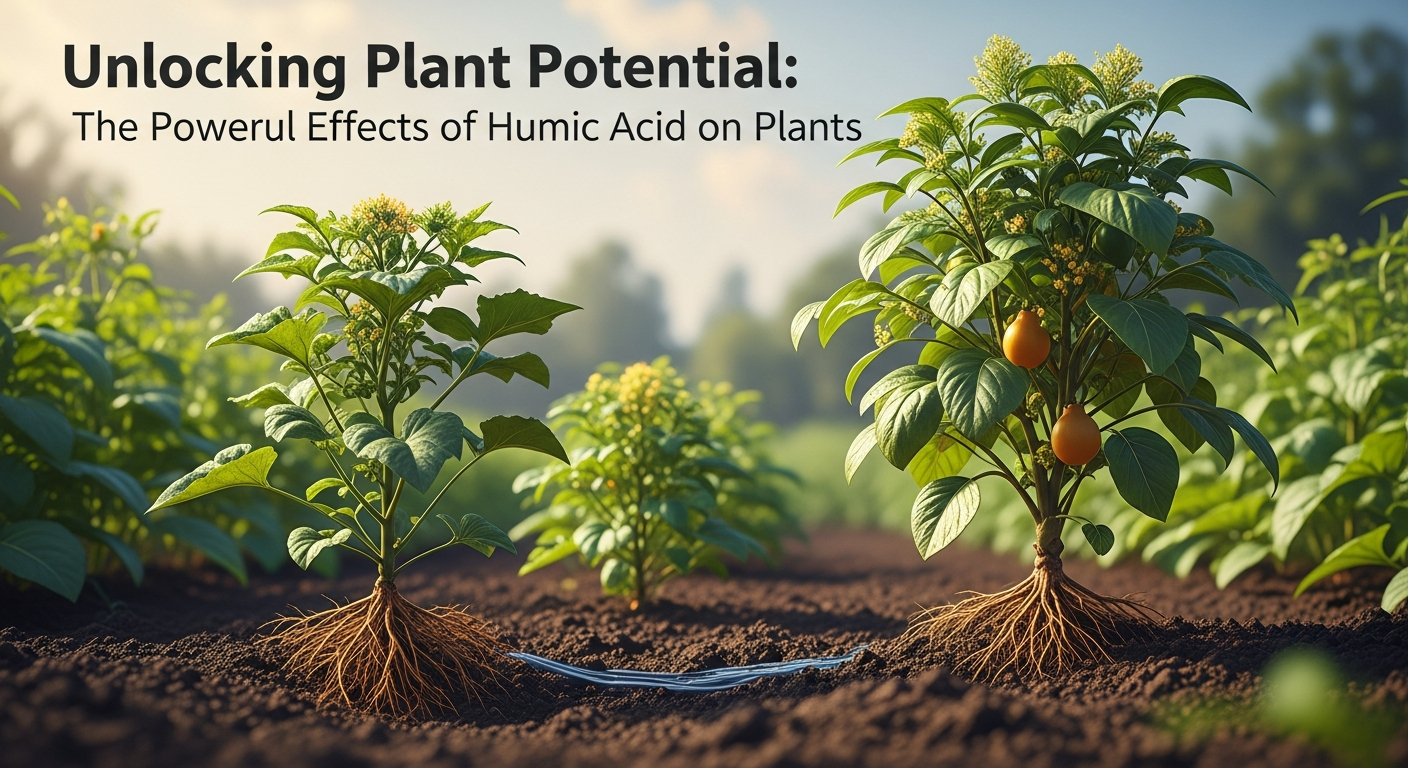
Humic acid is an organic substance that originates from decomposed plant and animal matter found in soil, and it has enriched agricultural soils and created healthier plants for thousands of years. Humic acid is composed of carbon, trace minerals, and bioactive molecules; however, these materials are in their natural form when used on plants. This means that humic acid will enhance soil structure through improved nutrient absorption and enhanced energy level of the plant.
The increasing ability of plants to absorb nutrients and minerals due to humic acid is one of the primary factors in the quality of crop yields. When a plant has greater access to the essential crop nutrients it needs, it can develop larger, stronger root systems, develop rapidly, and produce greater quantities of flowers and fruit. Additionally, due to its ability to hold water in the soil, humic acid helps crops remain hydrated for an extended period of time, and this helps reduce the negative effects of drought and temperature fluctuations. Whether used in sandy soils, in clay-based farms, or used in organic farming systems, humic acid will improve soil health no matter the application.
By promoting the health of the plant in terms of stronger seedlings and mature plants that can withstand environmental conditions better, humic acid will also help improve soil health.
Understanding Humic Acid: Nature’s Plant Booster
Sorted and broken down to a guarded projection, humic acid plays a key role in the creation of healthy soils with lots of beneficial organisms, helping to build soil fertility while enriching the nutritive content of crops.
The longer, healthier crops produced by using humic acid result from higher levels of active microbial life that support plant health. In such an environment, humic acid is one of many important natural plant nutrients that enhance the overall quality of crop production.
What Is Humic Acid and How It Forms in Agricultural Soils
Humic Acid and Agricultural Sustainability
Overview
The long-term decomposition of organic materials creates humic acid which forms complex carbon molecules needed for healthy, productive soils.
Key Elements
Decomposed organic materials to produce Humic Acid
Components:
- Carbon
- Minerals
- Bioactive Compounds
Contributes to increased soil fertility and living microorganisms in the Soil.
Foundation of Plant Health and Growth.
Organic, Safe, and Compatible with Any Type of Crop.
In the Agricultural Industry, Humic Acid acts as a Biological Engine to support Soil Productivity. The structure of the Humic Acid Molecule allows the Humic Acid to absorb, hold and release nutrients in a manner that Plants can utilize effectively. Thus, Crop Plants have a constant supply of Essential Minerals throughout their development. This will result in enhanced soil quality through enhanced Plant Resistance and is therefore an important part of Sustainability in Agriculture Systems.
Why Farmers Use Humic Acid as an Organic Soil Amendment
The overall purpose of using humic acid by farmers is that humic acid provides a better set of physical, chemical, and biological conditions for all types of plants through improving the quality of the soil. It is possible to increase the quality of soil with humic acid without relying primarily on chemical fertilizers.
The following are Key Benefits of Humic Acid:
- Increase the amount of organic matter in the soil naturally;
- Increase the ability of the soil to hold and retain water;
- Correct aeration and compaction are improved in the soil;
- Promotes the growth of the population of microbes in the soil and improves activity around the roots;
Reduces nutrient loss due to nutrient leaching.
Using humic acid allows the soil to hold on to more nutrients, such as nitrogen, phosphorus, potassium and micronutrients, allowing those nutrients to be more readily available for the plants' absorption, thus making humic acid very inexpensive for farmers. Humic acid helps convert low quality, depleted soils into more productive farmland by improving soil structure and allowing the roots of the plants to grow deeper into the soil. As the improvement occurs over time, humic acid also contributes to immediate crop results as well as long-term soil regeneration.

Key Humic Acid for Plants Benefits in Crop Production
Multiple benefits associated with humic acid increase plant performance and crop yield for farmers, such as:
1) Developing stronger/deeper/dense root systems,
2) Quicker rate of plant growth and improved leaf development,
3) Improving absorption of nutrients by enhancing chelation,
4) Increased ability to resist stress, drought, and salinity,
5) Increasing quantity/quality of yields and improving productivity uniformity of crops.
Humic acid will help develop that increased root system. As the root grows, it provides greater access to both water and nutrients in the soil. Additionally, humic acid can also help to improve the activation of natural enzymes within a plant as well as increase the efficiency at which the plant can use these nutrients to produce greater amounts of growth or yield. Humic acid can assist all types of agriculture, from vegetables/grains/fruits/commercial crops, by creating stronger, more productive plants and by helping to build/improve the soil.
The Science Behind How Humic Acid Works on Plants
A powerful plant growth enhancer in nature comes from biologically decomposed organic matter known as humic acid, which is found in deep soil. Humic acid enhances the chemistry, biology, and structure of soil when applied to the crop providing a complete solution to enhancing the crop’s growth. By encouraging deep and vigorous root development, providing higher levels of available nutrients, and improving soil health, humic acid supports crops with greater strength and resiliency throughout their entire growth cycle. For farmers seeking to maintain sustainable long-term productivity and increase the fertility of their soils, the combination of these benefits makes humic acid essential.
How Humic Acid Improves Soil Structure and Root Penetration
The improved soil texture, looseness of compacted soils, and availability of deeps spreading roots for many agricultural plants are the principal value of Humic Acid for agricultural purposes. If the soil is not conducive, then these benefits will be more immediate and apparent. The specific benefits can be summarised by the following bullet points:
1. The compacted soil can be broken down.
2. The compacted soil will allow for greater aeration and greater root breathing.
3. The compacted soil will have much greater water holding capabilities.
4. Roots will be able to draw from deeper layers of nutrients.
5. The plant will be supported by more robust and resilient roots.
The application of the Humic Acid into Farmers' soil binds the soil particles into stable aggregates and helps develop a finer texture of soil for better penetration of roots. The finer texture will allow for greater oxygen penetration into the root zone and will allow water to flow through the soil profile much more efficiently. Next, once the soil conditions are improved, the roots will grow much deeper, absorb greater amounts of nutrients and allow for improved plant growth in more difficult field conditions.
Enhancing Nutrient Uptake Through Chelation and Metabolism Boost
Humic acids are extremely powerful natural chelators, acting as natural "gates" to bind essential plant nutrients to make them more easily accessible to plants for absorption. The combination of improved nutrient efficiency, through the use of humic acid, and the speed at which a plant will grow using fertilizers can produce significant increases in plant growth rates.
The key benefits of humic acids in plants include;
- Enhanced availability of Micronutrients,
- Increased fertilizer use efficiency by as much as 30%,
- Enhancement of photosynthesis,
- Enhancement of Metabolism, resulting in Increased Growth Rate,
- Reduction of nutrient leaching.
Humic acid's chelation capability is just one of many benefits for plants. Many nutrient elements, particularly Z and M, become chemically bound in the soil, making them unavailable to plants. Humic acid creates a chelated complex of these elements that allows plants to absorb them easily through their roots. When an increase in metabolism and nutrient uptake through humic acid occurs, plants will develop a faster, greener, and hardier plant than can utilize fertilizers with less waste and more efficiency.

Stimulating Soil Microbes for Better Plant Growth
Humic acid is a natural compound that increases the biological activity of soil. It is made up of mineral compounds and provides a carbon-rich food source for beneficial microbes, promoting their growth and activity.
- When beneficial microbes thrive in the presence of humic acid, they break down organic material into its basic components, such as carbohydrates, proteins, fats, and minerals.
- These nutrients are then released in a format that plants can easily absorb, thus providing the essential elements for plant health and growth.
- With the increased biological activity of beneficial microbes, the number of disease-causing pathogens in the soil will continue to decline, while the nutrient cycling in the soil will become much more efficient.
By providing a continuous supply of humic acid, the plants will benefit from the biological life of the soil during their entire growing season, creating a living soil ecosystem.
Main Benefits of Applying Humic Acid on Plants
Agricultural scientists commonly recognize that humic acid is one of the most potent agents used in enhancing plant performance by increasing soil fertility, stimulating root development, and overall improving plant health and growth rates. By adding organic carbon and bioactive compounds to soils, plant performance can be greatly improved by creating the optimal environment for plant growth regardless of the type of soil being cultivated. Farmers have been applying humic acids to increase crop yield and improve plant health as well as reduce losses due to poor soil conditions and stress. As a result, humic substances represent one of the most efficacious natural materials available in today's agricultural systems.
Stronger Root Systems and Increased Plant Growth Rates
The advantages of utilizing humic acid in agriculture include enhanced root development in a shorter amount of time than would be experienced without it (i.e., using conventional fertilisation methods). With stronger roots, crops will also take up more nutrients from soil than would otherwise happen without the use of humic acid, as well as continue to develop and stay healthy during the growing season.
Root Growth Boosting Effects of Humic Acid
- Extends Both Depth and Width of Roots
- Boosts (early) plant vigour
- Improves Root Hair Growth, which Improves Nutrient Uptake Ability.
- Allows for Lower Levels of Transplant Shock
- Enables Uniformity Throughout Fields
Humic acid stimulates enzyme activity and hormone levels, both of which directly impact how roots grow and develop in other ways. Humic acid generates longer and denser roots (i.e., greater volume), which allows for an increased capacity to absorb nutrients from the soil, as well as greater volumes of nitrogen, phosphorus, potassium, micronutrients, etc., by generating longer, denser (larger) roots (i.e., greater volume) therefore crops establish quicker and grow vigorously. Fields treated with humic acid demonstrate higher percentages of germination (reads "credibility") and faster development of full canopy (for more crop performance and higher yield).
Yield Improvement and Better Plant Health Across Crop Types
The use of Humic Acid will improve yield potentials by improving nutrient utilization, improving plant metabolism, and creating a more healthy crop throughout the crop life cycle.
Key Advantages of Humic Acid
The following are some of the key advantages of using humic acid on crops:
Those that are treated with humic acid will experience:
1. An additional source of nutrients via chelation.
2. Greater production of chlorophyll and photosynthesis.
3. Stronger stems with thicker leaves and fewer insect or disease issues.
4. A faster flower and fruit/seeds formation time.
5. Increased grain weight, size and quality.
Crops treated with humic acid have improved vegetative development, improved flowering, and improved reproductive success. Improved nutrient absorption (nutritional uptake) and improved photosynthesis allow for more energy produced for the most important metabolic functions of the plant (tiller, flower and fill) resulting in increased output of production in the forms of food (cereals and vegetables) oilseeds and fruit. Improved overall plant vigor will reduce crop loss due to lack of nutrition or weak growth.

Improved Stress and Drought Resistance Through Humic Acid
Humic acid allows plants to endure environmental stresses; therefore, it is an essential amendment to derive the most benefit for dryland and climate-constrained agricultural systems
The Principal Benefits of Humic Acid in Stress Tolerance Include:
- Enhancing the ability of soils to retain moisture;
- Allowing plants to retain moisture longer;
- Increasing antioxidant activity;
- Reducing heat stress and leaf burn; and
- Increasing plant immunity against extremes.
A more detailed explanation would provide more information about how humic acid improves the structure of soils and increases soil organic matter, thereby enhancing the ability of soil to hold water, thereby allowing plants to remain hydrated during dry periods. It also stimulates metabolic processes that help to minimize oxidative stress caused by heat or nutrient deficiency in the plant. As a result of this increased metabolic activity, farmers growing crops in areas susceptible to drought or salinity report much better survival rates and crop performance when humic acid is applied routinely. The increased resilience in crops ultimately produces higher yields, even when subjected to adverse.
How to Use Humic Acid for Maximum Effectiveness
An understanding of the interaction of humic acid with soil type, nutrient type, and stage of plant growth is important for farmers looking to apply it to their crops using an effective method. Proper application will make the roots of your plants stronger, enhance the amount of nutrients they can absorb, and increase your crops' overall production ability. You can apply humic acid to your crops via soil drench, foliar spray, drip irrigation, seed treatment, and mix with fertilizer; however, each method has its benefits and limitations depending on soil type, crop type, and growth stage. If you consistently apply humic acid to your field, your soil structure will change for the better, allowing your plants to thrive even when experiencing stress.
Foliar Spray vs. Soil Drench – Which Method Works Best?
Both the foliar spray method and the soil drench method for delivering humic acids have some advantages for your plants. However, the effects of each of these methods will vary depending on the growth stage of the plant, the intended purpose of use, and various other factors.
- The foliar spray method is an efficient way to provide plants with humic acids through direct application onto leaves, giving your plants immediate access to the nutrients contained in the humic acid.
- This method can be best used when the plant is undergoing stress, taking up micronutrients, or requiring rapid responses to crop production.
- The soil drench method provides long-term benefits for your plants by improving soil structure and enhancing root growth.
- The soil-drench method is best used for planting in solid blocks of soil rather than as a surface application to the plant's leaf.
The benefits of using the foliar spray method and the soil drench method will work together with your other fertilizer applications to maximize your plants' growth potential at critical points throughout their life cycle.
Correct Dosage and Timing for Field Crops and Agriculture
Appropriate dosage is critical to achieve maximum benefit from the humic acid. It also minimizes waste when applied to your plants. There are many variables associated with determining how to apply humic acids based upon soil type, type of crop, and method of application.
Recommended Dosage for Humic Acid Use
- Soil Use: 3–8 Kilograms per Acre (Granular Form) or 1–3 Liters per Acre (Liquid Form)
- Drip Irrigation: 1–2 Liters mixed with the Drip Irrigation Supply Line per Acre (Liquid Form)
- Foliar Spray: A 0.1–0.2% Solution Applied Every 15–20 Days.
- Seed Treatment: 5–10 ml humic acid per kg of seed used.
When is the Best Time to Apply Humic Acid to Plants
- Prior to Planting: Improves Soil Structure and Increases Microbial Activity
- Early Growth Stage (Vegetative): Provides Plant the Resources to Support Explosive Root and Leaf Growth
- Flowering: Increases Nutrient Uptake and Overall Yield of the Crop
- Periods of Drought/Stress due to Weather Conditions: Increases Resilience and Aids in Recovering from Adverse Environmental Conditions.

Compatibility of Humic Acid with Fertilizers and Pesticides
Humic acid's compatibility with many agricultural inputs is said to be one of its best properties. By combining humic acid with support products such as fertilizer and pesticide, it's possible to increase the efficiency of both products rather than decrease their efficiency.
Compatibility Benefits
- Combines well with NPK type fertilizers
- Assists in chelation of micronutrients (Fe, Zn, and Mn).
- Can be combined with organic fertilizers and/or compost teas.
- Compatible and safe with most pesticides when utilizing proper mixing strategies.
Compatibility in Agriculture
Combining fertilizer and humic acid helps to minimize nutrient leaching while improving nutrient uptake from the soil. Therefore, fertilizer effectiveness is increased, and farmers can reduce the need for chemical inputs. Combining humic acid with pesticides helps to alleviate stress on the plants, allowing them to better recuperate and maintain their health throughout the growing season.
Comparing Humic Acid with Other Soil Amendments and Fertilizers
The amendments one chooses to use are among many ways a grower could influence the quality of their crops. Humic acids are very important for plant and crop development because they not only provide the nutrients needed to support plant growth, but also improve root systems and enable better nutrient absorption through the soil. Growers often compare humic acids against fulvic acids, composts, and chemical fertilizers to determine which is best for their operation. All four types of products serve specific purposes, however, only humic acids have the many unique properties that increase crop production, while also increasing soil sustainability.
Humic Acid vs. Fulvic Acid: Which Is Better for Agriculture?
Although both humic acids and fulvic acids play an integral role in humic substances that are organic components of plants, they both function differently in the soil as well as helping plants flourish.
Key Differences Between Humic & Fulvic Acids and Their Benefits
- The main benefit of Humic Acid is its ability to improve aeration and improve water retention within the soil over time. Long-Term Soil 'Health'.
- Fulvic Acids benefit from providing an immediate source of nutrient availability for Plants and help with the Transportation of Micronutrients within Plants.
- When used by farmers in combination, they yield better results than either Product alone, especially for agricultural purposes.
A further breakdown of the differences between humic acid and fulvic acid: When comparing the benefits of using humic acid on plants, it is best compared to that of providing a long-term source of 'Fertility' for Soil through Improved Aero-Transport characteristics & Available Humus, Increased Soil Microbiology, Increased Soil Organic Matter and Improved Internal Soil Depository System for Organic Nutrients; the point at which "Soil value" is created.
Conversely, on the other hand, Fulvic Acid has a broader range of Applicability and is better suited for immediate use because it is bioavailable to plant cells; thus it can be rapidly absorbed into the plant cell and utilized as "nutrient transportation".
When both products are used on crops, the best result comes from Combining both products because they each provide a distinct type of benefit and are complementary to each other for Agricultural Crop Production.
Humic Acid vs. Compost: Understanding Their Different Roles
Compost improves organic matter, while humic acid enhances the soil chemically and microbially by acting as a more potent soil additive.
The following are some of the significant differences between compost and humic acid:
1. Although compost continuously supplies organic nutrients, humic acid increases plant productivity by enhancing the availability of organic nutrients and access to them by being absorbed by the plant(s).
2. Humic acid is significantly stronger and has a faster action than compost.
3. Compost improves the structural or physical characteristics of soil, while humic acid boosts the chemical and biological activity that occurs in soil.
4. Therefore, utilizing compost and humic acid jointly yields the greatest advantages regarding improving soil.
Summary of this paragraph: Some farmers mistakenly believe compost and humic acid perform identical functions. However, these two materials provide many varying benefits to crops grown in different soils. Specifically, compost helps increase the total volume/biomass of soil and help improve soil texture, while humic acid helps stimulate microbial/fungal activity, allow for increased chelation of nutrients and boosted use efficiencies of existing fertilizers. Also, when used in conjunction, these two products complement one another; compost provides additional volume to soils while humic acid provides chemical stimulation, ultimately resulting in higher yields and improved overall plant health.

How Humic Acid Supports Reduced Chemical Fertilizer Dependency
As a source of natural nutrients, humic acid provides many benefits to plants while decreasing the number of costly chemical fertilizers required to produce those crops without losing productivity.
Benefits of Humic Acid to Plants
1. Increased efficiency of chemical fertilizers applied (21% -39%)
2. Prevention of leaching of nitrogen and other nutrients
3. Enhancements of Root Development Capabilities; development of More Extensive Root Systems.
4. Increase in Levels of Beneficial Microbial Activity, resulting in further nutrient release from organic matter.
Overall, Humic Acid is an ideal way for farmers to increase the productivity of their crops with a reduction in the amount of chemical fertilizers. By better retaining fertilizer in the root zone through the use of Humic Acid, farmers are able to maximize the nutrients available to their crops at every fertilizer application. Furthermore, Farmers will be able to take advantage of nutrient stores in the soil over many seasons, thereby reducing the costs associated with increased cost of fertilizing. The net effect on soil is healthier soils without the chemical impact.
Troubleshooting Myths and Mistakes When Using Humic Acid on Plants
The numerous benefits of humic acids are well documented in regards to improving the fertility of soil, helping plants absorb more nutrients, and improving plant health, but still many farmers and gardeners struggle with how to correctly and effectively use these products. Farmers and gardeners who are confused about dosage, product types, or expected results are more likely to underuse or misuse the benefits of humic acids; thus, it is important to know the difference between common perceptions vs reality regarding using humic products for plants. Here are the top ten factors that can help maximize the benefits of Using Humic Products for Plants.
Common Myths About Humic Acid Effectiveness in Farming
Like many agricultural inputs, humic acid is also surrounded by myths and misconceptions that can create confusion for growers. Many of the misinterpretations about humic acid arise from a lack of understanding of how it functions at the soil to plant interface.
Key Myths & Clarifications
1 - Humic Acid Provides Immediate Results, as with Chemical Fertilizers.
Fact - Humic Acid helps build the health of the soil over time. Humic Acid will help build the quality and health of your soil just like a soil conditioner. It should not be considered a fast-acting source of nutrients.
2 - Humic Acid can Replace All Fertilizers.
Fact - Humic Acid will help make fertilisers more efficient but, crops still need to receive fertiliser containing the primary nutrients (NPK).
3 - Humic Acid Products Will Produce the Same Results.
Fact - Each source of Humic Acid (i.e., Leonardite, Peat, Compost) has a different quality, as does the extraction method, and concentration of Humic Acid.
4 - Humic Acid Only Benefits Poor Soils.
Fact - In addition to providing additional benefits for soils that are classified as poor and degraded (such as Nutrient Uplift)?Humic Acid will also provide additional benefits for soils classified as being fertile by improving the structure of soils, Moisture Retention and Nutrient Uptake?
Contrary to popular belief, many growers mistakenly think that applications of humic acid deliver nutrient-rich, high-value products immediately, when in fact humic acid functions as a long-term beneficial soil amendment that enhances soil health by creating an environment conducive to the growth of beneficial microbes, promoting improved soil structure, and facilitating nutrient absorption over time. Knowing the differences between the many types of humic acid amendments and understanding how each product should be properly integrated into a crop management strategy enables growers to establish realistic expectations of the benefits of the product(s) and to ensure that the product(s) selected are used correctly within a grower's crop management plan.
Avoiding Overapplication and Understanding Product Labels
While humic acid is a nontoxic and natural product, dosages that are inappropriate or misconceptions about product labels can lead to decreased efficiency of humic acid products. Overuse of humic acid does not harm plants; however, wasting products and expenses can occur due to redundancy.
The following points to be emphasised and serve as a guide for proper use:
- Check the concentration of humic acid in the product (10%, 12%, 18%, and 70%).
- The dilution ratio is dissimilar for liquid humic acids and granular forms.
- More is not always better - the benefits of humic acid occur through a low and steady application.
- The manufacturer’s instructions should indicate when to dilute or how long to wait after application.
- Combine humic acid products and fertilizers only when the labels state that they will not react with one another.
- Farmers should utilise a formula when determining the correct dosage based on the soil type, crop needs, and the type of humic acid being used to maximise plant benefit without unnecessary waste.

Choosing the Right Form: Liquid, Powder, or Granular Humic Acid
There are numerous ways for obtaining humic acid, and each type varies greatly in terms of its absorption and ideal instructional method for that product.
The following are some of the greatest benefits and characteristics of using humic acid in your agricultural operations:
1. Liquid Humic Acid
- Liquid humic acids are quickly absorbed into the root system of plants via the leaf (foliar), therefore being more readily available from foliar applications than other methods.
- Liquid humic acid is compatible with drip irrigation systems and is also used in hydroponics.
2. Granular Humic Acid
- Granular types of humic acid provide a long-term benefit as they improve the soil by increasing organic matter and root volume,
- being advantageous for field-grown crops and open agriculture.
3. Powdered Humic Acid
- Powdered humic acids can provide high-potency concentrations, making them very cost-effective for larger farming operations.
- Mixing a powdered product requires extra care in order to eliminate unnecessary clogging of sprayers.
When selecting the right type of humic acids to use, you must take into account the way in which you will be applying them to your crop and how quickly you expect to see an improvement in either plant response or soil condition.
FAQ's
Q1. What is humic acid and how does it benefit plants?
Humic acid is a natural soil enhancer that improves nutrient uptake, boosts root growth, and supports overall plant health for higher yields.
Q2. Is humic acid safe to use on all types of crops?
Yes, humic acid on plants is safe for vegetables, fruits, cereals, pulses, and most agricultural crops.
Q3. How often should I apply humic acid to my crops?
Apply every 15–25 days during active growth stages for the best humic acid for plants benefits.
Q4. Can humic acid be used with chemical fertilizers?
Yes, humic acid works well with chemical fertilizers and increases their efficiency by improving nutrient absorption.
Q5. How much humic acid should I apply to field crops?
Most farmers use 1–3 liters per acre of liquid humic acid or 3–8 kg per acre of granular products depending on soil needs.
Conclusion: Transform Your Garden or Farm by Harnessing the Power of Humic Acid on Plants Today
Humic Acid represents one of nature's greatest gifts to plant growers seeking healthy soils, stronger plants, and more abundant harvests. In creating an environment conducive to plant health, Humic Acid enhances soil structure, increases nutrient availability, and enhances beneficial organisms' activity.
When incorporated into the everyday care of vegetables, fruits, flowers, and/or commercially produced major field crops, using Humic Acid regularly helps to develop more extensive root systems, create healthier foliage, promote faster development at each stage of the growth process, and help crops thrive under less strain and with greater robustness.
Long-term benefits of Humic Acid
Boosting crop growth is only one aspect of the long-term benefits of using Humic Acid. For the farmer looking to enhance their soil's ability to sustain crop production for the longer term, Humic Acid is an inexpensive investment because it helps farmers conserve water, reduce fertilizer waste, and create stable organic matter.
In times of drought or with inferior soils, farmers who use Humic Acid are experiencing greater yield stability than their counterparts who do not. This supports the idea that Humic Substances are not just supplying nutrients to crops, they are literally regenerating soils. Using Humic Acid is an excellent way to help make your garden more productive or to improve the soil's ability to sustain agriculture for years to come.