

The Fascinating History of Mycorrhiza: From Ancient Roots to Modern Science
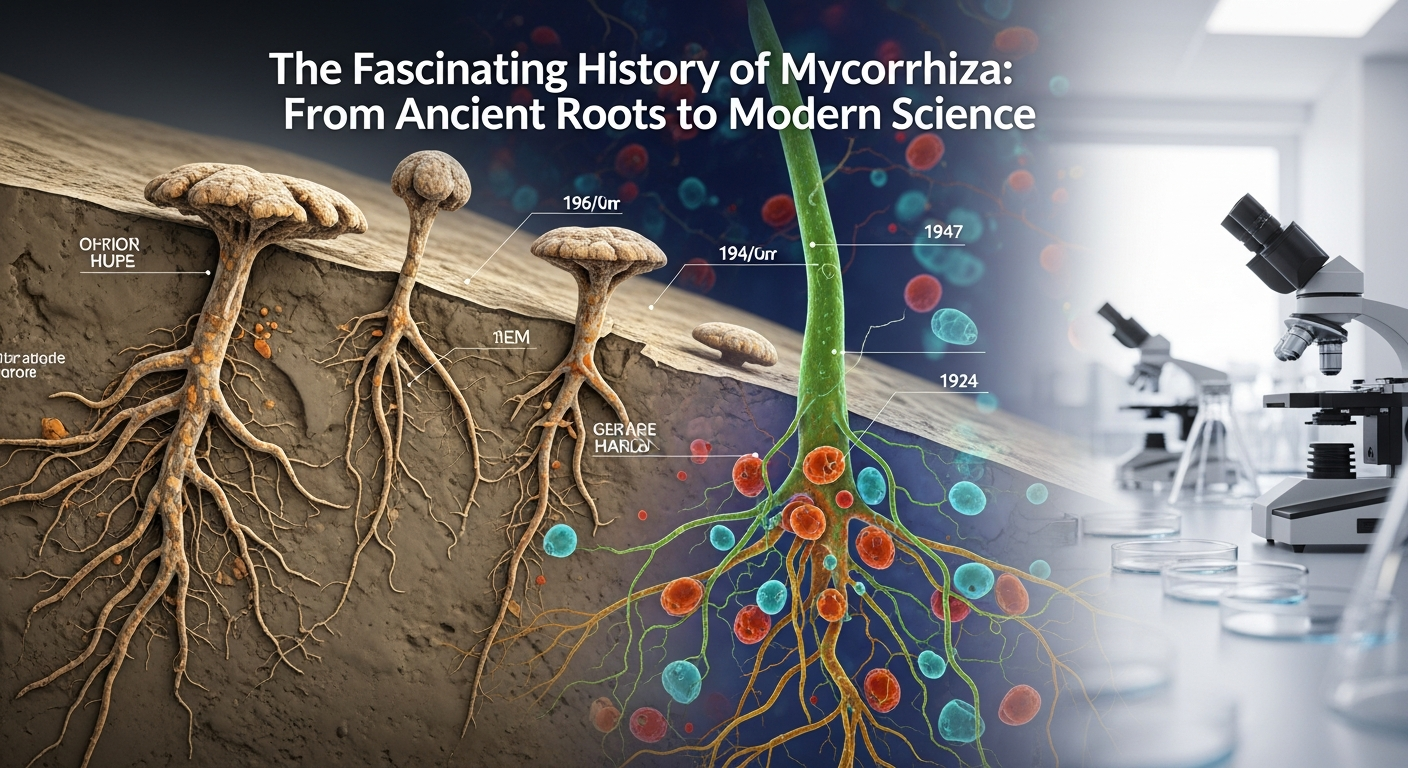
Mycorrhiza is one of the oldest and most powerful partnerships in nature, dating back to when the first true plants were establishing themselves as terrestrial lifeforms over 400 million years ago. The history of mycorrhiza shows that early land-dwelling plant species utilized the use of mycorrhizal fungi to access water and nutrients found in primitive soils, allowing for survival and evolution in challenging environments.
From early plant–mycorrhizal fungal interactions, scientists later learned that mycorrhizal fungi created a symbiotic relationship with the roots of plants that extended well below the surface of the ground. In return for sugars deposited by plants into the fungal structures, mycorrhizal fungi enabled the plant to absorb key mineral nutrients—such as phosphorus, zinc, and other micronutrients—resulting in the establishment of the foundation for healthy plant growth and the support of resilient ecosystems.
With the evolution of agricultural sciences, this ancient natural system became more relevant to modern agriculture. Our knowledge of mycorrhiza created the basis for the development of mycorrhizal biofertilizers, or biofertilizers derived from mycorrhizal fungi, which are used to enhance soil fertility and increase root mass and ultimately crop yields in a sustainable manner.
Today, mycorrhizal biofertilizers unite traditional ecological knowledge and modern agricultural requirements by reducing reliance upon chemical fertilization and improving the long-term sustainability of soils. Mycorrhiza continues to play an important role in shaping agriculture's future with an emphasis on sustainable agriculture from ancient historical beginnings to the latest agricultural technologies.
Introduction: Understanding Mycorrhiza and Its Importance
Mycorrhiza is among the most impactful natural connections on earth and plays an imperative part in plant health, soil fertility, and sustainable farming practices. To appreciate modern eco-friendly farming practices we need to understand the development of mycorrhizae, how mycorrhizal fungi work, and why they are increasingly used as mycorrhizal biofertilizers.
From prehistoric forest ecosystems to current agricultural systems, mycorrhiza has supported the survival of plants by providing improved nutrient uptake, water absorption, and stress resistance. These underground connections are crucial to developing soils that are healthy and producing optimum crops. The focus of modern biological and agricultural sciences has been on mycorrhiza and its benefits.
What Is Mycorrhiza? A Simple Definition
A Definition Created by Mycorrhiza may be defined as a naturally occurring symbiosis (mutually beneficial relationship) between the roots of a vascular plant and a fungus. From the Greek word roots, "mykes" (fungus) and "rhiza" (root), mycorrhiza literally means fungus and roots.
In basic terms:
- The plant is providing carbohydrate (energy) to the fungus.
- The fungus is providing the plant with water and base nutrients from the soil.
Mycorrhizal associations have several main functions:
- Increase surface area of the root system via fine threads of fungal hyphae.
- Improve the plant's ability to absorb phosphorus, nitrogen and zinc, and micronutrients.
- Increase the plant's ability to absorb water during drought.
- Protect plant roots from pathogens in the soil.
Natural systems create such a high-functioning level of service that nearly 90% of the world's land-dwelling vascular plants will use mycorrhizal associations for their growth and sustainability.
Why Mycorrhizal Fungi Matter in Nature and Agriculture
The fossil history of these relationships shows that without mycorrhizae, there is no way that any plant would have evolved or survived on land. They are some of the earliest established life forms on earth and were a key part of creating our current ecosystem.
The role of mycorrhizal fungi in the natural world include:
- Assisting plant survival in nutrient-limited soils
- Increasing soil structure and stability
- Increasing biodiversity through underground networks connecting different plants
The role of mycorrhizal fungi in agricultural systems include:
- Reduction of reliance on chemical fertilizers
- Improved crop yields and root development
- Improved resistance to drought, salinity, and soil stress
- Improvement of soil fertility over the long term.
Because of the above items, farmers are using more bio-fertilizers that utilize mycorrhizal fungi to reinstate the natural health of soils while continuing to produce high crop yields, thus providing a sustainable model for future agriculture.
The Foundation of Plant–Fungal Symbiosis
Mycorrhizal fungi and their association with plants are among the best examples of how two distinct organisms can cooperate to form a mutually beneficial relationship over time. This cooperative association has remained unchanged for millions of years due to its high degree of efficiency and balance.
How the partnership works
- Fungi can grow into the roots of many different plants without causing any damage
- The hyphal network of fungi will be extensive, growing deep into the soil away from where the root zone ends.
- While the plant receives water and nutrients from the fungi, the fungi receive sugar and carbohydrates from the plant.

Early Discoveries: The Origins of Mycorrhizal Research
Mycorrhiza research started long before modern agriculture, beginning with the curiosity of early botanists and their observations of roots. Scientists began to take notice of fungi and their presence in root systems while they were studying why certain plants flourish in poor soils and others do not. Thus began a chain of historical discoveries that ultimately established mycorrhiza fungi as silent contributors to plant nutrition and soil vitality.
While the invention and development of the microscope provided botanists with more detail about the underground workings of plants, many times what they once thought was a fungal disease or abnormality was eventually found to be a beneficial and common occurrence in nature, ultimately developing into a basis for the development of mycorrhiza compost as a soil conditioner and natural fertilizer for sustainable agriculture.
First Scientific Observations of Mycorrhizal Fungi
The first scientific observations of mycorrhizal fungi were made when scientists noticed that threads of fungus could be consistently found in the roots of healthy plants. There was some mistaking these fungi as being harmful parasites.
The most important observations were:
- Fungi are present in many healthy plants
- Roots having fungi are able to absorb nutrients more effectively than those without fungi
- Plants growing in soils low in nutrients do better with fungi than without
As a result of multiple studies in forests, grasslands and on agricultural land, it has been established that fungi are NOT accidental but are CRUCIAL. The initial steps in the history of mycorrhiza are to have moved from a questionable view of mycorrhiza to one where people are inquisitive about mycorrhiza.
Albert Bernhard Frank and the Coining of “Mycorrhiza”
1885 was a defining moment in the development of mycorrhizal research history as German botanist Albert Bernhard Frank introduced the term "mycorrhiza." In addition to coining the name "mycorrhiza," Frank demonstrated scientifically that mycorrhizal fungi form a mutualistic association, rather than simply being parasites, with their host plants; he was the first to make this distinction.
What Frank Did For Mycorrhiza Research
- Defined mycorrhiza as a mutualistic association of roots of higher plants with mycorrhizal fungi.
- Shown how the developing roots of both plants and fungi are mutually beneficial from this relationship.
- Established evidence that plant micronutrients acquired by the fungus enhance nutrient acquisition and plant health.
As a result of Frank’s contributions to science, the field of botany has changed significantly and laid the groundwork to conduct future work in soil biology, ecology, and ultimately create mycorrhizal based fertilizer products.
19th-Century Botany and Early Fungal Studies
The development of botany and the classification of fungi were some of the biggest achievements of the 19th Century. There were large increases in scientific knowledge about mycorrhizal fungi, as well as research into how they function within forests, agricultural lands, and within their natural environments.
Key Events that Occurred During This Period:
- Utilizing advanced microscopes, scientists identified hyphae (fungal roots) both inside and outside of plant roots;
- Identifying mycorrhizal relationships, and classifying them as either internal (endo) or external (ecto);
- Realizing that mycorrhizae have a very large amount of geographic distribution across different ecosystems on our planet.

The Evolutionary Timeline: Mycorrhiza Through the Ages
The relationship between mycorrhizae and plants has existed for 100 million years or more, well before there were modern plants or agriculture. This early relationship between plants and mycorrhizal fungi was formed as a way to help plants survive in challenging environments with low nutrients. Mycorrhizae and plants worked together to shape the world and the forests that exist today, as well as form the base of the modern agriculture system utilizing mycorrhizal bio-fertilizer.
When scientists follow the development of mycorrhizal relationships through the various geological time periods, they learn how this relationship has greatly impacted plant evolution, soil development, and the establishment of life on the planet.
Fossil Evidence of Ancient Mycorrhizal Associations
Numerous fossilized samples from before 400 million years ago provide clear evidence of many types of mycorrhizal fungi coexisting with early land plants. The fossilized roots of land plants contain microscopic fossils that represent fungal structures that closely resemble those observed in modern mycorrhizal relationships.
The fossil record has provided important evidence regarding each of the different forms of evidence listed below:
- Hyphae inside ancient plant roots,
- Nutrient exchange arbuscule-type structures,
- Evidence from early vascular land plants (Devonian period).
The presence of this evidence confirms that mycorrhiza was not a new adaptation, but rather part of a fundamental biological system. Therefore, these findings are a significant chapter in the development of mycorrhizal fungi and show that plant and fungal lineages were linked together throughout the entire evolution of land (terrestrial) life.
Co-Evolution of Plants and Mycorrhizal Fungi
Mycorrhizal fungi and plants have developed and changed as different groups of plants originated through time. Throughout this co-evolution, plants and fungi have adapted together to different root structures, environments, and soil types through time. By doing this, both partners in this symbiosis became more productive at transferring nutrients from soil to plants and thus provided both partners with increased success against environmental stresses.

How Mycorrhiza Enabled Plants to Colonize Land
Once plants started moving away from water onto land, they experienced several significant challenges: lack of nutrients, insufficient soil formation, and too little water. Mycorrhizal fungi helped provide solutions to these problems.

If there had been no mycorrhiza , land colonization would have been either very slow or impossible. Mycorrhiza is an ancient support system, just as important today. By using a method similar to nature's method of evolution, using mycorrhizal bio-fertilizer to help crops today establish good root systems, withstand stress, and produce sustainably.
Pioneering Scientists and Breakthrough Studies
The advancement of the understanding of mycorrhizae is due in large part to the efforts of creative scientists pioneering the way when examining (questioning) the relationship between fungal mycelium/roots of plants. Previously viewed as an antagonistic infection, mycorrhizae have now been identified as integral components for plant viability. Scientists' increased understanding of the role of mycorrhizal discuss has been the result of years of rigorous field and laboratory investigations and advancements in technology which ultimately provide today's scientific basis for the application of mycorrhizal fungi as biofertilizers.
This revolutionary research has not only changed the way in which science views the physiological aspects of higher plants to produce crops, but has also changed how we view soil productivity and crop productivity in present-day agriculture.
Key Figures in the History of Mycorrhizal Science
Many scientists helped shape our understanding of mycorrhiza and establish it as an important part of botany and soil biology.
The most significant contributors are:
- Albert Bernhard Frank was the first to identify mycorrhizas as beneficial, and not pathogenic relationships.
- Francizek Kamieński was one of the first to discover fungal-root partnerships in soil that lacked nutrients.
- G.B. Rayner was the first to show the role of mycorrhiza in the ecology of a forest.
- Ethel R. Wilson improved research into root mutualisms and the ecology of fungi.
These researchers, as a group, established an important piece of mycorrhizal history, illustrating that fungi are important partners in plant survival, rather than parasites.
Landmark Experiments on Root Symbiosis
As research techniques progressed, scientists were able to document the advantages of mycorrhizal partnerships by performing a series of rigorous controlled experimental studies. Scientists compared the growth of plants grown with and without mycorrhizal fungi and found that there were considerable differences between the two situations.
The following three important study findings demonstrate the advantages of mycorrhizal associations with plant roots:
- Mycorrhizal plants absorb significantly more phosphorus and nitrogen than without mycorrhizae.
- Mycorrhizae helped the plants develop larger, more efficient root systems.
- Mycorrhizae increased plant drought and/or soil stress tolerance.

Advances in Microscopy and Early Soil Biology
Microscopy's advancements dramatically changed how we study mycorrhizal fungi. This technology has allowed us to actually see the fungal hyphae (or the fungal filaments) come out of the soil and into root cells and the formation of the complex structures used for the exchange of nutrients.
Major advances made possible by the use of microscopy:
- The ability to see and identify arbuscles and vesicles present within the roots,
- The ability to identify and differentiate fungal types as either being internal or external mycorrhizal types,
- The early mapping of fungal networks throughout the soil.
These significant discoveries have helped us to establish a connection between root biology and soil ecology, classifying the soil system as a living system instead of simply an inactive growth substrate. This newer understanding of soil and life has allowed us to implement biologically based solutions such as mycorrhizal biofertilizers, which are able to use the natural networks of fungi to assist in the sustainable production of crops.
Types of Mycorrhizal Associations Through History
Mycorrhiza is not a singular type of mycorrhizal relationship, rather there are many types of mycorrhizal associations depending upon the developmental history of the plants and fungi, along with their particular processes of adaptation to the various growing habitats in which the plants have evolved and adapted over time. The differences in plant species, fungal species, and environmental conditions have each resulted in a unique way that these associations occur. Today’s types of mycorrhizal associations are an integral part of the functioning of agriculture; specifically how agriculture benefits from mycorrhizal biofertilizer.
The understanding of the various historical types of mycorrhizae provides insight into the present day associations of particular fungi with specific crops, with particular tree genera, and with particular soil conditions.
Arbuscular Mycorrhiza as the Oldest Symbiotic Form
AM (Arbuscular Mycorrhiza) is recognized by many authorities in the field as both the oldest and farthest reaching instance of mycorrhiza throughout the entire known history of mycorrhiza. There is also fossil evidence available that supports the presence of the AM structure in some of the earliest existing plant species on this planet.
Major Characteristics of Arbuscular Mycorrhiza:
- The fungal hyphae penetrate the root cells providing a pathway for the formation of arbuscules within the root cell.
- 'The presence of arbuscules allows for an extremely efficient exchange of nutrients between fungus and plant, particularly with phosphorus.
- Approximately 80 to 90 percent of all plant species possess some form of AM.
Significance of AM historically:
- The establishment of AM allowed primitive plants to grow in soil which lacked or was void of nutrients.
- Assisted in the establishment of grasses, crops, and major plants within the vegetation of the world.
- Forms the foundation upon which is built a majority of today's commercial mycorrhizal Bio-fertilizers.
- AM fungi are still extremely beneficial to major agricultural crops including cereals, vegetables, legumes, and oilseed crops.
Evolution of Ectomycorrhiza in Forest Ecosystems
As forests grew and as trees evolved woody-rooted, ectomycorrhizae were developed as a new type of symbiosis. Unlike arbuscular mycorrhizae (AM), ectomycorrhizal fungi surround the roots, rather than be found directly inside of root cells.
Key Ectomycorrhital Characteristics
- Have a fungal sheath covering the root tips;
- Possess a large underground fungal network in forest soils.
- Are prominent in tree species such as pine, oak and eucalyptus.
Importance of Ectomycorrhiza's
- Facilitate the uptake of nitrogen and other minerals in forests
- Increase the life span of trees by enhancing resistance to environmental disturbances
- Assist in developing stable soils within forest environments
This evolutionary change is a clear example of how mycorrhizal ecosystems diversified through time, as a result of alternative structures and ecosystems evolving through time.
Diversification of Mycorrhizal Fungi Over Time
Mycorrhizal relationships have undergone significant development over the course of millions of years in response to changes in soil chemical composition, climate and plant evolution. As mycorrhizal relationships developed and diversified over time, they contributed to increasing ecosystem stability and the degree to which plants were specialized.
The four major types of mycorrhizae that developed (over time) are:
- Arbuscular mycorrhiza (AM) – grains and grasses
- Ectomycorrhiza (ECM) – trees that grow in forests
- Ericoid mycorrhiza – plants requiring acidic soils (e.g., tea and berries)
- Orchid mycorrhiza – necessary for the germination of orchids

The Role of Mycorrhiza in Ecosystem Development Over Time
Over countless years, mycorrhizal fungi have existed since before humans began to cultivate food as we know it; they quietly aided in earth's evolutionary process (and thus helped shape landscape, enhance soil, and create and enhance plant communities). This long-standing relationship affected all points of ecosystem assembly & stability, and function - many of these principles are used today in modern agricultural applications of mycorrhiza with the use of biofertilizers.
From barren soils left by erosion of rocks through glacier action, to the creation of forests and grasslands that support the ecosystem's many types of organisms; they have been instrumental in making the earth an environment where complex life can exist.
Contribution to Soil Formation and Fertility
Early on in evolution, mycorrhizal fungi contributed to the development of the soil on earth. As land-based plants developed, the soil was not as we know it now; there was little to no stability or nutrients. Mycorrhizal fungi help develop soils by breaking down rocks and organic material into usable nutrients for our land-based plants.
Some key contributions that mycorrhizal fungi made to the development of healthy soils include:
- The weathering of rocks which releases nutrients (particularly phosphorus and many micronutrients)
- Mycorrhizal fungi improve the availability of phosphorus and many micronutrients
- The use of fungal networks creates soil aggregates
- Mycorrhizal fungi increase the amount of organic matter found in soils
All of these processes contributed to the development of fertile soils. Mycorrhizal biofertilizers perform many of the same functions today as mycorrhizal fungi originally did thousands of years ago when soils were first developing. They help rebuild damaged soils and help maintain long-term soil fertility.
Influence on Forests, Grasslands, and Biodiversity
The mycorrhiza was instrumental in shaping ecosystems for greater variability over time. Many plant communities depend on mycorrhizal fungi that correlate with that community and the environment.
Roles of Ecosystems
- Forests: Root support for deep-rooted trees, nutrient cycling, and long-term stability.
- Grasslands: Quick nutrient uptake for grasses and seasonal plants.
- Mixed Ecosystems: Connected plants via underground fungal networks.

Historical Impact on Plant Diversity and Stability
History and the role of mycorrhizal fungi demonstrate the relationship between both diversity of plants and stability of ecosystems and that both are tied to the existence of mycorrhizal relationships, which provided plants with a competitive advantage to be able to grow and expand into new, often diverse and/or extreme habitats.
Long-term effects include:
- Increased number and range of plant species growing in areas of poor or extreme soils.
- Improved ability to tolerate and recover from drought, disease and climatic changes.
- Decreased competition through fly and mycorrhizal sharing of plant available nutrients among plants.
While providing stability to plant communities over time through mycorrhiza, this has ensured resiliency of ecosystems. Today, agriculture practices utilize this same principle through the use of mycorrhizal biofertilizer to (1) promote a balanced growth of crops while at the same time decreasing the need for fertilizer and (2) improve the health of the soil and soil life.
The Modern Era: Advances in Mycorrhizal Science and Technology
The current phase of development in the history of mycorrhizal relationship has evolved from merely observing to being able to apply this information. With tremendous advances in biotechnology, soil science, and agronomy, there has been a shift from studying the association at an observational level to studying at the molecular level and using plants, soil, and fungi in the agricultural field to enhance crop production and sustainability.
The application of ancient relationships scientifically proven to have been developed over time now have scientific evidence of development, i.e., mycorrhizal biofertilizer. Mycorrhizal research now connects ecology to modern agriculture in a manner that allows for more precise, crop-specific, and environmentally sustainable farming practices.
Molecular Biology and DNA Tools in Mycorrhiza Research
Advanced molecular biology techniques have changed the way in which mycorrhizal fungi are studied by scientists. This was possible due to advances in DNA sequencing and genetic markers, which allow for accurate identification and classification of many fungal species that have previously been difficult to identify.
Examples of these technological innovations are:
- DNA barcoding allows for the identification of mycorrhizae
- Knowledge of gene expression provides insight into nutrient transfer pathways
- Molecular mapping provides insight into fungal networks in soils
- Understanding of plant/fungal signaling mechanisms
All of the above technologies have provided scientists with new opportunities to learn about the evolution and diversification of mycorrhizae through time and space. This information is very valuable when choosing appropriate fungal strains that may be used for the development of biofertilizers.
Mycorrhizal Biofertilizer Development in Agriculture
Mycorrhizal biofertilizers are one of the best developments in agriculture today; they are created by researchers isolating fungal species known for being beneficial (mycorrhizal types), growing these colonies of beneficial fungi under controlled conditions, then formulating them so that they can be easily applied to large-scale agricultural fields.

Applications in Forestry, Horticulture, and Crop Systems
Mycorrhizal fungi have become widely used outside agriculture (ie: forestry and horticulture) for their ability to increase the health, survival and growth of plants.

FAQs
Q1. What is the history of mycorrhiza in simple terms?
The history of mycorrhiza shows how plants and fungi formed a helpful partnership millions of years ago, allowing plants to grow better in poor soils.
Q2. Who discovered mycorrhizal fungi scientifically?
Mycorrhizal fungi were scientifically identified and named by Albert Bernhard Frank in the late 19th century.
Q3. Why are mycorrhizal fungi important for agriculture today?
Mycorrhizal fungi improve nutrient and water uptake, strengthen roots, and reduce the need for chemical fertilizers in farming.
Q4. How did mycorrhiza lead to modern biofertilizers?
Understanding natural plant–fungus partnerships led scientists to develop mycorrhizal biofertilizers that enhance soil health and crop growth naturally.
Q5. Are mycorrhizal biofertilizers based on historical research?
Yes, mycorrhizal biofertilizers are built on decades of research rooted in the long history of mycorrhiza and plant–fungal symbiosis.
Conclusion: Why the History of Mycorrhiza Matters for Our Future
The historical significance of mycorrhiza demonstrates that many of the world’s greatest solutions for developing productive agricultural systems and preserving soil health will not consist of modern inventions but represent evolutionary and natural systems over millions of years. How mycorrhizal fungi contributed to the ability of the earliest plants to survive, adapt, and disperse across the earth offers us important lessons in creating resilient agricultural and ecological systems in today’s world. The long-standing relationship between plants and fungi illustrates the importance of collaboration and cooperation with other life forms as the hallmark of attaining sustainability over time.
Today, soil degradation, climate change, and excessive fertilizer use are all contributing to a potential food crisis; and therefore, lessons learned from the history of mycorrhiza therefore are ever more relevant. The emergence and availability of mycorrhizal biofertilizers is a direct application of knowledge learned through the history of mycorrhiza and will allow improved nutrient uptake by crops, enhanced soil structure, and a decreased reliance on synthetic fertilizers, while maintaining current yields.
Moving forward, the incorporation of mycorrhizal science into mainstream agriculture and ecosystem restoration creates opportunities for improving soil health, and the sustainability of food systems. By acknowledging and utilizing the accumulated wisdom inherent in the history of mycorrhiza will lead to both protecting environmental health and advancing innovative agricultural systems ensuring a more resilient future for generations to come.