

Essential vs Non Essential Amino Acids in Agriculture: Understanding Their Crucial Roles in Crop Growth
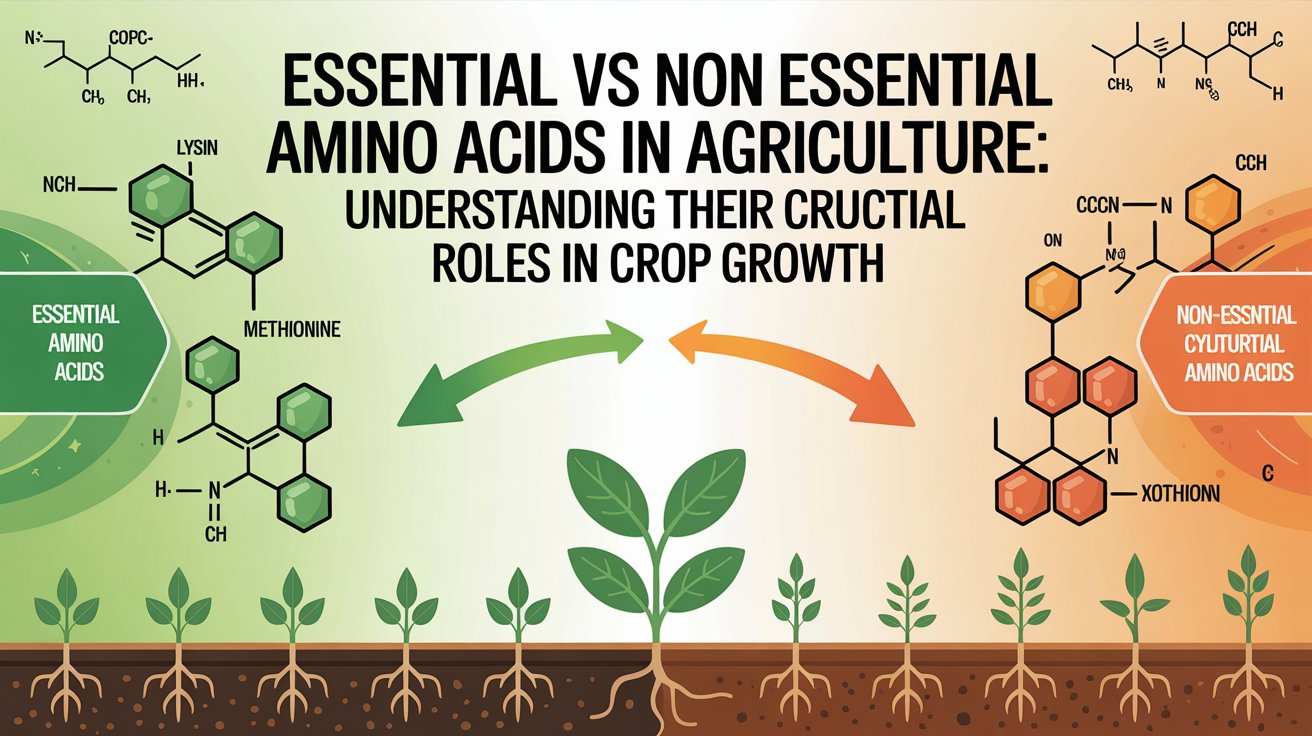
Plant proteins consist of amino acids, which have vital functions in crop vitality and ultimately yield. Amino acids also support healthy roots, foliage, and flowers in all species of crops.
Essential amino acids must be acquired through external means, while nonessential amino acids must be produced internally by the plant, both of which have significant value when it comes to producing healthy crops.
Overall, all amino acids provide benefits to improving nutrient uptake, enzymatic activity, and the crop's ability to withstand climate or drought stress; consequently aiding in building a more robust and stronger crop.
Examples of amino acids include, but are not limited to, lysine, methionine, glycine, and glutamic acid; all of which will provide improvements in yield, quality, and sustainable agricultural practices from a production perspective.
What Are Amino Acids in Agriculture?
Plant life is built on the foundation of amino acids. They are considered bio-stimulants in agriculture because they enhance plant growth, increase nutrient use and tolerance to stress or adverse environmental conditions. Amino acids promote root development, foliage and improvement of crop yield.
It is important to understand the difference between essential and non-essential amino acids for fertilising crops because each type affects the way a crop will develop. When amino acids are applied, through soil or foliar sprays, they are rapidly absorbed and used by plants, allowing them to grow more rapidly and more uniformly.
Amino Acids as Building Blocks of Plant Proteins
Plant proteins are formed from combinations of amino acids (the basic building block of proteins) that control just about every biological activity that occurs in crops.
The major functions of proteins in the plant include:
- Cell division and formation of tissues
- Production of enzymes and hormones.
- Development of roots and shoots.
- Produce flowers and fruits.
Plants form essential amino acids internally and non-essential amino acids from outside, making it more efficient for a plant to absorb non-essential amino acids when applied externally, particularly during times of plant stress.
Role of Amino Acids in Plant Metabolism and Growth
Amino acids play an active role in many of the metabolic functions that contribute to good plant growth and development.

Essential amino acids are those that cannot be made by plants, while non-essential amino acids can be formed by the plants, but have to be in sufficient amounts (balanced) for optimal plant metabolism to occur.
Difference Between Essential and Non Essential Amino Acids:

Why Amino Acids Are Essential for Modern Farming Systems
The use of amino acids can assist in solving some common contemporary agricultural issues, which include soil degradation, climate change, and decreasing efficiency of nutrients. Amino acids naturally support plant processes without negatively impacting the environment.

Balancing essential and non-essential amino acids provide the opportunity to strengthen agricultural crops in a natural manner, improve soil health, and create additional farm income.
The Difference Between Essential and Non Essential Amino Acids Explained
Essential amino acids are necessary for proper protein formation and yield improvement, but they need to be supplied from outside the plant because plants cannot make the required amount. Non-essential amino acids are made by plants, but are important for various processes such as metabolism, chlorophyll production, and stress tolerance.
While the primary distinction between essential and non-essential amino acids is how they are made by the plant, they are both equally important for creating strong, resilient, and productive crops.
Definition of Essential Amino Acids in Plants
Essential amino acids are not synthesized in sufficient quantities by plants. Therefore, they must obtain them from soil fertility, organic matter, microbial activity, or amino acid–based fertilizers.
Essential amino acids have four key characteristics:
- Protein synthesis and cell growth
- Producing flowers and setting fruit
- Producing enzymes and hormones
- Support rapid growth through key crop growth periods
For example, lysine, methionine, and tryptophan will directly affect crop performance and yield. Supplying essential amino acids will reduce the energy required from the plant and speed up plant growth.
Definition of Non Essential Amino Acids in Crops
Amino acids that are not essential to a plant's growth are made in plants through natural metabolic pathways. Although they can produce their own non-essential amino acids, they are still essential for plant health and growth.
Amino acids will help a plant to: GRAPHICS
- Make chlorophyll and photosynthesize
- Move nutrients around the plant's tissues
- Respond to stress caused by drought or excessive salt
- Strengthen the roots and shoots
Common examples of non-essential amino acids are: glycine, glutamic acid, alanine, aspartic acid. By supplying these non-essential amino acids to plants externally, growers can enhance the efficiency of the plant's metabolism and overall resilience to stress.
Key Difference Between Essential and Non Essential Amino Acids
Essential and nonessential amino acids differ primarily in their source and function in plants.

Evaluating essential and non-essential amino acids will show that they both play an equally important role but provide different functions. While essential amino acids promote direct growth and productivity, non-essential amino acids are primarily responsible for maintaining balance internally and adapting to stressors.
Essential Amino Acids and Their Functions in Crop Development
Essential amino acids significantly impact the productivity and growth of crops through direct means. When looking at essential and non-essential amino acids, essential amino acids are those that cannot be produced by a plant in adequate quantity and must therefore be supplied through an outside source.
The availability of essential amino acids has a substantial effect on structural development and growth, metabolic activities, and ultimately how productive a crop ultimately will be. Knowing the fundamental differences between these two classes of amino acids helps farmers to develop appropriate nutrient applications for each stage of crop development, including vegetative growth, flowering, and fruiting.
Role in Protein Synthesis and Structural Growth
The building blocks of plant protein are the essential amino acids, which form the structural framework of plant tissues.
As far as functions, they contribute to:
- Cell division and expansion
- Root and shoot development
- Formation of leaves and establishment of canopies
- Increasing strength of stems and vascular tissues
For proteins to be synthesized during active growth, essential amino acids impact protein synthesis more than non-essential amino acids.
Importance in Enzyme Activity and Plant Immunity
Proteins are made of enzyme proteins. Enzymes need certain amino acids to help them function properly. Enzyme efficiency helps control the overall functioning of metabolic processes.
Examples of performance benefits include:
- Increased Nutrient metabolism
- Increased Biochemical Reaction Rate
- Increased Tolerance to Stress
- Increased Natural Defence Mechanisms
Both essential and non-essential amino acids help support the immune system; however, essential amino acids tend to be associated with more immediate physiological responses due to their greater availability following stressors such as drought or pathogen attack.
Contribution to Yield Formation and Crop Quality
Amino acids classified as essential amino acids directly affect flowering, pollination, fruit set and filling of the grain. The application of essential amino acids can improve the quantity and quality of the final harvest.
Essential amino acids assist in:
- Retention of flowers
- Uniformity in the development of the fruit
- The protein content of grains
- Size, colour and shelf life of the crop
The table below illustrates the difference in effect between Essential Amino Acids compared to Non Essential Amino Acids:

The primary differentiator between essential and non essential amino acids is the mechanism for synthesis and the primary purpose of each, though both amino acids provide tremendous value in the production of crops. The producer of a crop can grow the most productive crop possible and receive the best price at market, when there is a balanced supply of both types of amino acids.
Non Essential Amino Acids: Why They Still Matter in Agriculture
In crop nutrition, non essential amino acids are frequently misconceived. There is a general misconception that the term "non-essential" implies that non-essential amino acids are of lesser importance relative to essential amino acids. However, this indicates that non-essential amino acids can be produced by plants through internal processes. The non-essential amino acids are essential for sustaining daily metabolic activities, providing steady-state growth, and maintaining overall plant balance.
It is important to recognize the necessity of both essential and non-essential amino acids in total plant growth and development. A farmer who understands the differences between the two types of amino acids will develop a more balanced nutrition program than a farmer who focuses on one or the other group alone.
Supporting Plant Metabolism and Energy Flow
Non-essential amino acids have a key role in metabolism of plants since they allow for the movement of energy (as nutrition) from one part of the plant to another.
The following list indicates the functions of non-essential amino acids to a plant's metabolism:
- They convert nutrients into usable energy
- They support photosynthesis and respiration
- They regulate cellular activities
- They maintain a plant's internal balance
Comparison of essential and non-essential amino acids: Non-essential amino acids provide stabilization of metabolic flow through the entire life cycle of a plant.
Role in Stress Recovery and Cell Repair
Stress due to heat, drought, salinity, pestilence, and nutrient imbalance are common stressors for plants. Non-essential amino acids help aid the recovery process from stress by repairing damaged plant tissues and restoring normal metabolism.
Some benefits of using non-essential amino acids during times of stress are:
- Faster rate of cell repair post stress compared to plants that didn't receive non-essential amino acids.
- Improved recovery time from pruning or transplant shock.
- Increased support for the plants' natural antioxidant systems.
- Reduced disruption of normal metabolism during/after times of stress.
This distinguishes the practical effect between essential vs. non-essential amino acids —non-essential amino acids help provide normal metabolic function during times of stress and promote recovery, while essential amino acids facilitate critical growth processes in the plant.
Non Essential vs Conditionally Essential Amino Acids in Crops
A group of amino acids referred to as "conditionally essential" can be produced by plants but may need additional supplementation during periods of stress or high demand for growth.

The table above shows the overall relationship of essential verses non-essential and the differences of non-essential versus essential based on their overall method of synthesis and function.
In the interest of sustainable agriculture, providing an equal supply of both essential and non-essential amino acids will lead to stronger, healthier plants and provide better stress tolerance and thus higher yields.
Essential vs Non Essential Amino Acids in Practical Farming
In agriculture, both supply of essential and nonessential amino acids has a significant impact on the growth and sustainability of crops and their yield. Field conditions (soil fertility/climate stress) can also affect the ability of plants to synthesize certain amino acids naturally.
Therefore, understanding how essential and nonessential amino acids function during active growing conditions will assist producers with better responses to their nutrient management decisions. Understanding the distinction between the two classes of amino acids allows for more effective nutrient mgmt of crops during all growth stages (e.g. during times of high demand and/or stress).
How Soil Health Affects Amino Acid Availability
The soil's overall health is critical to providing both the essential and non-essential amino acids needed for plant growth.
Soil-related factors that influence amino acids:
- Microorganisms support the formation of amino acids
- The balanced pH level of soil enhances the availability of various nutrients
- Organic matter stabilizes amino acids
- And compacted soils, or those that have been degraded, limit their synthesis.
When considering both essential versus non-essential amino acids, poor soil quality leads to less internal production of amino acids and an increased need for external supplements to meet amino acid requirement needs.
Impact of Climate Stress on Amino Acid Synthesis
Stressors to the environment have a great impact on the way in which plants produce and use their amino acids. Stress from heat, drought, salinity, and nutrient availability may slow the natural production of amino acids.
Below are examples of how environmental stress affects the synthesis of amino acids:
- There is less production of non-essential amino acids
- There is much greater need for essential amino acids
- There is slower formation of proteins
- There is greater susceptibility to pests and diseases.
These points demonstrate the difference between essential and non-essential amino acids in an environmental setting, where under stressful conditions, essential amino acids are often limited.
Managing Both Types Through Agricultural Inputs
One way to achieve effective farming is by managing both essential and non-essential amino acids using well planned inputs such as bio-stimulants, organic amendments and foliar sprays.

Best management practices:
- Preserved organic material in soils will help with the natural synthesis of amino acids.
- Use amino acid based products at times of stress.
- Balance nutrient supply to minimize metabolic disruptions.
Farmers must manage both essential and non-essential amino acids together to address the challenges of modern agriculture. Understanding the difference between essential and non-essential amino acids will assist farmers in providing consistent support to their crops. As a result, farmers can achieve better growth, increased durability and more accurate yields across a wide range of production systems.
FAQs
Q1. What is the difference between essential and non essential amino acids in agriculture?
The difference between essential and non essential amino acids is that essential amino acids must be supplied externally, while non essential amino acids are naturally synthesized by plants.
Q2. Why are essential and non essential amino acids important for crops?
Both essential and non essential amino acids support protein formation, metabolism, stress tolerance, and overall crop growth.
Q3. Can plants produce all non essential amino acids naturally?
Yes, plants can produce non essential amino acids under normal conditions, but production may slow during stress.
Q4. Do essential vs non essential amino acids affect crop yield differently?
Yes, essential vs non essential amino acids affect yield differently—essential amino acids directly influence yield formation, while non essential amino acids support sustained growth.
Q5. Are amino acids safe for sustainable and organic farming?
Yes, amino acids are natural, plant-friendly, and safe for sustainable and organic farming systems when used correctly.
Conclusion: Why Understanding Essential vs Non Essential Amino Acids Matters in Agriculture
In order to create a productive crop nutritional regimen, it is important for farmers to first understand the two broad classifications of amino acids; those that must be ingested (essential amino acids) and those that are produced by plants (non-essential amino acids). Essential amino acids will affect protein synthesis directly, as well as both structure and yield of the crop. Whereas, nonessential will not directly affect any of the above criteria but will contribute to the overall balance of plant metabolism, stress tolerance and energy transfer within the plant. Additionally, knowing the difference between essential and non-essential amino acids will allow producers to support the growth and resilience of their crops at the same time.
Crops are being challenged today in our current agricultural atmosphere due to soil deterioration, climate stress, along with increased demands for productivity from their crops. By utilizing a proper ratio of essential/non-essential amino acids for your crops will improve nutrient use efficiency, crop immunity, and therefore help crops recover faster from stress events. Crop yield improvement will reduce the need to apply excessive chemicals for crop production.
Managing essential and non-essential amino acids is one of the ways that help promote good plant growth, enhance flower and fruiting quality, and ultimately yield more harvested products. When growers utilize the appropriate combinations of essential and non-essential amino acids, at the correct times throughout crop production growth cycles, it will provide sustained agricultural success through improved productivity and greater overall crop strength and resistance to disease.