
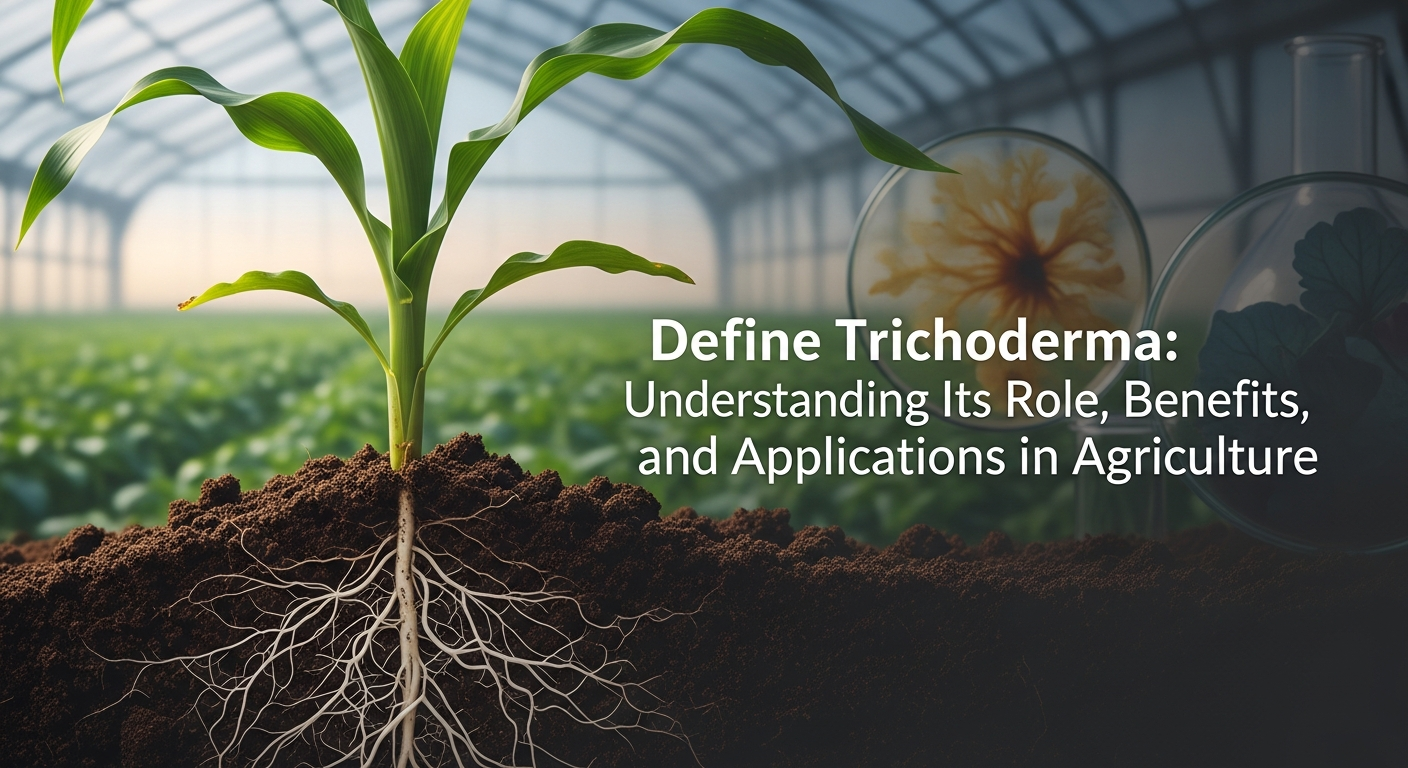
Define Trichoderma: Understanding Its Role, Benefits, and Applications in Agriculture
Agricultural use of the naturally occurring soil fungus Trichoderma dates back many decades and improves a variety of plant processes resulting in improved health, crop yield, and overall plant productivity. For most farmers, when they attempt to define Trichoderma, they consider it a valuable microbe (or fungal partner) that aids in preventing the effects of soil-borne disease on crop yield by protecting crops at their roots and promoting nutrient uptake via healthy root systems. Healthy soils contain high levels of Trichoderma and are an important component to the continued success of maintaining soil health, and therefore supporting the long-term sustainability of agriculture.
Trichoderma consists of beneficial microorganisms, enzymes, and other plant-supporting compounds that aid plant root development, improve soil condition, and limit the growth of disease-causing organisms. These natural attributes of Trichoderma are an excellent option for environmentally conscious farmers to help them lessen their reliance on synthetic fungicides. When providing an understanding of Trichoderma, it can also be seen that it provides dual support to the crop, serving as both a stimulus for growth and an environment-friendly means of creating a natural protective barrier around plants to help inhibit it from becoming stressed or weakened by adverse environmental conditions.
Trichoderma has applications to nearly all plant types from the use of it in vegetables, fruit, and ornamental plant species to field agriculture crops such as wheat, rice, and maize. Additionally, regardless of how Trichoderma is applied (e.g., as a seed treatment or soil application, application with compost, etc.), it will continually provide continued support from beneficial microorganisms throughout the crop's entire growing phase. Just as with many other processes, maintaining soil health with Trichoderma is essential if we want to reap the benefits of Trichoderma.
What is Trichoderma? A Scientific Definition
In agriculture, Trichoderma refers to a type of soil fungus that helps plants grow, protects them from disease, and helps improve soil fertility. Trichoderma is a genus of fast-growing, green-spored fungi that live in the natural environment of rich organic soils, where they break down organic matter and protect the plant roots from disease microbes. For farmers, Trichoderma is a way to use biological methods to increase crop yields sustainably and the use of chemical fungicides is reduced.
Define Trichoderma in Simple Terms
In the simplest terms, Trichoderma is like a 'good' soil fungus that supports the health of plants by making them stronger and helping them to fight off disease-causing bacteria and fungi.
The following are the important aspects of this fungus that are described as a generalization for agricultural use:
- It is naturally occurring in healthy soils; it is a friendly fungus.
- It uses another type of relationship called antagonism to eliminate [reduce] the population of the other organism;
- It stimulates the development of roots and promotes the growth of the plant.
- The fungi break down the organic material in the soil to improve the soil's quality.
- It has been widely used by farmers as a natural biofungicide in organic farming.

Classification of Trichoderma in Fungal Taxonomy
To learn how Trichoderma is treated scientifically, we first must examine how Trichoderma was classified. Trichoderma belongs to a group of fungi that tend to colonize rapidly, adapt easily and have an innate ability to fight off pathogens.
Why is Classification Important in Agriculture
- Assists the Farmer in selecting the correct Species of Trichoderma for use on specific diseases.
- Helps ensure that the Biofungicide Products produced will all be of the most effective Strains available for use.
- Supports Scientific Research on the Sustainable Protection of Crops from Disease; and
- Enables Accurate Identification of the Beneficial and Harmful Species of Trichoderma and other fungi.
Key Characteristics of Trichoderma Fungus Used in Agriculture
Knowledge of the various traits associated with a particular Trichoderma species will assist farmers in establishing an appropriate level of usage within their operations and determining which locations best suit the application of that particular fungus.
Important Characteristics of Trichoderma:
Rapid Root Colonization
Fast colonization of roots providing protection from harmful soil borne diseases (rhizosphere= root zone).
Strong Antagonism
Produce enzymes that can break down the cell walls of pathogenic fungi (decomposing your competition).
Organic Matter Decomposing
Composts and crop residues to transform into a nutrient-rich humus.
Plant Growth Promotion
Hormonal stimulation of both root and shoot growth through the release of growth hormones into the soil.
Environmentally Friendly
Does not contain harmful chemicals; thus, it is safe for both soil and plant use, as well as for human health.

The Biology and Life Cycle of Trichoderma
Trichoderma is a fast-growing and beneficial soil fungus that is one of the most important beneficial microorganisms in modern agriculture. The term "Trichoderma" is used to describe an active microbial species that rapidly colonizes the area around the roots of plants (the rhizosphere). Trichoderma helps plants fight off disease as well as improve the overall structural quality of the soil. The biology of Trichoderma is characterized by speed, adaptability, and strong antagonistic activity against harmful pathogens, and it is one of the main components of sustainable farming practices.
Understanding the biology of Trichoderma will allow farmers to fully appreciate how effective Trichoderma is at enhancing plant health and crop productivity.
Morphology and Structure of Trichoderma Species
The morphology of Trichoderma is highly specialized for its rapid growth and ability to survive in the soil environment by being highly competitive with other organisms, but also to rapidly penetrate into soil particles, as well as forming symbiotic connections with plant roots.
Morphological Characteristics of Trichoderma
1. Conidia (Spores)
The spores of Trichoderma range in color from light green to dark green and function as the primary means of reproduction and dispersal into soils.
2. Mycelium
The mycelium of Trichoderma is made up of dense white to green thread-like filamentous structures, which provide a mechanism for rapid and efficient coverage of soil surfaces.
3. Conidiophores
The conidiophores of Trichoderma are branched and are responsible for producing and dispersing spores.
4. Flexible and Aggressive Hyphal Characteristics
Trichoderma possesses hyphae that are flexible and aggressive, making them highly successful in invading the cell walls of plant pathogens by the use of enzymes.
5. The Importance of Trichoderma's Morphology
Increased ability to be competitive with other pathogenic fungi
Increased rate of colonization
Ability to allow for deeper penetration into the root-zone of a plant
How Trichoderma Grows and Survives in Soil
Trichoderma uses organic substances for nutrition and is also a biological control agent against harmful microorganisms. As a result, it also plays a role in cycling nutrients through soil.
Characteristics of Growth
1. Extreme Rate of Reproduction
Trichoderma spores germinate rapidly and cover root systems and soil surfaces in a matter of hours.
2. Mycoparasite Nature
Trichoderma colonizes and kills pathogenic fungus by consuming the fungi's cell wall material.
3. Saprophytic Nutritional Strategy
Trichoderma exists by eating organic waste and enhances the quantity of humic material in soils.
Life Cycle Stages
- Germination Stage – initiation of spore germination in response to moisture
- Hyphal Development Stage – rapid spread of hyphen growth through soil
- Root Colonization Stage – establishment of a tight bond with root systems
- Pathogen Suppressive Stage – reduction of pathogens through destruction of pathogenic microorganisms
- Long-Term Survival Stage – after nutrient depletion Trichoderma will continue to exist and grow in soils due to nutrient availability from decaying organic matter.
Environmental Conditions Required for Trichoderma Development
The efficacy of Trichoderma is contingent upon the right environment. An ideal growing environment leads to accelerated colonization and enhanced ability of Trichoderma to protect plants effectively.
Environmental Factors
- Excessive moisture will limit oxygen levels in the soil, inhibiting spore germination.
- Insufficient moisture will delay the activation of the spores.
- The improper soil pH will decrease the ability of Trichoderma to survive and attach to the roots of the host plant.
Best Farming Practices
- Irrigate regularly, but do not allow standing water in the field.
- Add organic matter in the form of composted materials to provide nutrients to Trichoderma.
- Do not apply fungicides that may be harmful to Trichoderma spores.

The Importance of Trichoderma in Agriculture and Horticulture
Trichoderma has become an important part of agriculture today because of its many benefits for improving both soil quality and crop yield. In layman's terms, Trichoderma is a fungal organism that has been found to benefit key elements of a healthy plant's root structure as well as enhance overall plant health throughout its life cycle.
Many farmers rely on Trichoderma to lower their dependence on synthetic chemicals by increasing the quantity and quality of nutrients in the soil and improving the overall health of the soil ecosystem. Trichoderma will continue to be an integral component of commercial agriculture in the future.
Trichoderma as a Biofungicide and Biocontrol Agent
Trichoderma is a naturally occurring agent that serves as an organic barrier between plants and the pathogens that can cause them disease, making it an effective alternative to commercial products in agriculture.
How Is Trichoderma A Biocontrol Agent?
1. Ditrucol Destroy Pathogens
Trichoderma utilizes its natural ability to produce enzymes to break down and kill pathogens such as Fusarium, Rhizoctonia, and Pythium by using both enzyme action and competition for space.
2. Competition for Space and Nutrients
Trichoderma creates a physical barrier to new pathogens that would colonize root areas early on and ultimately ensures that new pathogens cannot establish themselves in that zone.
3. Production of Antimicrobial Agents
Trichoderma produces natural products that inhibit many of the organisms' enzyme activities, which could otherwise allow them to cause injury to plants.
Benefits of Trichoderma for Plant Health and Soil Quality
Use of Trichoderma in Agriculture
In addition to its pathogen management capabilities, Trichoderma has also been shown to enhance the overall strength of plants, as well as the structure of soils, and to increase farm productivity.
The major benefits of using Trichoderma for plants include:
1. Improved root system development
Trichoderma stimulates the branch growth and elongation of roots; thus, improving the ability of plants to absorb water and minerals from the soil.
2. Increased plant resistance to stress
Trichoderma promotes recovery after periods of low moisture, high salt and low fertility.
3. Increased nutrient uptake
Trichoderma makes essential nutrients available to plants, thus increasing plant yield.
For Soil Benefit
1. Increased population diversity of microorganisms
Trichoderma enhances the population diversity of microorganisms in soils which provide benefits to the ecosystem of soil.
2. Improved soil texture and increased aeration
Trichoderma processes organic matter to create an improved structure within the soil.
3. Increased sustainability of farming
The use of Trichoderma reduces the use of chemical pesticides on the farm, while providing enhanced benefits to the soil through the continued use of organic materials.

Why Farmers Trust Trichoderma for Sustainable Farming
Farmers worldwide have utilized Trichoderma as a sustainable product because it consistently produces results while promoting environmental health. Defining Trichoderma will allow you to recognize it as an environmentally friendly product, which has become one of the most important assets in modern agriculture.
There are several reasons that farmers choose Trichoderma.
1. Less Dependence on Chemicals.
Chemical dependence means less fungicide application, therefore creating healthy soils and lowering farmer costs.
2. Safe for Any Type of Crop.
Trichoderma is considered safe for all types of crops such as cereal grains, pulse crops, vegetable crops, fruit crops, spice crops and all types of commercial crop production.
3. Convenience of Application.
Trichoderma can be used with seeds, soil, compost, irrigation water, or through direct root application.
Improving sustainability of farming practices as well as improving farm's long-term fertility and health is improved by using Trichoderma.
Mechanisms: How Does Trichoderma Benefit Plants?
Trichoderma enhances the various ways crops and plants grow and thrive by utilizing numerous biological mechanisms. These biological mechanisms work collectively to create stronger root systems, improve nutrient uptake and absorption and act as a protective barrier against harmful pathogens/crop diseases for the grower. As such, when a farmer tries to describe what Trichoderma is, often they will say that it is a 'multi-functioning soil fungus'. Trichoderma supports growth and also serves as a natural defence mechanism for crops against disease. By understanding how Trichoderma works at the biochemical level, the grower can make well-informed decisions regarding how best to incorporate Trichoderma into the grower's production and the grower's sustainable farming practices.
Trichoderma’s Role in Plant Growth Promotion
Trichoderma is an essential tool for natural agricultural growth promotion as a response to plants’ higher level of nutrition, through stronger root systems and better root development.
Role of Trichoderma in Plant Growth Promotion:
1. Improved root development - Through Trichoderma’s interaction with the root system, Trichoderma increases root size and enhances the ability of a plant’s root system to absorb numerous different types of nutrients from soil.
2. Regulated hormone production - Trichoderma promotes the production of auxins, gibberellins and cytokinin which facilitate faster plant development and increasing yields.
3. Boosted nutrient absorption - Trichoderma aids plants in the ability to absorb greater amounts of nitrogen, phosphorus and other trace minerals.
4. Improved water absorption - Healthy root systems aid in drought stress tolerance.
H3 - Disease Suppression Through Enzymes and Mycoparasitism
Trichoderma is an environmentally responsible way of protecting plants, rather than being a chemical fungicide through its ability to naturally suppress disease through the method of mycoparasitism by killing off harmful soil fungi.
1. Process of Suppressing Disease
Trichoderma produces enzymes such as chitinase, glucanase, and proteases that degrade the cell walls of the pathogenic fungus.
2. Parasitism (Scientific Definition)
Trichoderma parasitizes the pathogenic fungus by wrapping itself around it and subsequently breaking it down.
3. Restriction of Colonization
Trichoderma occupies the root surfaces of plants, thus preventing the growth of pathogens on the plant's root system.
4. Activation of Natural Immunity (ISR - Induced Systemic Resistance)
Trichoderma stimulates the plant's natural immune system, providing enhanced resistance against future disease.

H3 - Soil Health Improvement and Nutrient Cycling
In order to fully comprehend Trichoderma it is important to understand the benefits it provides for increasing the overall health of our soils. Trichoderma has the ability to promote microbial diversity, enhance nutrient availability, and contribute to long-term fertility in our soil systems.
Trichoderma as it Relates to Soil Health
1. Organic Matter Decomposition
Trichoderma assists in the breakdown of organic matter such as composts and crop residues which results in nutrients being made available to plant roots through soil amendments like compost.
2. Beneficial Microbial Activity Increase
Trichoderma promotes the growth and availability of bacteria and fungi which in turn increases the number of beneficial microbes found in the soil.
3. Soil Quality Improvement
By increasing soil aeration, drainage and aggregation, Trichoderma improves the quality of the root zone.
4. Nutrient Cycling Enhancement
Trichoderma also provides improved phosphorus solubilization and nitrogen mineralization.
Common Species and Commercial Products Containing Trichoderma
The fungi that enhance the health of plants, protect their crops against soil-born pathogens, and increase the fertility of soils. The various species and commercial formulations of these fungi give farmers the opportunity to select the most productive products for their crops. A complete description of Trichoderma will be much easier for anyone wishing to learn about it to provide by understanding that Trichoderma is strong because of the many types of species and commercial formulations available to modern agricultural practice.
Widely Used Trichoderma Species (T. harzianum, T. viride, etc.)
There are several species of Trichoderma fungi that are commonly used in agricultural practices to benefit different plant types and provide benefits such as disease control, root growth enhancement, and soil conditioning. These species have been tested and proven effective in laboratories and agricultural applications.
1. Trichoderma Harzianum
- Very effective for soil-borne fungal diseases
- Promotes rapid root growth
- Used commonly with vegetable, fruit and nursery crops
2. Trichoderma Viride
- Has a very strong antifungal effect
- Able to control disease caused by Fusarium and Rhizoctonia
- Used primarily with cereal, pulse and oilseed crops
3. Trichoderma Asperellum
- Helps plants survive adverse environmental conditions (drought, heat)
- Increases the ability of plants to absorb nutrients
- Occasionally used in the greenhouse and by commercial horticulturists
4. Trichoderma Koningii
- An excellent decomposition agent for organic waste materials
- Works well in the soil environment to promote healthy microflora
- Works best when combined with compost or aged organic wastes.

These species clearly explain what is Trichoderma: a versatile group of fungi designed to protect and enhance plant life naturally.
Commercial Biofertilizers and Biofungicides with Trichoderma
Applications of Trichoderma- based agricultural products in the context of a farmer's point of view are seen as both biological fungicides and fertilizers. As such, their preparation for sale has taken into account the importance of creating products that maintain long shelf lives, are easy to use and provide adequate spore viability.
1. Key Elements of a Quality Commercial Trichoderma Product Include:
- High number of CFU's (colony forming units)
- Trichoderma strain identification.
- Ability to be used in agricultural production.
- Free from chemical fungicides.
- Good Stability Shelf Life & Properly packaged.
2. Agricultural Uses" include:
- Prevention of diseases found in seedlings.
- Increase in the number of bacteria and fungi in the soil.
- Protection of root systems from rotting and wilting.
- Increase of yields naturally.
3. Categories of Commercial Trichoderma Products" include:
- Biofungicides to suppress plant disease.
- Biofertilizer to promote soil health and its improvement.
- Root protectants for production nursery crops.
A farmer may refer to Trichoderma as "a protective layer around their crops," due to the fact that it provides a wide spectrum of protection to many agricultural crops.
Different Formulations: Powder, Liquid, Granules
Trichoderma comes in different formulations as per the requirements of different agricultural crops/needs.
Each formulation type has its advantages for different crops/soil types, as well as how it is applied.
1. Powder Formulation - WP (Wettable Powder)
- High concentration of spores
- Stays stable for a long time
- Can be used to treat seeds, mix into soil and enrich compost.
2. Liquid Formulation - SC (Suspension Concentrate)
- Application is easy by drenching the roots or drip irrigation.
- Roots colonize quickly when treated with SC.
- Can be used for all types of greenhouse/horticultural crops.
3. Granular formulation - GR
- releases material slowly into soil.
- Very effective for improving soil quality over extended periods.
- Suitable for use on all types of field crops and for agricultural use at large scale.
How to Use Trichoderma Effectively: Best Practices and Tips
How to use Trichoderma correctly will help you maximize all of the benefits of Trichoderma as an agricultural input. Defining Trichoderma shows that Trichoderma is a bene−ficial fungus that must be directly applied to the root zone, seed surface, or organic matter for optimal effect. Farmers worldwide are using Trichoderma to aid in building healthy soils and in enhancing the plant's natural defense system against disease-causing pathogens. When used correctly, Trichoderma can be used again and again as an ally to increase plant health and assist in developing sustainable farming systems.
Application Methods for Soil, Seeds, Roots, and Compost
The different techniques used to apply Trichoderma product will help establish different regions of your plants’ systems where Trichoderma will thrive. Once you have an understanding of what Trichoderma is and how it will function in soils, you will be able to select the appropriate application technique.
✓ Seed Treatment
Seed treatment involves coating your seeds with Trichoderma to provide them with protection against a variety of soil-borne pathogens, as well as to promote seedling growth.
- Mix Trichoderma powder with water to form a slurry.
- evenly coat your seeds prior to sowing.
- Allow the slurry-coated seed to dry in a shaded area for 15–30 minutes.
✓ Soil Application
- The soil application process can be used for field crops as well as vegetable and fruit orchards.
- Trichoderma powder can be mixed into compost or farmyard manure
- Broadcast (spread) onto the soil surface just prior to planting.
Immediately follow with a good soaking of water, which is necessary for the activation of Trichoderma to take place.
✓ Root Dip for Transplanting
- This technique works best on seedlings or nursery-grown plants.
- To prepare a root dip, mix a Trichoderma suspension using warm water.
- Using your prepared Trichoderma suspension, dip your root systems into it for a period of 10–20 minutes.
Transplant your moistened seedlings into the garden.
✓ Compost Enrichment
- Adding Trichoderma to compost provides additional microbial activity and helps break down nutrients.
- Add Trichoderma to your compost pile each time you turn it.
- Keep the compost pile moist in order to hasten the growth of Trichoderma.
Dosage Guidelines for Farms, Gardens, and Nurseries
Sometimes, farmers want to know how much Trichoderma fungus to use and when to apply it. It is essential to apply the right amount of Trichoderma fungus to enable a robust colonization and hence save the expense of using too much. When Trichoderma is considered a "living" fungus, it must reach a certain population (threshold) before it can effectively control pathogens.
✓ Recommended Dosage for Trichoderma
1. For Field Crops (Commercial farms)
- Powder: Mix 2 to 4 kg per acre with compost.
- Liquid: Apply 500-1000 ml/acre through drip irrigation or by drenching.
2. For Home Gardens
- Powder: Take 5-10 g of powder per plant.
- Liquid: Mix 5-10 ml of liquid with one litre of water.
3. For Nurseries
- Soil Mix: 50-100 g of Trichoderma can be mixed into a 10 kg soil potting mixture.
- Root Dip: 10 g of Trichoderma can be mixed into a litre of water for use as a root dip.
Why Dosage is Important
Too little Trichoderma results in weak colonization, while too much Trichoderma results in needless expense. The correct dosage of Trichoderma results in a higher level of beneficial biological protection to the plant.

Safety Tips and Compatibility with Other Agrochemicals
Before farmers can effectively combine Trichoderma (a type of beneficial fungus), it is important that they understand what it is and how to use it with various chemicals. Some types of chemicals provide nutrients and other growth-enhancing benefits to Trichoderma, whereas many of them have negative effects (both short- and long-term) on Trichoderma.
When Using Trichoderma:
Follow the Safety Guidelines
1. Do not mix with chemical fungicides.
2. Apply chemical fungicides 10-15 days prior to or after application of Trichoderma.
3. Store Trichoderma in a cool, dark area away from sunlight.
4. To get the best results, use only fresh batches of Trichoderma. Fresh Trichoderma contains live microorganisms.
Guidelines for Maximizing the Safe Use of Trichoderma:
1. Keep soil moist for successful activation of Trichoderma.
2. Do not expose Trichoderma to temperatures greater than 90°F.
3. Do not mix Trichoderma with copper-based pesticides/chemicals.
Future Potential: Innovations and Research in Trichoderma Usage
Trichoderma has gained global recognition as an effective and environmentally friendly biological solution for the future of agriculture. Ongoing research has shown a greater understanding of Trichoderma's biological functions and advances in the way this fungus can positively contribute to the health of soils, enhance plant defence mechanisms, and reduce the reliance on synthetic agricultural inputs. Trichoderma's benefits align with the increasing global pressure from issues like Climate Change, Soil Degradation and decreasing crop yields, and is positioned to become one of the leading microorganisms used in developing tomorrow's sustainable agriculture systems. As a result of its wide adaptability and its highly effective biological functions, Trichoderma has great potential for being central to the future of agricultural technology.
Advances in Biological Fungicides and Microbial Farming
Researchers are developing more sophisticated Trichoderma-based biological fungicides as they learn more about the biology and plant interaction of Trichoderma. The innovation is to improve the stability of the spore (including improved morphological features of the spore), improve colonization capabilities, and formulate products that can be applied to various environments.
Key advantages of using advanced formulation technology:
- New technology provides long-term root protection, faster colonization, and enhanced disease resistance against soil-borne pathogens.
- Innovative technologies are being developed (e.g., encapsulation, nano-carrier technology) to improve the viability and efficacy of Trichoderma spores in the difficult field environment.
Key highlights of these advancements:
- Trichoderma spore coating formulation will allow for longer shelf life.
- Trichoderma-based biofungicides will be made from multiple strains (dual-strain or multi-strain)
- Will improve the ability of Trichoderma-based products to penetrate soils.
- Improved compatibility with inorganic or organic fertilizers.
Research on Climate-Resilient Agriculture Using Trichoderma
Trichoderma is being researched by scientists studying the effects of climate change as an option to enhance a crop's ability to cope with climate-induced events such as droughts, heat waves, and sudden weather change that results in flooding. A large body of research on Trichoderma treated crops shows increased root system development, increased stress tolerance, and improved water use efficiency, compared to crops that are untreated.
- Drought Tolerance is Increased
- Roots are Protected From Heat and Water Stress
- Increased Antioxidant Activity
- Consistent Yields, Even When Weather is Harsh

Research shows that crops inoculated with Trichoderma experience less destruction caused by extreme climate events, due to antioxidant production that the fungus stimulates within the plant. This results in a faster recovery from extreme heat, drought, and disease pressure and makes Trichoderma one of the most versatile and effective technologies available for implementing climate-smart practices.
The Growing Role of Microbial Solutions in Sustainable Farming
Farmers are increasingly using Microbial Farm Systems (MFS) in agriculture today as they are looking for Natural Alternatives to Chemical Inputs. Trichoderma is one of the important beneficial Microorganisms in Agriculture that will enable the restoration of soil fertility and ecological balance to the environment by maintaining a healthy level of soil and Plant Biological Diversity (BBD). The data regarding Trichoderma from Scientific Investigations indicate that using Trichoderma in agriculture will enhance farm production and Crop Resilience (CR) resulting in a Sustainable Future System of Agriculture.
Description of Trichoderma :
- Trichoderma Products provide a variety of benefits including:
- Increased Breakdown of Organic Matter
- Increased Nutrient Recycling Ability
- Increased Soil Biological Diversity
As Global Agriculture transitions to Regenerative Agricultural Practices Trichoderma will be included in the Agricultural Input List for both small and large scale farms.
Key Features of Trichoderma Products include:
- Reduction of Dependence on Chemical Fungicides and Pesticides
- Promotion of Long-Term Soil Regeneration and Reuse
- Enhancing Availability of Nutrients Naturally
- Increased Crop Production by Developing Healthy Root Zo
FAQs
Q1: What is Trichoderma in agriculture?
Trichoderma is a beneficial soil fungus used to promote plant growth and naturally control soil-borne diseases.
Q2: How does Trichoderma help plants grow?
It boosts root development, enhances nutrient uptake, and strengthens plant immunity against pathogens.
Q3: Can Trichoderma replace chemical fungicides?
Yes, Trichoderma can effectively suppress many soil diseases, reducing the need for chemical fungicides.
Q4: Which Trichoderma species are commonly used?
T. harzianum, T. viride, and T. asperellum are the most widely used species in agriculture.
Q5: How do you apply Trichoderma to plants or soil?
Apply it through seed treatment, soil drenching, compost mixing, or root dipping depending on crop needs.
Conclusion: Harnessing the Power of Trichoderma for a Sustainable Future in Agriculture
is evolving to new technologies and understanding of sustainable, organic methods to promote healthy soil and crops. Farmers today must address issues related to soil fertility, crop health and yield, and climate change impact through innovations such as microbe-based products like Trichoderma.
Using Trichoderma as a genetic resource in regenerative agriculture allows farms to increase organic inputs, restore soil health and fertility, enhance nutrient retention capacity, improve root structure and growth rates, and reduce pesticide use.
There are now numerous product formulations and specific application methods available that can support farmers looking for natural solutions to raise the productivity of their fields while maintaining quality.
By providing an opportunity for farmers to use natural products without the negative side effects associated with traditional synthetic pesticides (e.g., environmental contamination), Trichoderma is also an excellent candidate for the development of new and higher quality organic products that will support future generations of farming.
New research is being conducted worldwide to identify new uses of Trichoderma for a variety of applications in agriculture, horticulture, landscaping, forestry and waste management. The ongoing work to define the full potential benefits of Trichoderma on agriculture is still a work in progress. The company also continues to search for ways to improve its T. harzianum production process for use in organic farming.