

Arbuscular Mycorrhiza: Unlocking Sustainable Agriculture Growth
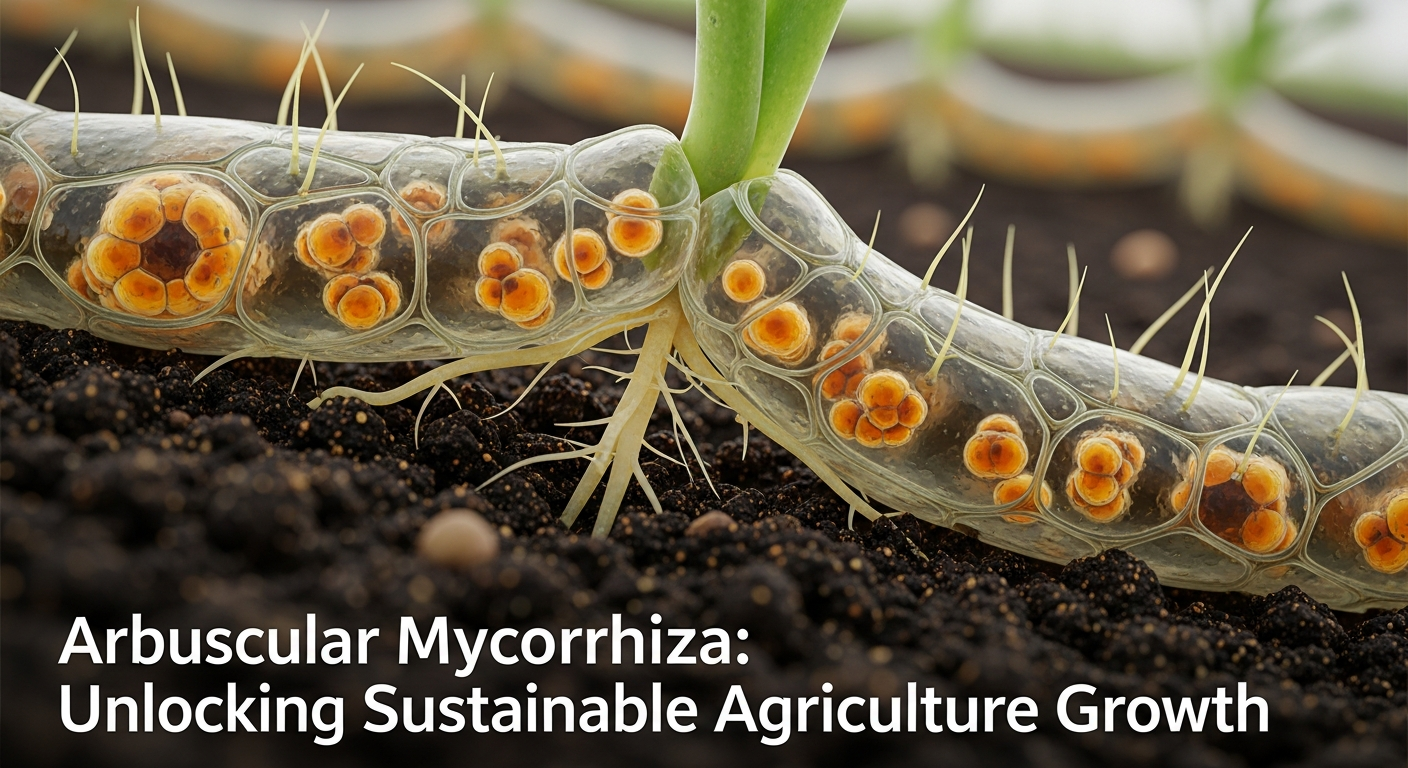
Mycorrhizal associations (mycorrhizae) between soil fungi and plant roots (plants) represent a naturally occurring relationship that has existed for millions of years (millions of years) and benefited both crop production (agriculture) as well as Soil (soil). The availability of key (essential) nutrients such as Phosphorus (P), Nitrogen (N), Micronutrients (micro) and Water (water) is significantly improved when the plant root connects with the (mycorrhizae) fungi: resulting in a stronger root system (root system) and better overall growth of the plant (overall growth). The (mycorrhiza) fungi provide the plant with these key nutrients for (nutrient) absorption and movement (transport) internally throughout the plant; therefore mycorrhiza is especially important for crops that are growing in nutrient deficient soils (nutrient-deficient soils), and it is therefore a major contributor toward crop health and sustainability (sustainable agriculture). Mycorrhiza's varied roles between different types of plants (cereal, vegetable, pulse, oilseed and fruit) indicate how mycorrhiza functions as a nutrient transporter for all crops, while ensuring long-term Soil (soil) fertility, due to the natural process by which mycorrhiza provides nutrients.
Understanding Arbuscular Mycorrhiza and Its Importance
Arbuscular mycorrhiza is important in agriculture as it establishes a natural and beneficial relationship between soil fungi and plant roots. This long-standing biological association allows crops to obtain nutrients and water from sources that are typically inaccessible to plants due to their lack of direct root contact.
Among mycorrhizal types, arbuscular mycorrhiza is the most widely distributed type of association and has been found in nearly 80–90% of all agricultural crop plants. Through improved nutrient utilization and enhanced rooting systems, arbuscular mycorrhiza plays an important role in increasing soil fertility, improving crop yields and promoting sustainable agricultural practices.
What Is Arbuscular Mycorrhiza in Agriculture
The arbuscular mycorrhizal association occurs when a fungal hypha enters and penetrates the root cell of the host plant. In addition to enhancing the transport of nutrients to the plant through their direct physical contact with the plant root cell wall, arbuscular mycorrhiza also produces specialized structures called Arbuscular. These structures provide a direct connection point between the fungus and the host plant.
Characteristics:
- Located within the plant root cortex
- Promotes enhanced phosphorus, zinc and other micronutrient uptake
- Enhances water absorption and tolerance to drought
- Provides for enhanced root establishment and development of vigor early in crop growth.

Agricultural Importance of Arbuscular Mycorrhiza: There are many cereal, vegetable, legume, oilseed, and fruit crops that benefit from the presence of arbuscular mycorrhiza; thus, it is one of the most important biological inputs for sustainable agricultural systems.
Mycorrhiza and Types of Mycorrhiza in Farming Systems
A variety of types of mycorrhizal fungi are associated with different plant systems. The type most commonly found in farming and food production is arbuscular mycorrhiza (AM).
The importance of arbuscular mycorrhizas in the agricultural industry is:
- compatible with the majority of crops grown in agriculture;
- facilitates the mobilization of nutrients in poorly nutrient-rich soils;
- an ideal partner for organic and low-input farming regimes; and
- provides farmers with a wealth of information on which mycorrhiza will be best suited to their crops and soils.
Root Colonization and Soil Health Improvement
The establishment of hyphae inside a plant's roots is the first step towards successful root colonisation by arbuscular mycorrhizae. After they colonise the root, the hyphae extend into the soil, creating an extensive subterranean network that connects with neighbouring plants.
The advantages of effective colonisation of plant roots by arbuscular mycorrhizae include:
- increased surface area of the root system;
- enhanced aggregation and structure of the soil;
- increased mobility of nutrients and water in the soil matrix; and
- decreased soil erosion and compaction.

The Science Behind Arbuscular Mycorrhizal Symbiosis
The symbiotic relationship between plants and arbuscular mycorrhizae has become one of the largest and most important relationships in terms of plant/fungi interactions in agriculture. An arbuscular mycorrhizal fungus will inhabit a plant root where it forms specialized structures that enable it to facilitate nutrient transfer and energy exchange between the two organisms. Ultimately, arbuscular mycorrhizae are the most frequently observed type of mycorrhiza in today’s modern agricultural landscape and they benefit approximately 80-90 percent of the crops grown in North America and around the world. In order to utilize the benefits offered by mycorrhiza in the production of crops and development of soils, it is essential that agronomists and farmers have a fundamental understanding of how this partnership operates.
Nutrient Exchange Mechanisms in Mycorrhiza
The mechanism by which arbuscular mycorrhizae provide efficient exchanges of nutrients between fungi and plants is the crux of arbuscular mycorrhizae symbiosis. The penetration of the root cell by the arbuscular mycorrhizal fungus occurs when the fungus develops a branching structure of the root (called arbuscule) in the interior of the root. The fecal material and metabolites produced by the fungal hyphae are then exchanged directly to the plant root.
Mechanism of Nutrient Exchange:
- The fungal hyphae take up phosphorus, nitrogen, zinc and other micronutrients from the soil and directly transport them to the plant root, and
- In exchange, the plant supplies carbohydrates (i.e. sugars) produced via photosynthesis to the fungus.
- This exchange of nutrients results in an efficient use of fertilizer by the plant without additional applications of fertilizer being necessary.

Mycorrhizal Networks and Fungal Hyphae
The role of arbuscular mycorrhizal fungi is to create a vast network of hyphae extending beyond the roots of plants. The root network of fungi consists of interconnected hyphae which form an underground network of mycorrhizae to connect to the larger volume of soil available to the plants' root system.
Functions of Mycorrhizal Networks:
- The surface area available for the roots of the plants to absorb
- The ability to use nutrients located further away from the roots (beyond the area that root hairs can reach)
- Providing improved soil structure and aggregation
- Facilitating movement of water through soils during periods of drought
According to this information, the importance of fungal hyphae in agriculture is to provide farmers and growers with better access to nutrient sources stored in soil particles. Because they are thin and can penetrate through the smallest pores in soil, mycorrhizal networks provide crops with greater access to nutrient sources that would otherwise be inaccessible. Thus, the presence of mycorrhizae in compacted or nutrient-poor soils is critical.
Role of Arbuscular Mycorrhiza in Plant Growth
Along with being beneficial to the roots of crops, arbuscular mycorrhizal fungi directly interact with and influence several growth stages of the plants. The benefits of mycorrhizal fungi to plant
grow are measurable and can therefore be observed in three key areas:
1- Faster establishment of seedlings
2- Stronger and deeper rooting systems
3- Increased efficiency of nutrient utilization
4- The ability to withstand drought, soil salinity and soil stress
5- A greater production of flowers, fruit and yield

Benefits of Arbuscular Mycorrhiza for Crops and Soil
The arbuscular mycorrhizal fungi are some of the most widely distributed and economically significant of all mycorrhizal fungi worldwide, forming symbiotic relationships with most agronomically important food crops. These partnerships improve plants' nutrient, water and soil acquisition capabilities, resulting in healthier crops and increased fertility of soils. By incorporating arbuscular mycorrhizae into their agricultural production systems, farmers can increase their productivity while also sustaining the long-term health and viability of their soils.
Improved Nutrient Absorption and Crop Yield
Arbuscular mycorrhizae play a vital role in enhancing nutrient bioavailability (absorption) in soils where nutrients are present, but plants cannot easily obtain them from the soil.
4 Ways Nutritional Assimilation Affects Plant Yield:
- Increases the area of effective roots by using fungal hyphae
- Additionally, arbuscular mycorrhizal fungi assist plants in the assimilation of P, Zn, Cu and N by enhancing their capacity for absorption of these elements from the soil profile.
- Arbuscular mycorrhizal fungi also reduce the potential for nutrient leaching from soils.
- Arbuscular mycorrhizal fungi help assist plants in achieving uniform growth across fields.
Effect of Nutritional Assimilation on Crop Yield:
When nutrients are effectively taken up by plants, a greater portion of the plant's energy can be directed toward the production of flowers, fruit and grain rather than for its own sustenance.

Drought Resistance and Stress Tolerance
The ability of a plant to combat environmental stressors is greatly enhanced through Arbuscular Mycorrhizae mycorrhizae which are present.
The following are stress-resistance benefits of Mycorrhizae;
- Will improve the ability of plants to extract water from the deeper levels of the soil
- Will improve the amount of soil moisture retained around the roots of plants
- Will reduce wilting of plants in dry times
- Will allow for quicker recovery of plants from times of stress
In Agriculture, crops supported by Mycorrhizae are growing in what is becoming a more variable climate. When in a water-limited environment, crops supported with Mycorrhizae have much better survival rates and produce stable yield levels compared to crops that do not have Mycorrhizae. The fungal network acts as an extension of the root system so it provides a connection for the plant to the soil moisture that is unavailable to the non-mycorrhizal crop. In contrast, the non-mycorrhizal crop cannot use that moisture without a Mycorrhizal association.
Disease Suppression and Plant Resilience
Mycorrhizae assist plants in improving their normal methods of fighting disease, which increases their ability to resist soilborne diseases and soilborne pathogens.
- By creating a structure that inhibits or blocks access to harmful pathogens
- By providing optimum nutrient balance to the plant and thus reducing the likelihood of disease
- Eliciting the development of beneficial microbial populations in the root zone
- By increasing the defensive response by the plant's immune system

Role of Arbuscular Mycorrhiza in Sustainable Agriculture
Arbuscular mycorrhiza is important because it fosters the natural interactions between crops and the biological components of the soil, creating a positive impact on sustainable farming. Arbuscular mycorrhiza is the most prevalent and advantageous form of mycorrhiza for all crops grown for agricultural production, including cereals, vegetables, legumes, oilseeds and fruit-bearing plants. Mycorrhiza provides an additional root system that is both wider and deeper than the actual root system because it forms a network of fungal hyphae connected to the crop roots. By extending the effective rooting area, mycorrhizae enhance the way crops can utilize nutrients, improve soil structure, and provide additional support for growing crops, increasing productivity and reducing the harmful effects on the environment.
Reducing Chemical Fertilizer Dependency
One of the key benefits of arbuscular mycorrhiza is its ability to help reduce the reliance on chemical (phosphorus-based) fertilizers.
How Arbuscular Mycorrhiza helps Reduce the Use of Fertilizers
- Provides enhanced availability of phosphorus from the soil reserves
- Enhances the ability of crops to absorb the micronutrients (e.g., zinc, copper)
- Improves nutrient use efficiency of crops
- Reduces the leaching or runoff of nutrients

Arbuscular Mycorrhiza in Organic Farming
Arbuscular mycorrhizae are an integral part of organic farm systems, as they promote the natural soil processes that work together with organic farm systems. As organic agriculture does not utilize synthetic fertilizers, crops rely heavily on biological methods, such as arbuscular mycorrhizae, for their nutrients. Why Arbuscular Mycorrhizae are Appropriate for Organic Farming
Arbuscular mycorrhizae are:
a) Completely Natural & Biologically Safe
b) Enhance the release of nutrients from organic matter
c) Promote the development of strong roots without relying on the use of chemicals.
d) Increase drought or other stress tolerance to crops.
The following best organic practices are important to support arbuscular mycorrhizae:
1. Regularly adding compost and/or green manure.
2. Avoid using high phosphorus synthetic fertilizers.
3. Minimizing soil disturbance to maintain the fungal network.
With the above practices, arbuscular mycorrhizae can be a major partner in maintaining soil fertility and crop productivity in organic farming systems.
Contribution to Regenerative Agriculture
The Regenerative Farming movement is focused on regenerating the health of the soil and the biodiversity and func-tionality of the ecosystem. Arbuscular mycorrhizae are an important component of that effort.
The following are the primary benefits of arbuscular mycorrhizae to regenerative farming:
1. They increase the amount of organic carbon in soils through the stabilization of the soil aggregates.
2. They contribute to improving the structure and water holding capacity of the soil.
3. They increase microbial biodiversity and soil life.
4. They improve the ability of crops to resist the effects of climate stress.

Application of Arbuscular Mycorrhiza in Modern Farming
Arbuscular mycorrhiza is a predominant source of biological innovation used in contemporary agriculture and has enormous potential as an agricultural tool to improve crop productivity and health by supporting the establishment and development of a mutually beneficial relationship with the roots of the crop plant for enhanced access to nutrients and moisture, especially in areas outside of or beyond the root system of the crop plant. In addition, arbuscular mycorrhizae x 10 million (1,000,000,000,000) have been beneficial for the majority of all agricultural crops and can serve as a foundation for sustainable agricultural practices, as they improve the efficiency of nutrient uptake, improve the health of the soil, and decrease the dependency of chemical fertilizers by farmers.
Arbuscular Mycorrhizal Inoculants for Crops
The objective of a mycorrhizal inoculant is to establish a beneficial fungus in the rhizosphere of a crop to enable a rapid and successful colonization of the roots of the crop.
The Mycorrhiza Inoculant Can Be Used In Several Ways:
- Granular mycorrhizal inoculants are generally applied to the soil or in a tuber planting (sow) or transplant process
- Powder mycorrhizal inoculants are often used to coat seed or dip roots.
- Liquid formulations of mycorrhizal inoculants can be used in drip irrigation systems.
Benefits Associated With the Use of Mycorrhizal Inoculants:
- Improved phosphorus and micronutrient uptake
- Increased root branching and root surface area
- Increased drought and nutrient stress tolerance
- Increased availability of uniform crop growth across an entire field.

Application Timing of Arbuscular Mycorrhizal Inoculants:
The best time to apply mycorrhizal inoculants to crops is during the time of planting as the young roots of the crop allow the fungus greater opportunity for colonization.
Suitable Crops for Mycorrhizal Association
The presence of arbuscular mycorrhizae in agriculture contributes significantly to positive yields. Like many mycorrhizal associations, the distribution of arbuscular mycorrhizae will be beneficial for all systems of cropping.
Diverse Types of Crops that are Beneficial to the Use of Arbuscular Mycorrhizae
- Cereals: Wheat, Rice, Maize, Sorghum.
- Pulses: Chickpea, Lentils, Pigeon Peas
- Vegetables: Tomatoes, Chilli, Onion, Brinjal.
- Oilseeds: Groundnut, Sunflower, Mustard.
- Fruits: Bananas, Citrus, Mango, Papaya.
Soil and Farm Management for Mycorrhiza Success
The success of arbuscular mycorrhizae from an application perspective will depend on the environment from which these organisms were acquired and used. The benefit achieved through the use of arbuscular mycorrhizae is derived from their mutualism with the root of a plant; therefore, the physical environment where the root and mycorrhizae exist is very important.
Best Practices for Farm Management to Maximize the Benefit of Arbuscular Mycorrhizae:
- Maintain moderate moisture levels in the soil during the first growth period.
- Avoid using high rates of phosphorus fertilizer to avoid inhibiting the production of arbuscular mycorrhizae.
- Reduce or eliminate excessive deep tillage to avoid disrupting mycorrhizal networks.
- Increase organic matter in the soil by using compost or by growing green manure crops.
- Implement rotation of crops to maintain biodiversity in the soil/resource system.

Challenges and Future Prospects of Arbuscular Mycorrhiza
The use of arbuscular mycorrhiza is crucial for sustainable agricultural systems, but the effectiveness of the arbuscular mycorrhizal (AM) fungi depends upon soil conditions, climatic situations, and the agricultural practices being implemented. In general, most crops will benefit from using AM fungi, but it is important to understand the limitations that are associated with these fungi to optimize their performance in actual agriculture settings. By implementing better soil management practices and utilizing the latest innovations, farmers can determine how AM mycorrhizal fungi will affect their future crop production and practices.
Soil and Climate Limitations
AM mycorrhizal fungi will only perform well when the soil is healthy and the environment is conducive for growth. Therefore, poor soil conditions, especially in locations with very high or low amounts of rainfall, can negatively affect fungal colonization and will stop crops from receiving any of the benefits associated with AM fungi.
Limitations of Soil and Climate Include:
- The compaction of soil will inhibit root growth and fungal colonization
- An excess amount of phosphorus found in the soil will not support the life cycle of AM fungi
- Soil that is saturated with water or has low water availability will have decreased survival rates of AM fungi
- Hot soil temperature will decrease the feasibility of the AM fungi

Compatibility with Agrochemicals
The relationship between Mycorrhizae and Agrochemicals is an important factor in agriculture throughout the world today. While some chemical inputs are compatible, misusing these agrochemicals may negatively affect the efficacy of the Fungi.
Agrochemical Challenges:
- Fulvic Acid High Dose Phosphate Fertilizers Reduce Fungal Colonization
- Systemic Fungicides Cause Damage to Beneficial Fungi
- Frequent Applications of Chemicals Disrupt the Balance of Microbes Within the Soil
Future Research and Innovation
Ongoing research will continue to expand our understanding of Arbuscular Mycorrhizae and subsequently remove current barriers preventing their use within agriculture, and ultimately to allow for their continued adoption across agriculture.
Innovation Areas:
- Crop-Specific Mycorrhizal Strains
- Improved Inocula Formulations Suitable for Varying Environmental Conditions
- Incorporation with Precision Agriculture Technologies
- Inoculation Application Techniques: Seed Coating, Root Dipping
- Developing Climate Resilient Mycorrhizal Strains
Future of Research: As research continues to grow and advance, Arbuscular Mycorrhizae will be increasingly predictable, efficient, and flexible to meet the demands of farmers, thus creating the opportunity for farmers to customize their Biological Inputs based on regional site conditions. As a result, these advances will expand the role of Mycorrhizae to be a critical component of sustainable agriculture by providing increased productivity, while at the same time protecting soil health into the future for generations ahead.

FAQs:
Q1. What is arbuscular mycorrhiza and why is it important in agriculture?
Arbuscular mycorrhiza is a beneficial fungi–root association that improves nutrient uptake, root growth, and crop productivity.
Q2. How is arbuscular mycorrhiza different from other types of mycorrhiza?
Arbuscular mycorrhiza colonizes plant root cells and benefits most agricultural crops, unlike other types that mainly associate with trees.
Q3. Can arbuscular mycorrhiza reduce fertilizer use?
Yes, it enhances nutrient efficiency, especially phosphorus uptake, reducing the need for chemical fertilizers.
Q4. Which crops benefit most from arbuscular mycorrhiza?
Cereals, vegetables, pulses, oilseeds, and fruit crops show strong positive responses to arbuscular mycorrhiza.
Q5. Is arbuscular mycorrhiza suitable for organic farming?
Yes, arbuscular mycorrhiza is natural, eco-friendly, and widely used in organic and sustainable farming systems.
Conclusion: Embracing Arbuscular Mycorrhiza for a Sustainable Agricultural Future
The Arbuscular Mycorrhizal Fungi offers one of Nature's best opportunities to create stable, productive Agricultural Systems. They work in close symbiosis with Plant Roots as an extension of their root systems by increasing Nutrient Uptake (particularly Phosphorus) and Root Development, while also improving Water Use Efficiency. These Natural Processes support Crop Health, Stress Resistance and overall Field Performance, making Arbuscular Mycorrhizae essential components of sustainable agriculture.
As Farming processes and practices continue to grow and change in response to a variety of pressures including Soil Degradation, Increased Input Costs and Climate Variability; Arbuscular Mycorrhizae provide an ecologically sustainable, long-term solution to these Problematic Issues. Their ability to reduce the reliance on chemical Fertilizers while improving Soil Structure and Microbial Diversity fits perfectly within the Regressive and Organic Farming Models. Over time, Mycorrhizal Networks will rebuild Soil Fertility so that consistent yields can be achieved without degrading the environment.
Utilizing Arbuscular Mycorrhizae represents more than simply adding a new Biological Input into your Farming. Utilising Arbuscular Mycorrhizae represents an increased focus on smarter, more Soil-Centric Farming Practices. Integrating Arbuscular Mycorrhizae into your farming practices enables Farmers to achieve Sustainable Yields, develop Healthier Soils and build a more Balanced Ecosystem for Future generations, thus creating the opportunity for True Sustainable Agricultural Futures.