

D-Amino Acids in Agriculture: Their Role, Science, and Applications
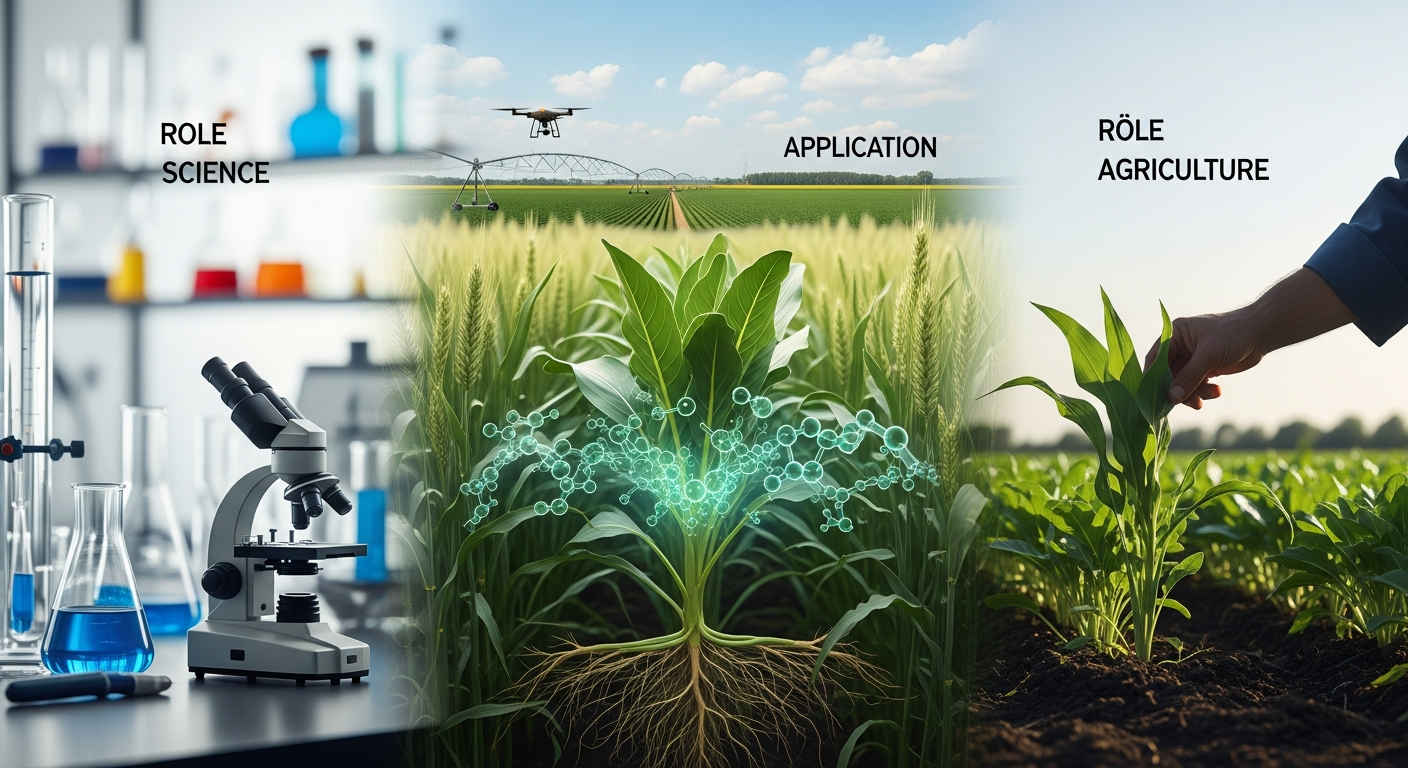
D-amino acid's role in plant and soil systems is becoming more recognized for its impacts on agricultural production as they are being found in natural products such as manures. While plants will only recognize L-Amino Acid (LAA) forms, they are produced naturally in the soil by soil microorganisms and directly affect the root structure of plants along with other interactions such as nutrient cycling and balancing soil microflora.
An understanding of D-amino acids vs. L-amino acids provides farmers and agronomist with the knowledge necessary to provide the correct nutrient input to crops as well as when to apply them resulting in improving the health of soils as well as crop performance without altering the biological processes of the soil.
D-amino acids influence how plants are signalled, allow plants to grow on sustainable agricultural systems and support more dynamic ecosystems in soils to help farmers succeed by allowing them to use the latest biological practices.
Understanding D-Amino Acids and Amino Acids Chirality in Agriculture
D and L refer to the two versions of amino acids which are designed like mirror images of each other and are called chirality. In agriculture, these two different forms of amino acids are vital. Plants utilize the L-forms of amino acids for photosynthesis, growth, and respiration; however, D-amino acids are found abundantly in soil (produced by soil microbes) critical to the behavior of roots, the activity of microbes, and the cycling of nutrients. Knowing more about how D versus L amino acids operate will help farmers and researchers better manage the health of soil.
What Are D-Amino Acids in Agricultural Science?
While L-amino acids support growth directly to plant, the role of D-amino acids in agriculture is more about helping farmers understand and maintain balancing the soil ecosystem rather than fertilizing plants directly.
- They are produced naturally by soil microbes and affect the relationships between roots and microbes.
- They aid in nutrient cycling.
- They assist in maintaining a balanced biological community
D or L Amino Acids: Key Structural Differences
L-Amino acids are fundamental elements of proteins utilized by plants for their immediate protein synthesis and recovery from stress, whereas D-Amino acids enhance soil quality and enhance the activity of microorganisms in the soil.
Comparison of types of Amino acids
- L-Amino acids are absorbed rapidly, which provides the plant with the most readily available protein source after it is harvested and recovered from stressful conditions
- D-Amino acids offer indirect support to plants through the stimulation of soil biological processes and their contribution to nutrient cycling.
- L Forms Provide Direct Energy & D Forms Are Long Term Soil Conditioner.
- L Amino Acid Products Provide Immediate Benefit; D Amino Acid Products Develop Soil Health Over Time."

Naturally Occurring D-Amino Acids in Soil Systems
In healthy soil, the presence of D-amino acids is a result of ongoing decomposition of organic matter caused by microorganisms. A presence of D-amino acids indicates that a soil is biologically active due to the presence of microorganisms that are necessary for maintaining long-term fertility and health.
Function of D-Amino Acids in Soils:
- Promotes Microbial Diversity
- Supports the Decomposition of Organic Matter
- Influences Root Signaling
- Enhances Biological Stability of Soils
Biological Role of D-Amino Acids in Soil and Plant Systems
D-amino acids have a crucial, albeit niche, role in agriculture, mainly in the soil and plant systems. While plants obtain L-amino acids directly, D-amino acids originate from many of the soil microbes and influence the microbial balance, nutrient cycling, and cynging of root-soil interactions between microbes and the plants. Farmers need to understand how D or L amino acids operate differently to gain a better understanding of these microbial biological processes that support long-term soil and crop health.
Function of D-Amino Acids in Soil Microorganisms
The role of D-amino acids in soil microbes is reflected graphically. Soil microbes produce D-amino acids as part of their normal metabolism, which assists with the formation of cell walls, regulating growth, and communicating with other soil microbes. As microbes decompose organic matter, D-amino acids are released back into the soil and will be available for use in the nutrient cycling.
The key roles of D-amino acids in soil microbes include:
- Support the structure of the cell walls of the microorganisms.
- Regulate the balance of the microorganism population in the soil ecosystem.
- Facilitate the decomposition of organic materials and plant residues.
- Provide for a slow-release source of nutrient(s) into the soil ecosystem.
D-Amino Acids and Plant–Microbe Interaction
D-amino acids affect the way that plants and soil-dwelling microorganisms interact around their root systems (or rhizospheres). Plants primarily utilize about 70% of the amino acids they take up in the L-form ("L" refers to the natural form of amino acids), while the presence of d-amino acids will influence how microorganisms behave within the rhizosphere.
Effects of Plant–Microbe Interaction:
- D-amino acids are instrumental in creating diverse microbial populations found around the roots of plants.
- They impact how nutrients are converted in the rhizosphere.
- D-amino acids also support beneficial microbes, which will help to feed plants.
- Finally, they will create a balance of beneficial and detrimental organisms to the plant.

Impact of D-Amino Acids on Soil Health
D-amino acids that are produced by microorganisms eventually return to the soil and contribute to its ability to maintain structure and to support soil fertility.
Long-Term Benefits of Soil Health:
- D-amino acids stabilize the organic matter of soils.
- D-amino acids are responsible for sustaining healthy populations of beneficial microorganisms.
- D-amino acids sustain healthy populations of beneficial microorganisms and provide them with a steady nutrient supply.
- D-amino acids provide a steady source of nutrients and will provide long-term fertility to soils.
D-Amino Acids vs L-Amino Acids: Agricultural Perspective
Amino acids can be classified into two distinct isomers: D-amino acids (D) and L-amino acids (L). Both of these classes of amino acids play critical roles in the production and management of agricultural products. For example, plants use L-amino acids for growth, while D-amino acids have major effects on soil biology and affect root communication. An understanding of how plants metabolize and respond to both D and L amino acids enables farmers to apply their resources (e.g., fertilizers) more efficiently towards producing healthier soils and more robust crops.
How Plants Respond to D or L Amino Acids
When applying amino acids to plants, there are important differences in how L and D amino acids function based on their application method and location. For example, L-amino acids can be quickly absorbed by plants and directly influence plant growth, photosynthesis, and nutrient uptake. D-amino acids, however, do not serve as primary growth factors for plants, but do serve to modulate root behaviour and provide for microbial interactions in the soil. By utilising both D and L amino acids together, plants attain a greater level of growth and achieve greater levels of overall soil health.
Benefits:
- sustained growth and improved recovery from environmental stress (L-amino acids)
- moderation of root communication and improved balance between microbes in the soil
- increased interaction between plants and soils due to the presence of both D and L amino acids.
Metabolic Differences Between D and L Amino Acids
- L-Amino Acids - Plants directly metabolise these amino acids for protein and enzyme production.
- D-Amino Acids - These amino acids support the growth of soil organisms and modulate nutrient and biological activity within the soil.
Uses / Targets for Growth
- The L-forms of the amino acids support and promote the growth of the plant
- while the D-forms of the amino acids promote and maintain a healthy microbial ecosystem.
Agricultural Importance - Both L- and D-amino acids are essential for achieving maximum crop yields while maintaining a balanced soil ecosystem.

Why Both Amino Acids Matter in Agriculture
Modern agricultural systems benefit from both D- and L-amino acids. L-amino acids increase the rate at which crops produce; D-amino acids enhance the health of the soil and the efficiency of soil microbes. Omitting either D- or L-amino acids can hinder the productivity of agricultural systems and hinder the sustainability of the soils used for those systems. Utilizing materials with knowledge of whether they have a D or an L amino acid leads to improved crop production and healthier agricultural systems with sustainable practices.
The Importance of D- and L-amino acids:
- Provides support to both plant growth and soil life.
- Increases the efficiency of nutrient cycling.
- Increases the long-term fertility of soils.
D-Amino Acids in Crop Stress Management and Growth Regulation
D-amino acids have a positive influence on how plants grow and respond to stressors. This makes them of great interest in a number of areas within agriculture and other fields. The majority of D-amino acids produced by plants are found in their roots. However, it is commonly accepted that D-amino acids in plants are produced by soil fungi and bacteria. Many researchers believe this is because D-amino acids are involved in a plant’s response to its environment; therefore, they play an important role in plant root signalling and acclimatization to environmental stress factors, as well as soil-plant interaction. When identifying D- and L-amino acids, it will provide agricultural producers and researchers a better opportunity to manage their crop production with respect to adverse conditions.
Role of D-Amino Acids Under Drought and Salinity Stress
As a result of the effects of drought conditions and salinity stress on the plant, metabolic disruption occurs along with decreased nutrient uptake. D-amino acids provide a regulatory function to regulate stress signals in the plant allowing for the adjustment of growth patterns as well as providing energy conservation during periods of extreme stress.
The key Benefits for Plants during Stress:
- Regulate Metabolism when under Stress due to Lack of Water
- Support Plant Tolerance to Saline Soil
- Facilitates Microbial Interactions to Improve Soil Health
- Assist in Reducing Growth Disruption associated with Stress
Influence on Root Development and Crop Vigor
Roots are extremely responsive to chemical signalling found within the soil. D-amino acids provide regulation of root architecture through control of root elongation and branching patterns. D-amino acids are essential in preventing overdevelopment of roots while providing for balanced development to produce increased crop vigour. The use of D-amino acids together with L-amino acids can lead to roots that are more stable and resilient to stress.
Benefits of D-Amino Acids to Roots:
- Root Elongation Regulation
- Balanced Branching of Roots
- Improved Interaction with Beneficial Soil Microorganism
- Uniform Plant Growth

Amino Acids as Natural Growth Modulators
Not all amino acids stimulate direct growth; however, there are some that act as natural regulators. By modulating the balance between hormonal signals and enzyme activity, D-amino acids fine-tune plant growth. The mode of action of D-amino acids differs from that of L-amino acids, and therefore the distinction between D and L-amino acids plays a role in planning for agricultural use. Used properly, D-amino acids contribute to consistent growth patterns, minimise stress-induced excessive root development, and help ensure the long-term health of a crop.
Why Growth Modulation is Important:
- Prevention of Uncontrolled Growth (Stresses)
- Support of Uniform Crop Development
- Increased Efficiency of Applied L-Amino Acids
- Balance in Plant Development at All Stages
Applications of D-Amino Acids in Agricultural Biotechnology
D-amino acids are being looked at in farming technology because of their special function with soil microorganisms and the interactions between the environment and plants that support sustainable crop production. Instead of contributing directly to plant growth like tradition plant nutrients, d-amino acids indirectly support plant growth by maintaining beneficial microorganisms, supporting soil health, and strengthening a plant's natural defense against disease or a lack of nutrients.
D-Amino Acids in Biofertilizer Development
D-amino acids are produced naturally by many different types of soil microbes. The way they are used in the development of biofertilizers is to regulate the populations of microbes that are beneficial for nutrient cycling and soil fertility. D-amino acids will enhance nitrogen transformation and improve the beneficial interactions between the root and the microbe, this will ultimately be beneficial to the plant.D-amino acids do not feed the plant directly as do L-amino acids, but they contribute indirectly to the creation of healthy soil.
Biofertilizers:
- Benefit Soil Microorganisms
- Increase Nutrient Availability around the Roots
- Aid in Nitrogen and Carbon Cycling
- Increase Soil's Biological Levels of Activity
Use of Amino Acids in Biopesticides and Disease Control
Microbial signaling enables the use of D-amino acids in biopesticides to inhibit the growth of potential pathogens and encourage the proliferation of beneficial entities. D-amino acids provide a unique, potent, organic means of controlling diseases within crops by inhibiting the activity of disease pathogens without injury to the crop itself.
D-Amino Acids Prevent Disease By:
- Regulating the balance of microbes within their respective soils
- Perpetuating the naturally occurring suppression of harmful pathogens
- Creating less dependence on chemical pesticides
- Indirectly promoting the immune response of the plant

Role in Sustainable and Organic Agriculture
When combined with L-amino acids, D-amino acids create a biological product that is balanced and sustainable while remaining beneficial to both the environment and the farmer. These products will play an important role in continuing to develop Organic and Regenerative Farming practices.
D-Amino Acids and Sustainability
- Increase soil biodiversity
- Reduce the need for chemical inputs
- Maximize the natural recycling of nutrients
- Improve soil and crop health for the long term
Measurement and Analysis of D-Amino Acids in Agriculture
The current study highlights that identifying the presence and concentration levels of D-amino acids in plant and soil systems has become an integral part of agricultural production nowadays. The contributions of these amino acids in the biological processes within soil, the cycling of nutrients and also their impact on how plants and microorganisms interact with one another are a few of the reasons why growers/agronomists are interested in being able to analyze the levels of D-amino acids that are associated with the growth of a crop.
Soil and Plant Analysis of Amino Acids
The analysis of soil and plant amino acids allows the grower/agronomist to identify what types and (concentration) levels of amino acids exist within the agricultural system. D-amino acids are primarily created by soil microbes, therefore they indicate the level of soil microbial activity and soil biological health.
Benefits of Analyzing Amino Acids:
- Tracking soil microbes
- Determining the efficiency of nutrient cycling
- Assessing biological soil health
- Developing nutrient plans to improve crop nutrition
Importance of Monitoring D or L Amino Acids
It is essential to monitor the ratio of D or L amino acids because the majority of plants use an L amino acid form while the D amino acids affect soil processes. If there is too much D amino acid in the system, it will take longer for plants to absorb nutrients provided by fertilizers (i.e., D amino acids slow plant uptake). Monitoring these two forms will also assist farmers with avoiding nutrient waste and ultimately improving their crop yield.
Reasons for Monitoring:
- Prevention of Amino Acid Imbalances
- Maximization of Fertilizer and Biostimulant Utilization
- Promotion of Healthy Relationships Between Plants and Microorganisms

Quality Control in Agricultural Inputs
Quality Control (QC) is the process used by producers of agricultural products that contain amino acids to assure the safety and performance of those products. Testing also verifies that fertilizers, biostimulants and soil conditioners contain the correct percentage of D-amino acids and L-forms. Reliably performing Quality Control checks are essential to providing crops with the performance they require and producing consistent results for farmers.
Quality Control Focus Areas
- Proper Composition of Amino Acids
- Balanced Ratio Of D Or L Amino Acids
- Product Purity & Stability
- Safe Application Of The Product For Crops And Soil
FAQs:
Q1. What are D-amino acids in agriculture?
D-amino acids are naturally occurring forms of amino acids mainly produced by soil microbes that influence soil biology and nutrient cycling.
Q2. How are D or L amino acids different for crops?
L-amino acids are directly used by plants for growth, while D-amino acids mainly affect soil and microbial activity.
Q3. Are D-amino acids harmful to plants?
No, they are not harmful in normal levels, but excessive amounts may slow nutrient uptake if imbalanced.
Q4. Do plants absorb D-amino acids directly?
Plants primarily absorb L-amino acids; D-forms are mostly processed indirectly through soil microbes.
Q5. Are amino acids used in organic farming?
Yes, naturally derived amino acids are widely accepted and used in organic and sustainable farming.
Conclusion: Why D-Amino Acids Matter for the Future of Agriculture
D-amino acids offer researchers a new way to examine soil health and plant–microbe interactions of modern agriculture. D-amino acids are primarily produced and used in plants as their main source of nourishment in an L-amino acid form. By understanding how D-amino acids function, we can gain insight into how microbes function in cycled nutrients and how they contribute to maintaining the balance of biological organisms within the soil ecosystem. Therefore, by recognizing the differences between D-amino acids and their corresponding L-amino acids, agronomists and farmers have the ability to ensure better management of their inputs, thereby creating a healthier soil environment.
As the agricultural industry continues to transition towards sustainability and efficiency, more studies will be necessary about the role of amino acids beyond just traditional plant nutrition. The ability to monitor and manage d-amino acids will help support long-term soil fertility, reduce the amount of nutrients that are lost during farming, and create more resilient crops under changing climatic conditions. The incorporation of d-amino acid information into future agricultural operating procedures will allow for a better balanced, scientific-based, and environmentally friendly production system for agriculture.